


Page 49 - Hematology_ Basic Principles and Practice ( PDFDrive )
P. 49
Chapter 2  Epigenetics and Epigenomics  21


                                                        Bisulfite
               Bisulfite-Seq                             PCR
                           Methylated        Bisulfite                                                          DNA
                             DNA           conversion                     DNA fragmentation and PCR


               Chlp-Seq
                            DNA-protein     Crosslink proteins  Sample  Exonuclease  Immunoprecipitate  DNA  DNA
                              complex          and DNA    fragmentation  digestion              extraction


               DNase-Seq
                             Active chromatin        DNase I digestion  Isolate trimmed complexes DNA extraction  DNA


               ATAC-Seq
                           Open DNA            Tn5      Insert in regions of     Fragmented  DNA purification  DNA
                                           Transposome   open chromatin          and primed   Amplification


               Chromatin
               Conformation
               Capture (3C)-based
               Seq             Crosslink proteins     Sample       Ligation        Restriction  Self-circularization  DNA
                                  and DNA           fragmentation                    digest    and Reverse PCR


                                                                                      PCR amplify         DNA
                                                                                    ligated junctions
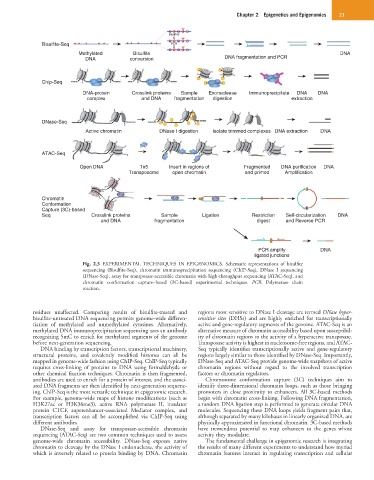
                            Fig.  2.3  EXPERIMENTAL TECHNIQUES  IN  EPIGENOMICS.  Schematic  representations  of  bisulfite
                            sequencing  (Bisulfite-Seq),  chromatin  immunoprecipitation  sequencing  (ChIP-Seq),  DNase  I  sequencing
                            (DNase-Seq), assay for transposase-accessible chromatin with high-throughput sequencing (ATAC-Seq), and
                            chromatin  conformation  capture–based  (3C-based)  experimental  techniques.  PCR,  Polymerase  chain
                            reaction.


            residues  unaffected.  Comparing  results  of  bisulfite-treated  and   regions most sensitive to DNase I cleavage are termed DNase hyper-
            bisulfite-untreated DNA sequencing permits genome-wide differen-  sensitive  sites  (DHSs)  and  are  highly  enriched  for  transcriptionally
            tiation  of  methylated  and  unmethylated  cytosines.  Alternatively,   active and gene-regulatory segments of the genome. ATAC-Seq is an
            methylated DNA immunoprecipitation sequencing uses an antibody   alternative measure of chromatin accessibility based upon susceptibil-
            recognizing 5mC to enrich for methylated segments of the genome   ity of chromatin regions to the activity of a hyperactive transposase.
            before next-generation sequencing.                    Transposase activity is highest in nucleosome-free regions, and ATAC-
              DNA binding by transcription factors, transcriptional machinery,   Seq  typically  identifies  transcriptionally  active  and  gene-regulatory
            structural  proteins,  and  covalently  modified  histones  can  all  be   regions largely similar to those identified by DNase-Seq. Importantly,
            mapped in genome-wide fashion using ChIP-Seq. ChIP-Seq typically   DNase-Seq and ATAC-Seq provide genome-wide snapshots of active
            requires  cross-linking  of  proteins  to  DNA  using  formaldehyde  or   chromatin  regions  without  regard  to  the  involved  transcription
            other chemical fixation techniques. Chromatin is then fragmented,   factors or chromatin regulators.
            antibodies are used to enrich for a protein of interest, and the associ-  Chromosome  conformation  capture  (3C)  techniques  aim  to
            ated DNA fragments are then identified by next-generation sequenc-  identify three-dimensional chromatin loops, such as those bringing
            ing. ChIP-Seq is the most versatile technique in epigenomic research.   promoters  in  close  proximity  to  enhancers.  All  3C-based  methods
            For example, genome-wide maps of histone modifications (such as   begin with chromatin cross-linking. Following DNA fragmentation,
            H3K27ac  or  H3K36me3),  active  RNA  polymerase  II,  insulator   a random DNA ligation step is performed to generate circular DNA
            protein  CTCF,  superenhancer-associated  Mediator  complex,  and   molecules. Sequencing these DNA loops yields fragment pairs that,
            transcription  factors  can  all  be  accomplished  via  ChIP-Seq  using   although separated by many kilobases in linearly organized DNA, are
            different antibodies.                                 physically approximated in functional chromatin. 3C-based methods
              DNase-Seq  and  assay  for  transposase-accessible  chromatin   have  tremendous  potential  to  map  enhancers  to  the  genes  whose
            sequencing (ATAC-Seq) are two common techniques used to assess   activity they modulate.
            genome-wide  chromatin  accessibility.  DNase-Seq  exposes  native   The fundamental challenge in epigenomic research is integrating
            chromatin to cleavage by the DNase I endonuclease, the activity of   the results of many different experiments to understand how myriad
            which is inversely related to protein binding by DNA. Chromatin   chromatin  features  interact  in  regulating  transcription  and  cellular

