


Page 731 - Hematology_ Basic Principles and Practice ( PDFDrive )
P. 731
618    Part V  Red Blood Cells


                                               Cysteine     Glutamic acid

                                                            ATP
                                        γ−Glutamylcysteine
                                              synthetase    ADP


                               5-Oxoproline      γ−Glutamylcysteine
                                                                 Glycine


                                              Glutathione  ATP
                                              synthetase
                                                           ADP
                                                                    H2O2       H2O


                                                              Glutathione peroxidase
                                                        GSH                        GSSG
                                                               Glutathione reductase


                                                       NADP                       NADPH
                                                                    G6PD

                                                      G6P          Pentose          F6P
                                                                    shunt
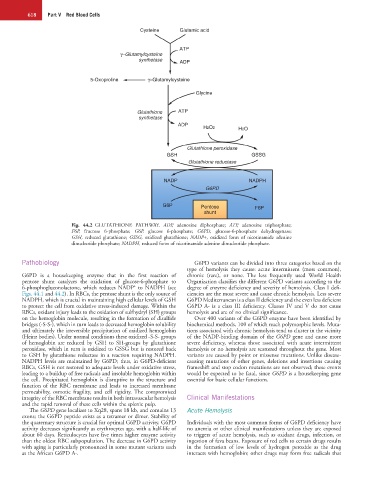
                        Fig.  44.2  GLUTATHIONE  PATHWAY.  ADP,  adenosine  diphosphate;  ATP,  adenosine  triphosphate;
                        F6P,  fructose  6-phosphate;  G6P,  glucose  6-phosphate;  G6PD,  glucose-6-phosphate  dehydrogenase;
                        GSH,  reduced  glutathione;  GSSG,  oxidized  glutathione;  NADP+,  oxidized  form  of  nicotinamide  adenine
                        dinucleotide phosphate; NADPH, reduced form of nicotinamide adenine dinucleotide phosphate.


        Pathobiology                                             G6PD variants can be divided into three categories based on the
                                                              type  of  hemolysis  they  cause:  acute  intermittent  (most  common),
        G6PD  is  a  housekeeping  enzyme  that  in  the  first  reaction  of   chronic  (rare),  or  none.  The  less  frequently  used  World  Health
        pentose  shunt  catalyzes  the  oxidation  of  glucose-6-phosphate  to   Organization classifies the different G6PD variants according to the
                                             +
        6-phosphogluconolactone,  which  reduces  NADP   to  NADPH  (see   degree of enzyme deficiency and severity of hemolysis. Class I defi-
        Figs. 44.1 and 44.2). In RBCs, the pentose shunt is the only source of   ciencies are the most severe and cause chronic hemolysis. Less severe
        NADPH, which is crucial in maintaining high cellular levels of GSH   G6PD Mediterranean is a class II deficiency and the even less deficient
        to protect the cell from oxidative stress-induced damage. Within the   G6PD A- is a class III deficiency. Classes IV and V do not cause
        RBCs, oxidant injury leads to the oxidation of sulfhydryl (SH) groups   hemolysis and are of no clinical significance.
        on the hemoglobin molecule, resulting in the formation of disulfide   Over 400 variants of the G6PD enzyme have been identified by
        bridges (-S-S-), which in turn leads to decreased hemoglobin solubility   biochemical methods, 100 of which reach polymorphic levels. Muta-
        and ultimately the irreversible precipitation of oxidized hemoglobin   tions associated with chronic hemolysis tend to cluster in the vicinity
        (Heinz bodies). Under normal conditions these oxidized -S-S- groups   of the NADP-binding domain of the G6PD gene and cause more
        of  hemoglobin  are  reduced  by  GSH  to  SH-groups  by  glutathione   severe  deficiency,  whereas  those  associated  with  acute  intermittent
        peroxidase, which in turn is oxidized to GSSG but is restored back   hemolysis or no hemolysis are scattered throughout the gene. Most
        to GSH by glutathione reductase in a reaction requiring NADPH.   variants are caused by point or missense mutations. Unlike disease-
        NADPH levels are maintained by G6PD; thus, in G6PD-deficient   causing mutations of other genes, deletions and insertions causing
        RBCs, GSH is not restored to adequate levels under oxidative stress,   frameshift and stop codon mutations are not observed; these events
        leading to a buildup of free radicals and insoluble hemoglobin within   would be expected to be fatal, since G6PD is a housekeeping gene
        the cell. Precipitated hemoglobin is disruptive to the structure and   essential for basic cellular functions.
        function  of  the  RBC  membrane  and  leads  to  increased  membrane
        permeability,  osmotic  fragility,  and  cell  rigidity.  The  compromised
        integrity of the RBC membrane results in both intravascular hemolysis   Clinical Manifestations
        and the rapid removal of these cells within the splenic pulp.
           The G6PD gene localizes to Xq28, spans 18 kb, and contains 13   Acute Hemolysis
        exons; the G6PD peptide exists as a tetramer or dimer. Stability of
        the quaternary structure is crucial for optimal G6PD activity. G6PD   Individuals with the most common forms of G6PD deficiency have
        activity decreases significantly as erythrocytes age, with a half-life of   no anemia or other clinical manifestations unless they are exposed
        about 60 days. Reticulocytes have five times higher enzyme activity   to triggers of acute hemolysis, such as oxidant drugs, infection, or
        than the oldest RBC subpopulation. The decrease in G6PD activity   ingestion of fava beans. Exposure of red cells to certain drugs results
        with aging is particularly pronounced in some mutant variants such   in  the  formation  of  low  levels  of  hydrogen  peroxide  as  the  drug
        as the African G6PD A-.                               interacts with hemoglobin; other drugs may form free radicals that

