


Page 110 - Williams Hematology ( PDFDrive )
P. 110
86             Part II:  The Organization of the Lymphohematopoietic Tissues                                                                             Chapter 6:  The Organization and Structure of Lymphoid Tissues             87


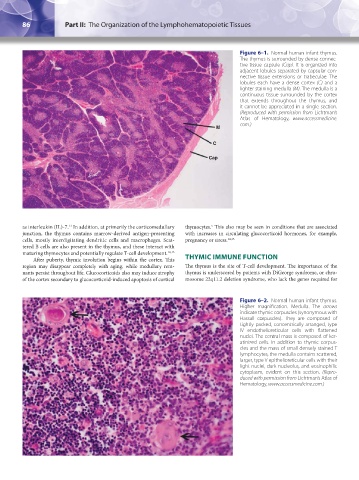
                                                                                        Figure 6–1.  Normal human infant thymus.
                                                                                        The thymus is surrounded by dense connec-
                                                                                        tive tissue capsule (Cap). It is organized into
                                                                                        adjacent lobules separated by capsular con-
                                                                                        nective tissue extensions or trabeculae. The
                                                                                        lobules each have a dense cortex (C) and a
                                                                                        lighter staining medulla (M). The medulla is a
                                                                                        continuous tissue surrounded by the cortex
                                                                                        that extends throughout the thymus, and
                                                                                        it cannot be appreciated in a single section.
                                                                                        (Reproduced with permission from  Lichtman’s
                                                                                        Atlas of Hematology, www.accessmedicine.
                                                                                        com.)
                                                                                M

                                                                               C

                                                                              Cap


               as interleukin (IL)-7.  In addition, at primarily the corticomedullary   thymocytes.  This also may be seen in conditions that are associated
                                                                               5
                               11
               junction, the thymus contains marrow-derived antigen-presenting   with increases in circulating glucocorticoid hormones, for example,
               cells, mostly interdigitating dendritic cells and macrophages. Scat-  pregnancy or stress. 14,15
               tered B cells are also present in the thymus, and these interact with
               maturing thymocytes and potentially regulate T-cell development. 12,13
                   After puberty, thymic involution begins within the cortex. This   THYMIC IMMUNE FUNCTION
               region may disappear completely with aging, while medullary rem-  The thymus is the site of T-cell development. The importance of the
               nants persist throughout life. Glucocorticoids also may induce atrophy   thymus is underscored by patients with DiGeorge syndrome, or chro-
               of the cortex secondary to glucocorticoid-induced apoptosis of cortical   mosome 22q11.2 deletion syndrome, who lack the genes required for


                                                                                        Figure 6–2.  Normal human infant thymus.
                                                                                        Higher magnification. Medulla.  The  arrows
                                                                                        indicate thymic corpuscles (synonymous with
                                                                                        Hassall corpuscles).  They are composed of
                                                                                        tightly packed, concentrically arranged, type
                                                                                        IV endothelioreticular cells with flattened
                                                                                        nuclei. The central mass is composed of ker-
                                                                                        atinized cells. In addition to thymic corpus-
                                                                                        cles and the mass of small densely stained T
                                                                                        lymphocytes, the medulla contains scattered,
                                                                                        larger, type V epithelioreticular cells with their
                                                                                        light nuclei, dark nucleolus, and eosinophilic
                                                                                        cytoplasm,  evident  on  this  section.  (Repro-
                                                                                        duced with permission from Lichtman’s Atlas of
                                                                                        Hematology, www.accessmedicine.com.)


          Kaushansky_chapter 06_p0085-0096.indd   86                                                                    17/09/15   5:52 pm

