


Page 114 - Williams Hematology ( PDFDrive )
P. 114
90             Part II:  The Organization of the Lymphohematopoietic Tissues                                                                             Chapter 6:  The Organization and Structure of Lymphoid Tissues             91


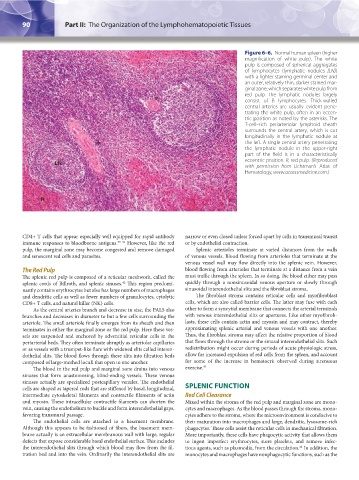
                                                                                          Figure 6–6.  Normal human spleen (higher
                                                                                          magnification of white pulp).  The white
                                                                                          pulp is composed of spherical aggregates
                                                                                          of lymphocytes  (lymphatic  nodules  [LN])
                                                                                          with a lighter staining germinal center and
                                                                                          an outer, relatively thin, darker stained mar-
                                                                                          ginal zone, which separates white pulp from
                                                                                          red pulp.  The lymphatic nodules largely
                                                                                          consist of B lymphocytes.  Thick-walled
                                                                                          central arteries are usually evident pene-
                                                                                          trating the white pulp, often in an eccen-
                                                                                          tric position as noted by the asterisks. The
                                                                                          T-cell–rich periarteriolar lymphoid sheath
                                                                                          surrounds the central artery, which is cut
                                                                                          longitudinally in the lymphatic nodule at
                                                                                          the left. A single central artery penetrating
                                                                                          the lymphatic nodule in the upper-right
                                                                                          part of the field is in a characteristically
                                                                                          eccentric position. R, red pulp. (Reproduced
                          LN
                                                                                          with permission from  Lichtman’s Atlas of
                                                                                          Hematology, www.accessmedicine.com.)


                      R


               CD4+ T cells that appear especially well equipped for rapid antibody   narrow or even closed unless forced apart by cells in transmural transit
               immune responses to bloodborne antigens. 39–41  However, like the red   or by endothelial contraction.
               pulp, the marginal zone may become congested and remove damaged   Splenic arterioles terminate at varied distances from the walls
               and senescent red cells and parasites.                 of venous vessels. Blood flowing from arterioles that terminate at the
                                                                      venous vessel wall may flow directly into the splenic vein. However,
               The Red Pulp                                           blood flowing from arterioles that terminate at a distance from a vein
               The splenic red pulp is composed of a reticular meshwork, called the   must traffic through the spleen. In so doing, the blood either may pass
               splenic cords of Billroth, and splenic sinuses.  This region predomi-  quickly through a nonsinusoidal venous aperture or slowly through
                                                 42
               nantly contains erythrocytes but also has large numbers of macrophages   sinusoidal interendothelial slits and the fibroblast stroma.
               and dendritic cells as well as fewer numbers of granulocytes, cytolytic   The  fibroblast  stroma  contains  reticular  cells  and myofibroblast
               CD8+ T cells, and natural killer (NK) cells.           cells, which are also called barrier cells. The latter may fuse with each
                   As the central arteries branch and decrease in size, the PALS also   other to form a syncytial membrane that connects the arterial terminals
               branches and decreases in diameter to but a few cells surrounding the   with venous interendothelial slits or apertures. Like other myofibrob-
               arteriole. The small arteriole finally emerges from its sheath and then   lasts, these cells contain actin and myosin and may contract, thereby
               terminates in either the marginal zone or the red pulp. Here these ves-  approximating splenic arterial and venous vessels with one another.
               sels are suspended and anchored by adventitial reticular cells in the   Thus, the fibroblast stroma may affect the relative proportion of blood
               periarterial beds. They often terminate abruptly as arteriolar capillaries   that flows through the stroma or the sinusal interendothelial slits. Such
               or as vessels with a trumpet-like flare with widened slits called interen-  redistribution might occur during periods of acute physiologic stress,
               dothelial slits. The blood flows through these slits into filtration beds   allow for increased expulsion of red cells from the spleen, and account
               composed of large-meshed loculi that open to one another.  for some of the increase in hematocrit observed during strenuous
                   The blood in the red pulp and marginal zone drains into venous   exercise. 43
               sinuses that form anastomosing, blind-ending vessels. These venous
               sinuses actually are specialized postcapillary venules. The endothelial
               cells are shaped as tapered rods that are stiffened by basal, longitudinal,   SPLENIC FUNCTION
               intermediate cytoskeletal filaments and contractile filaments of actin   Red Cell Clearance
               and myosin. These intracellular contractile filaments can shorten the   Mixed within the stroma of the red pulp and marginal zone are mono-
               vein, causing the endothelium to buckle and form interendothelial gaps,   cytes and macrophages. As the blood passes through the stroma, mono-
               favoring transmural passage.                           cytes adhere to the stroma, where the microenvironment is conducive to
                   The endothelial cells are attached to a basement membrane.   their maturation into macrophages and large, dendritic, lysosome-rich
               Although this appears to be fashioned of fibers, the basement mem-  phagocytes. These cells assist the reticular cells in mechanical filtration.
               brane actually is an extracellular membranous wall with large, regular   More importantly, these cells have phagocytic activity that allows them
               defects that expose considerable basal endothelial surface. This includes   to ingest imperfect erythrocytes, store platelets, and remove infec-
               the interendothelial slits through which blood may flow from the fil-  tious agents, such as plasmodia, from the circulation.  In addition, the
                                                                                                            44
               tration bed and into the vein. Ordinarily the interendothelial slits are   monocytes and macrophages have nonphagocytic functions, such as the


          Kaushansky_chapter 06_p0085-0096.indd   90                                                                    17/09/15   5:53 pm

