


Page 1215 - Williams Hematology ( PDFDrive )
P. 1215
1190           Part IX:  Lymphocytes and Plasma Cells                                                                                                                       Chapter 77:  Functions of Natural Killer Cells       1191


                                                                          NK cells preferentially kill certain tumor cells lacking expression of
                     MECHANISMS OF NATURAL KILLER                     MHC class I molecules.  NK cells are regulated by positive signals initi-
                                                                                       23
                  CELL FUNCTIONS                                      ated by activating receptors and negative signals transmitted by interac-
                                                                      tions between inhibitory receptors for MHC class I on the NK cells and
               CELL-MEDIATED CYTOTOXICITY                             autologous MHC class I molecules on potential target cells. NK cells
               Cytotoxicity mediated by NK cells depends on binding to the target   may mediate immune surveillance against cells that lose expression
               cells, followed by activation of the lytic mechanism, which usually   of MHC class I. Numerous viruses inhibit the synthesis or transport of
                                                                                                                  24
               involves release of perforin and granzymes from the granules.  Cytotox-  MHC class I proteins, presumably to avoid detection by CTL.  In addi-
                                                           5
               icity can also be mediated through the interaction of surface molecules,   tion, frequent loss of MHC class I expression on tumor cells has been
                                                                               25
               for example, the interaction of Fas ligand, membrane tumor necrosis   documented.  However, NK cells are capable of killing cells expressing
               factor (TNF), or TNF-related apoptosis-inducing ligand (TRAIL) on   MHC class I if they receive sufficiently strong activation signals.
               NK cells with their death-inducing receptors on target cells. Lysis of   Two families of NK cell receptors for MHC class I have been iden-
               the target cells results from alteration of membrane permeability and   tified in humans. The Killer cell Ig-like receptors (KIRs) are encoded
                                                                                                                        26
               induction of apoptosis. 5                              by approximately 15 genes present on human chromosome 19q13.4.
                   Several surface molecules on NK cells have been identified that   KIR genes are highly polymorphic and evolve rapidly, diversifying by
               activate the cytotoxic mechanism and induce cytokine secretion   gene duplication and conversion events. Certain KIRs bind human
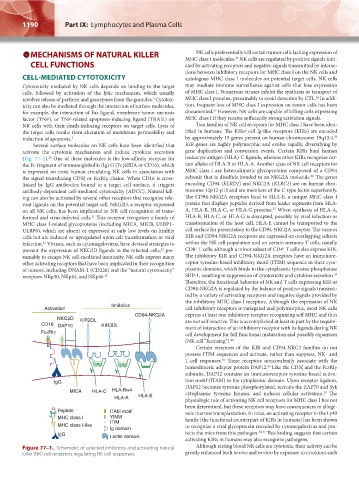
               (Fig. 77–1).  One of these molecules is the low-affinity receptor for   leukocyte antigen (HLA)-C ligands, whereas other KIRs recognize cer-
                        20
               the Fc fragment of immunoglobulin (Ig) G (FcγRIIIA or CD16), which   tain alleles of HLA-B or HLA-A. Another class of NK cell receptors for
               is expressed on most human circulating NK cells in association with   MHC class I are heterodimeric glycoproteins composed of a CD94
                                                                                                                20
               the signal-transducing CD3ξ or FcεRIγ chains. When CD16 is cross-  subunit that is disulfide bonded to an NKG2A molecule.  The genes
               linked  by IgG antibodies bound to a target cell surface, it triggers   encoding CD94 (KLRD1) and NKG2A (KLRC1) are on human chro-
               antibody-dependent cell-mediated cytotoxicity (ADCC). Natural kill-  mosome 12p12-p13 and are members of the C-type lectin superfamily.
               ing can also be activated by several other receptors that recognize rele-  The CD94-NKG2A receptors bind to HLA-E, a unique MHC class I
               vant ligands on the potential target cell. NKG2D, a receptor expressed   protein that displays peptides derived from leader segments from HLA-
                                                                                                   27
               on all NK cells, has been implicated in NK cell recognition of trans-  A, HLA-B, HLA-C, or HLA-G proteins.  When synthesis of HLA-A,
               formed and virus-infected cells.  This receptor recognizes a family of   HLA-B, HLA-C, or HLA-G is disrupted, possibly by viral infection or
                                       21
               MHC class I-related glycoproteins (including MICA, MICB, ULBP1–  transformation of the host cell, HLA-E cannot be transported to the
               ULBP6), which are absent or expressed at only low levels on healthy   cell surface for presentation to the CD94-NKG2A receptor. The various
               cells but are induced or upregulated upon cell transformation or viral   KIR and CD94-NKG2A receptors are expressed on overlapping subsets
               infection.  Viruses, such as cytomegalovirus, have devised strategies to   within the NK cell population and on certain memory T cells, usually
                      21
                                                                                                       +
                                                                         +
               prevent the expression of NKG2D ligands in the infected cells,  pre-  CD8  T cells, although a minor subset of CD4  T cells also express KIR.
                                                              22
               sumably to escape NK cell-mediated immunity. NK cells express many   The inhibitory KIR and CD94-NKG2A receptors have an immunore-
               other activating receptors that have been implicated in their recognition   ceptor tyrosine-based inhibitory motif (ITIM) sequence in their cyto-
               of tumors, including DNAM-1 (CD226) and the “natural cytotoxicity”   plasmic domains, which binds to the cytoplasmic tyrosine phosphatase
                                                                                                                        20
               receptors NKp30, NKp44, and NKp46. 20                  SHP-1, resulting in suppression of cytotoxicity and cytokine secretion.
                                                                      Therefore, the functional behavior of NK and T cells expressing KIR or
                                                                      CD94-NKG2A is regulated by the balance of positive signals transmit-
                                                                      ted by a variety of activating receptors and negative signals provided by
                                                                      the inhibitory MHC class I receptors. Although the expression of NK
                                                                      cell inhibitory receptors is variegated and polymorphic, most NK cells
                                                                      express at least one inhibitory receptor recognizing self MHC and thus
                                                                      are not self-reactive. This is accomplished at least in part by the require-
                                                                      ment of interaction of an inhibitory receptor with its ligands during NK
                                                                      cell development for full functional maturation and possibly expansion
                                                                      (NK cell “licensing”). 28
                                                                          Certain receptors of the KIR and CD94-NKG2 families do not
                                                                      possess ITIM sequences and activate, rather than suppress, NK- and
                                                                      T-cell responses.  These receptors noncovalently associate with the
                                                                                  20
                                                                      homodimeric adapter protein DAP12.  Like the CD3ξ and the FcεRIγ
                                                                                                  29
                                                                      subunits, DAP12 contains an immunoreceptor tyrosine-based activa-
                                                                      tion motif (ITAM) in the cytoplasmic domain. Upon receptor ligation,
                                                                      DAP12 becomes tyrosine phosphorylated, recruits the ZAP70 and Syk
                                                                      cytoplasmic tyrosine kinases, and induces cellular activation.  The
                                                                                                                    29
                                                                      physiologic role of activating NK cell receptors for MHC class I has not
                                                                      been determined, but these receptors may have consequences in alloge-
                                                                      neic marrow transplantation. In mice, an activating receptor in the Ly49
                                                                      family (the functional counterpart of KIRs in humans) has been shown
                                                                      to recognize a viral glycoprotein encoded by cytomegalovirus and pro-
                                                                      tects the mice from this pathogen. 30,31  This finding suggests that certain
                                                                      activating KIRs in humans may also recognize pathogens.
                                                                          Although resting blood NK cells are cytotoxic, their activity can be
               Figure 77–1.  Schematic of selected inhibitory and activating natural
               killer (NK) cell receptors regulating NK cell responses.  greatly enhanced both in vivo and in vitro by exposure to cytokines such


          Kaushansky_chapter 77_p1189-1194.indd   1190                                                                  9/21/15   11:22 AM

