


Page 1221 - Williams Hematology ( PDFDrive )
P. 1221
1196           Part IX:  Lymphocytes and Plasma Cells                                                                                                                Chapter 78:  Lymphocyte and Plasma Cell Disorders           1197


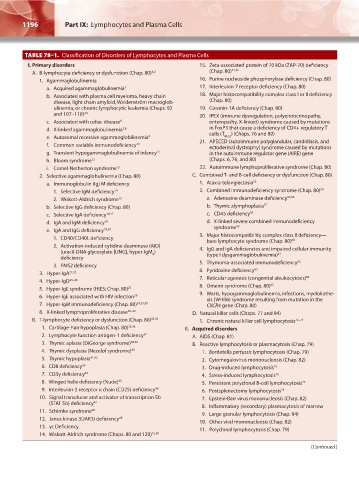
                TABLE 78–1.  Classification of Disorders of Lymphocytes and Plasma Cells
                 I. Primary disorders                                      15.    Zeta-associated protein of 70 kDa (ZAP-70) deficiency
                   A.  B-lymphocyte deficiency or dysfunction (Chap. 80) 1,2  (Chap. 80) 51,52
                     1.  Agammaglobulinemia                                16.   Purine nucleoside phosphorylase deficiency (Chap. 80)
                       a.  Acquired agammaglobulinemia 3                   17.   Interleukin-7 receptor deficiency (Chap. 80)
                       b.   Associated with plasma cell myeloma, heavy chain   18.    Major histocompatibility complex class I or II deficiency
                          disease, light chain amyloid, Waldenström macroglob-  (Chap. 80)
                          ulinemia, or chronic lymphocytic leukemia (Chaps. 92   19.   Coronin-1A deficiency (Chap. 80)
                          and 107–110) 4,5                                 20.    IPEX (immune dysregulation, polyendocrinopathy,
                       c.   Associated with celiac disease 6                  enteropathy, X-linked) syndrome caused by mutations
                       d.   X-linked agammaglobulinemia 7,8                   in FoxP3 that cause a deficiency of CD4+ regulatory T
                       e.  Autosomal recessive agammoglobilinemia 9           cells (T REGs ) (Chaps. 76 and 80)
                       f.  Common variable immunodeficiency 10             21.    APECED (autoimmune polyglandular, candidiasis, and
                                                                              ectodermal dystrophy) syndrome caused by mutations
                       g.  Transient hypogammaglobulinemia of infancy 11      in the autoimmune regulator gene (AIRE) gene
                       h.  Bloom syndrome 12                                  (Chaps. 6, 76, and 80)
                       i.  Comel-Netherton syndrome 13                     22.   Autoimmune lymphoproliferative syndrome (Chap. 80)
                     2.  Selective agammaglobulinemia (Chap. 80)        C.   Combined T- and B-cell deficiency or dysfunction (Chap. 80)
                       a.  Immunoglobulin (Ig) M deficiency                1.   Ataxia-telangiectasia 53
                          1.  Selective IgM deficiency 14                  2.   Combined immunodeficiency syndrome (Chap. 80) 54
                          2.  Wiskott-Aldrich syndrome 15                    a.  Adenosine deaminase deficiency 55,56
                       b.  Selective IgG deficiency (Chap. 80)               b.  Thymic alymphoplasia 57
                       c.  Selective IgA deficiency 16,17                    c.  CD45 deficiency 58
                       d.  IgA and IgM deficiency 18                         d.   X-linked severe combined immunodeficiency
                       e.  IgA and IgG deficiency 19,20                         syndrome 59
                          1.  CD40/CD40L deficiency                        3.   Major histocompatibility complex class II deficiency—
                                                                             bare lymphocyte syndrome (Chap. 80)
                                                                                                          60
                          2.   Activation-induced cytidine deaminase (AID)    4.   IgG and IgA deficiencies and impaired cellular immunity
                            (uracil-DNA glycosylate [UNG], hyper-IgM )       (type I dysgammaglobulinemia) 61
                                                           4
                            deficiency
                          3.  PMS2 deficiency                              5.  Thymoma-associated immunodeficiency 62
                     3.  Hyper-IgA 21,22                                   6.  Pyridoxine deficiency 63
                     4.  Hyper-IgD 23–26                                   7.  Reticular agenesis (congenital aleukocytosis) 64
                     5.  Hyper-IgE syndrome (HIES; Chap. 80) 27            8.   Omenn syndrome (Chap. 80) 65
                     6.  Hyper-IgE associated with HIV infection 28        9.   Warts, hypogammaglobulinemia, infections, myelokathe-
                                                                             xis (WHIM) syndrome resulting from mutation in the
                     7.  Hyper-IgM immunodeficiency (Chap. 80) 19,20,29      CXCR4 gene (Chap. 80)
                     8.  X-linked lymphoproliferative disease 30–32     D.  Natural killer cells (Chaps. 77 and 94)
                   B.   T-lymphocyte deficiency or dysfunction (Chap. 80) 33,34  1.   Chronic natural killer cell lymphocytosis 72–74
                      1.  Cartilage-hair hypoplasia (Chap. 80) 35,36  II.   Acquired disorders
                      2.  Lymphocyte function antigen-1 deficiency 37   A.  AIDS (Chap. 81)
                      3.  Thymic aplasia (DiGeorge syndrome) 38,39      B.  Reactive lymphocytosis or plasmacytosis (Chap. 79)
                      4.  Thymic dysplasia (Nezelof syndrome) 40            1.  Bordetella pertussis lymphocytosis (Chap. 79)
                      5.  Thymic hypoplasia 41,42                           2.  Cytomegalovirus mononucleosis (Chap. 82)
                      6.  CD8 deficiency 43                                 3.  Drug-induced lymphocytosis 75
                      7.  CD3γ deficiency 44                                4.  Stress-induced lymphocytosis 76
                      8.  Winged helix deficiency (Nude) 45                 5.  Persistent polyclonal B-cell lymphocytosis 77
                      9.  Interleukin-2 receptor α chain (CD25) deficiency 46  6.  Postsplenectomy lymphocytosis 78
                     10.    Signal transducer and activator of transcription 5b    7.  Epstein-Barr virus mononucleosis (Chap. 82)
                        (STAT 5b) deficiency 47                             8.  Inflammatory (secondary) plasmacytosis of marrow
                     11.   Schimke syndrome 48                              9.  Large granular lymphocytosis (Chap. 94)
                     12.   Janus kinase 3(JAK3) deficiency 49              10.   Other viral mononucleosis (Chap. 82)
                     13.   γc Deficiency                                   11.   Polyclonal lymphocytosis (Chap. 79)
                     14.   Wiskott-Aldrich syndrome (Chaps. 80 and 120) 15,50

                                                                                                                (Continued )


          Kaushansky_chapter 78_p1195-1198.indd   1196                                                                  9/18/15   9:58 AM

