


Page 1438 - Williams Hematology ( PDFDrive )
P. 1438
1412  Part X:  Malignant Myeloid Diseases                        Chapter 88:  Acute Myelogenous Leukemia             1413


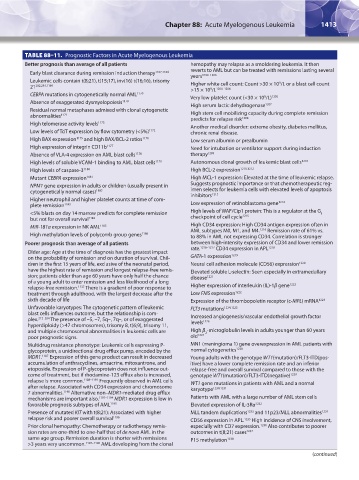
                   TABLE 88–11.  Prognostic Factors in Acute Myelogenous Leukemia
                   Better prognosis than average of all patients          hemopathy may relapse as a smoldering leukemia. It then
                     Early blast clearance during remission induction therapy 1167,1168  reverts to AML but can be treated with remissions lasting several
                                                                          years
                                                                              1199–1203
                      Leukemic cells contain t(8;21), t(15;17), inv(16) t(16;16), trisomy               9
                    21 282,284,1169                                        Higher white cell count: Count >30 × 10 /L or a blast cell count
                                                                                   1204–1206
                                                                                 9
                                                                          >15 × 10 /L
                     CEBPA mutations in cytogenetically normal AML 1170    Very low platelet count (<30 × 10 /L) 1205
                                                                                                   9
                     Absence of exaggerated dysmyelopoiesis 1170          High serum lactic dehydrogenase 1207
                      Residual normal metaphases admixed with clonal cytogenetic
                    abnormalities 1172                                     High stem cell mobilizing capacity during complete remission
                                                                          predicts for relapse risk
                                                                                           1208
                     High telomerase activity levels 1173                  Another medical disorder: extreme obesity, diabetes mellitus,
                     Low levels of TdT expression by flow cytometry (<5%) 1172  chronic renal disease.
                     High BAX expression 1175  and high BAX/BCL-2 ratios 1176    Low serum albumin or prealbumin
                     High expression of integrin CD11b 1177                Need for intubation or ventilator support during induction
                     Absence of VLA-4 expression on AML blast cells 1178  therapy 1209
                     High levels of soluble VCAM-1 binding to AML blast cells 1179    Autonomous clonal growth of leukemic blast cells 1210
                     High levels of caspase-3 1180                        High BCL-2 expression 1211,1212
                     Mutant CEBPA expression 1181                          High MCL-1 expression: Elevated at the time of leukemic relapse.
                     NPM1 gene expression in adults or children (usually present in   Suggests prognostic importance or that chemotherapeutic reg-
                    cytogenetically normal cases) 1182                    imen selects for leukemia cells with elevated levels of apoptosis
                                                                                 1213
                      Higher neutrophil and higher platelet counts at time of com-  inhibitors          1214
                    plete remission 1183                                  Low expression of retinoblastoma gene
                      <5% blasts on day 14 marrow predicts for complete remission      High levels of WAF/Cip1 protein: This is a regulator at the G   1
                                                                                            1215
                    but not for overall survival 1184                     checkpoint of cell cycle
                     MiR-181a expression in NK AML 1185                    High CD34 expression: High CD34 antigen expression often in
                                                                                                 1216
                     High methylation levels of polycomb group genes 1186  AML subtypes M0, M1, and M4.   Remission rate of 61% vs.
                                                                          to 88% in AML not expressing CD34. Correlation is stronger
                   Poorer prognosis than average of all patients          between high-intensity expression of CD34 and lower remission
                                                                          rate. 1216–1217  CD34 expression in APL 1218
                     Older age: Age at the time of diagnosis has the greatest impact    1219
                    on the probability of remission and on duration of survival. Chil-    GATA-1 expression
                    dren in the first 15 years of life, exclusive of the neonatal period,     Neural cell adhesion molecule (CD56) expression 1220
                    have the highest rate of remission and longest relapse-free remis-     Elevated soluble L-selectin: Seen especially in extramedullary
                    sion; patients older than age 60 years have only half the chance   disease 1221
                    of a young adult to enter remission and less likelihood of a long                      1222
                    relapse-free remission. 1137  There is a gradient of poor response to     Higher expression of interleukin (IL)-1β gene
                    treatment through adulthood, with the largest decrease after the     Low FMS expression 1222
                    sixth decade of life                                  Expression of the thrombopoietin receptor (c-MPL) mRNA 1223
                     Unfavorable karyotypes: The cytogenetic pattern of leukemic     FLT3 mutations 1224,1225
                    blast cells influences outcome, but the relationship is com-     Increased angiogenesis/vascular endothelial growth factor
                    plex. 212–284  The presence of –5, –7, 5q–, 7q–, or of exaggerated   levels 1226
                    hyperdiploidy (>47 chromosomes), trisomy 8, t(6;9), trisomy 11,
                    and multiple chromosomal abnormalities in leukemic cells are      High β -microglobulin levels in adults younger than 60 years
                                                                               2
                    poor prognostic signs.                                old 1227
                     Multidrug resistance phenotype: Leukemic cells expressing P-      MN1 (meningioma 1) gene overexpression in AML patients with
                    glycoprotein, a unidirectional drug efflux pump, encoded by the   normal cytogenetics 1228
                    MDR1. 1187  Expression of this gene product can result in decreased      Young adults with the genotype WT1(mutation)/FLT3-ITD(pos-
                    accumulation of anthracyclines, amsacrine, mitoxantrone, and   itive) have a lower complete remission rate and an inferior
                    etoposide. Expression of P-glycoprotein does not influence out-  relapse-free and overall survival compared to those with the
                    come of treatment, but if rhodamine-123 efflux also is increased,   genotype WT1(mutation)/FLT3-ITD(negative) 1229
                    relapse is more common. 1188–1191  Frequently observed in AML cells     WT1 gene mutations in patients with AML and a normal
                    after relapse. Associated with CD34 expression and chromosome   karyotype 1230,1231
                    7 abnormalities. 1190  Alternative non–MDR1-mediated drug efflux
                    mechanisms are important also. 1191–1194  MDR1 expression is low in     Patients with AML with a large number of AML stem cells
                    favorable prognosis subtypes of AML 1195              Elevated expression of IL-3Rα 1232
                     Presence of mutated KIT with t(8;21): Associated with higher      MLL tandem duplications 1233  and 11p23/MLL abnormalities 1234
                    relapse risk and poorer overall survival 1196          CD56 expression in APL. 1235  High incidence of CNS involvement,
                     Prior clonal hemopathy: Chemotherapy or radiotherapy remis-  especially with CD7 expression. 1236  Also contributes to poorer
                    sion rates are one-third to one-half that of de novo AML in the   outcomes in t(8;21) cases 1237
                    same age group. Remission duration is shorter with remissions     P15 methylation 1238
                    >3 years very uncommon. 1197–1198  AML developing from the clonal
                                                                                                                   (continued)


          Kaushansky_chapter 88_p1373-1436.indd   1413                                                                  9/21/15   11:02 AM

