


Page 1863 - Williams Hematology ( PDFDrive )
P. 1863
1838           Part XII:  Hemostasis and Thrombosis                                                                                                      Chapter 112:  Platelet Morphology, Biochemistry, and Function           1839


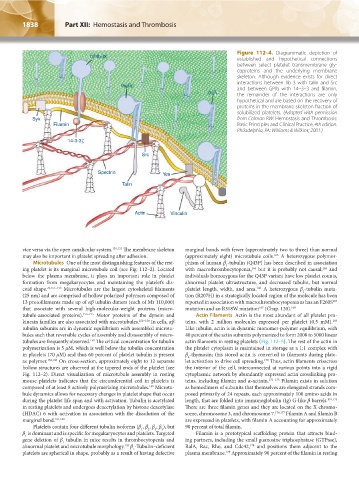
                                                                                       Figure 112–4.  Diagrammatic  depiction  of
                                                                                       established and hypothetical connections
                                                                                       between  select  platelet  transmembrane  gly-
                                                                                       coproteins  and  the  underlying  membrane
                                                                                       skeleton. Although evidence exists for direct
                                                a b                                    interactions between IIb 3 with talin and Src
                                                 IIb 3
                                                                                       and between GPIb with 14–3–3 and filamin,
                                                                              a b      the remainder of the interactions are only
                                                                               2 1
                                                                                       hypothetical and are based on the recovery of
                                                                                       proteins in the membrane skeleton fraction of
                                                                                       solubilized platelets.  (Adapted with permission
                                                                                       from Colman RW: Hemostasis and Thrombosis:
                                                                                       Basic Principles and Clinical Practice, 4th edition.
                                                                                       Philadelphia, PA: Williams & Wilkins; 2001.)


               vice versa via the open canalicular system. 101,133  The membrane skeleton   marginal bands with fewer (approximately two to three) than normal
               may also be important in platelet spreading after adhesion.  (approximately eight) microtubule coils.  A heterozygous polymor-
                                                                                                    163
                   Microtubules  One of the most distinguishing features of the rest-  phism of human β -tubulin (Q43P) has been described in association
                                                                                    1
               ing platelet is its marginal microtubule coil (see Fig. 112–2). Located   with  macrothrombocytopenia,  but  it is probably  not causal,  and
                                                                                                                    165
                                                                                            164
               below the plasma membrane, it plays an important role in platelet   individuals homozygous for the Q43P variant have low platelet counts,
               formation from megakaryocytes and maintaining the platelet’s dis-  abnormal platelet ultrastructure, and decreased tubulin, but normal
               coid  shape. 76,151–153  Microtubules are  the largest cytoskeletal  filaments     platelet length, width, and area.  A heterozygous  β -tubulin muta-
                                                                                              166
                                                                                                             1
               (25 nm) and are comprised of hollow polarized polymers composed of   tion (R207H) in a strategically located region of the molecule has been
               13 protofilaments made up of αβ tubulin dimers (each of Mr 110,000)   reported in association with macrothrombocytopenia as has an F260S
                                                                                                                       167
               that associate with several high-molecular-weight proteins (micro-  mutation and an R318W mutation  (Chap. 120). 168
                                                                                               165
               tubule-associated proteins). 153–155  Motor proteins of the dynein and   Actin Filaments  Actin is the most abundant of all platelet pro-
               kinesin families are also associated with microtubules. 156–158  In cells, αβ   teins, with 2 million molecules expressed per platelet (0.5 mM).
                                                                                                                       169
               tubulin subunits are in dynamic equilibrium with assembled microtu-  Like tubulin, actin is in dynamic monomer-polymer equilibrium, with
               bules such that reversible cycles of assembly and disassembly of micro-  40 percent of the actin subunits polymerized to form 2000 to 5000 linear
               tubules are frequently observed.  The critical concentration for tubulin   actin filaments in resting platelets (Fig. 112–5). The rest of the actin in
                                      159
               polymerization is 5 μM, which is well below the tubulin concentration   the platelet cytoplasm is maintained in storage as a 1:1 complex with
               in platelets (70 μM) and thus 60 percent of platelet tubulin is present   β -thymosin; this stored actin is converted to filaments during plate-
                                                                       4
               as polymer. 154,160  On cross-section, approximately eight to 12 separate   let activation to drive cell spreading.  Thus, actin filaments crisscross
                                                                                                170
               hollow structures are observed at the tapered ends of the platelet (see    the interior of the cell, interconnected at various points into a rigid
               Fig. 112–2). Direct visualization of microtubule assembly in resting   cytoplasmic network by abundantly expressed actin crosslinking pro-
               mouse platelets indicates that the circumferential coil in platelets is   teins, including filamin and α-actinin. 171–173  Filamin exists in solution
               composed of at least 8 actively polymerizing microtubules.  Microtu-  as homodimers of subunits that themselves are elongated strands com-
                                                          159
               bule dynamics allows for necessary changes in platelet shape that occur   posed primarily of 24 repeats, each approximately 100 amino acids in
               during the platelet life span and with activation. Tubulin is acetylated   length, that are folded into immunoglobulin (Ig) G-like β barrels. 174,175
               in resting platelets and undergoes deacetylation by histone deacetylase   There are three filamin genes and they are located on the X chromo-
               (HDAC) 6 with activation in association with the dissolution of the   some, chromosome 3, and chromosome 7. 176,177  Filamin A and filamin B
               marginal band. 161,162                                 are expressed in platelets, with filamin A accounting for approximately
                   Platelets contain four different tubulin isoforms (β , β , β , β ), but   90 percent of total filamin.
                                                            4
                                                       1
                                                         2
                                                              5
               β  is dominant and is specific for megakaryocytes and platelets. Targeted   Filamin is a prototypical scaffolding protein that attracts bind-
                1
               gene deletion of β  tubulin in mice results in thrombocytopenia and   ing partners, including the small guanosine triphosphatase (GTPase),
                             1
               abnormal platelet and microtubule morphology.  β -Tubulin–deficient   RalA,  Rac, Rho,  and Cdc42,   and positions  them  adjacent  to  the
                                                  153
                                                                                            178
                                                    1
               platelets are spherical in shape, probably as a result of having defective   plasma membrane.  Approximately 90 percent of the filamin in resting
                                                                                    179
          Kaushansky_chapter 112_p1829-1914.indd   1838                                                                 17/09/15   3:26 pm

