


Page 2066 - Williams Hematology ( PDFDrive )
P. 2066
2040  Part XII:  Hemostasis and Thrombosis           Chapter 120:  Hereditary Qualitative Platelet Disorders         2041


                                                History of Mucocutaneous Hemorrhage

                                                                Platelet Count
                                   Low                                                 Normal
                                     Platelet Size                                        VWF Analysis

                          Small   Normal   Large   Giant                 Abnormal                   Normal
                                                                           VWD
                                    (Chap. 118)
                                                                                    Aggregation Studies
                                                                             ADP, Collagen, Ristocetin, Epinephrine
                                                                               Arachidonic Acid, Thromboxane A 2
                                    Ristocetin Aggregation

                                                     Ristocetin  Collagen Alone  Epinephrine  Multiple  All
                          Normal         Decreased    Alone     Abnormal    Alone    Agonists   Normal
                                            BSS      Abnormal             Abnormal   Abnormal
                                                                                                 Serum
                             MYH9
                                                                                               Prothrombin
                                                                                                 Time
                       Abnormal   Normal                                                        Abnormal
                                                Enhanced       Decreased
                        MYH9     (Chap. 117)   Platelet VWD  Bernard-Soulier                     Scott
                      Syndromes               Type 2B VWD      Syndrome                        Syndrome


                                                            No Primary or Secondary         Primary Wave Present
                                                                   Wave                      No Secondary Wave
                                                                                                   or
                                                                                            Impaired Aggregation
                                                           Glanzmann Thrombasthenia


                                    Granule Defects                                               Secretion/Signaling/
                                                                                                   Activation Defects


                          Dense                                       Receptor    Signal Transduction   TxA 2     Others
                        Grannules                                      Defects        Defects         Production
                                                                      ADP Defect                       Defects
                                                                     TxA 2  Defect                  PLA2 Deficiency
                                                                                                    Cyclooxygenase
                                                                                  GTP-Binding         Deficiency
                                                                                                     Thromboxane
                               -                                                                   Synthase Deficiency

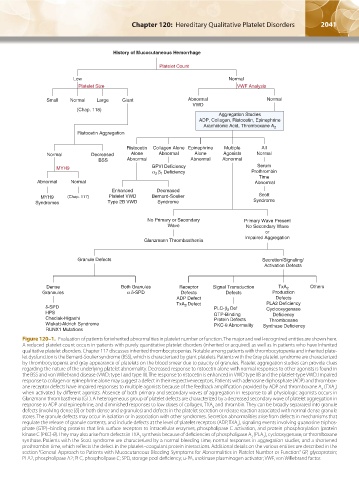
                  Figure 120–1.  Evaluation of patients for inherited abnormalities in platelet number or function. The major and well-recognized entities are shown here.
                  A reduced platelet count occurs in patients with purely quantitative platelet disorders (inherited or acquired) as well as in patients who have inherited
                  qualitative platelet disorders. Chapter 117 discusses inherited thrombocytopenias. Notable among patients with thrombocytopenia and inherited plate-
                  let dysfunction is the Bernard-Soulier syndrome (BSS), which is characterized by giant platelets. Patients with the Gray platelet syndrome are characterized
                  by thrombocytopenia and gray appearance of platelets on the blood smear due to paucity of granules. Platelet aggregation studies can provide clues
                  regarding the nature of the underlying platelet abnormality. Decreased response to ristocetin alone with normal responses to other agonists is found in
                  the BSS and von Willebrand disease (VWD; type I and type III). The response to ristocetin is enhanced in VWD type IIB and the platelet-type VWD. Impaired
                  response to collagen or epinephrine alone may suggest a defect in their respective receptors. Patients with adenosine diphosphate (ADP) and thrombox-
                  ane receptor defects have impaired responses to multiple agonists because of the feedback amplification provided by ADP and thromboxane A  (TXA )
                                                                                                                          2
                                                                                                                      2
                  when activated by different agonists. Absence of both primary and secondary waves of aggregation in response to all physiologic agonists occurs in
                  Glanzmann thrombasthenia (GT). A heterogeneous group of platelet defects are characterized by a decreased secondary wave of platelet aggregation in
                  response to ADP and epinephrine, and diminished responses to low doses of collagen, TXA  and thrombin. They can be broadly separated into granule
                                                                                  2
                  defects (involving dense [δ] or both dense and α granules) and defects in the platelet secretion or release reaction associated with normal dense granule
                  stores. The granule defects may occur in isolation or in association with other syndromes. Secretion abnormalities arise from defects in mechanisms that
                  regulate the release of granule contents, and include defects at the level of platelet receptors (ADP, TXA ), signaling events involving guanosine triphos-
                                                                                          2
                  phate (GTP)–binding proteins that link surface receptors to intracellular enzymes, phospholipase C activation, and protein phosphorylation (protein
                  kinase C [PKC]-θ). They may also arise from defects in TXA  synthesis because of deficiencies of phospholipase A  (PLA ), cyclooxygenase, or thromboxane
                                                                                                   2
                                                         2
                                                                                               2
                  synthase. Patients with the Scott syndrome are characterized by a normal bleeding time, normal responses in aggregation studies, and a shortened
                  prothrombin time, which reflects the defect in the platelet–coagulant protein interactions. Additional details on the various entities are described in the
                  section “General Approach to Patients with Mucocutaneous Bleeding Symptoms for Abnormalities in Platelet Number or Function.” GP, glycoprotein;
                  PLA2, phospholipase A2; PLC, phospholipase C; SPD, storage pool deficiency; u-PA, urokinase plasminogen activator; VWF, von Willebrand factor.

          Kaushansky_chapter 120_p2039-2072.indd   2041                                                                 9/21/15   2:20 PM

