


Page 2229 - Williams Hematology ( PDFDrive )
P. 2229
2204           Part XII:  Hemostasis and Thrombosis                                                                                                               Chapter 129:  Disseminated Intravascular Coagulation           2205


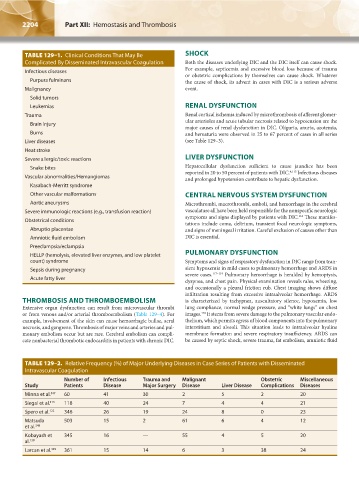
                TABLE 129–1.  Clinical Conditions That May Be         SHOCK
                Complicated By Disseminated Intravascular Coagulation  Both the diseases underlying DIC and the DIC itself can cause shock.
                                                                      For example, septicemia and excessive blood loss because of trauma
                Infectious diseases
                                                                      or obstetric complications by themselves can  cause shock.  Whatever
                  Purpura fulminans                                   the cause of shock, its advent in cases with DIC is a serious adverse
                Malignancy                                            event.
                  Solid tumors
                  Leukemias                                           RENAL DYSFUNCTION
                Trauma                                                Renal cortical ischemia induced by microthrombosis of afferent glomer-
                                                                      ular arterioles and acute tubular necrosis related to hypotension are the
                  Brain injury
                                                                      major causes of renal dysfunction in DIC. Oliguria, anuria, azotemia,
                  Burns                                               and hematuria were observed in 25 to 67 percent of cases in all series
                Liver diseases                                        (see Table  129–3).
                Heat stroke
                Severe allergic/toxic reactions                       LIVER DYSFUNCTION
                  Snake bites                                         Hepatocellular dysfunction sufficient to cause jaundice has been
                                                                      reported in 20 to 50 percent of patients with DIC. 4,115  Infectious diseases
                Vascular abnormalities/Hemangiomas                    and prolonged hypotension contribute to hepatic dysfunction.
                  Kasabach-Merritt syndrome
                  Other vascular malformations                        CENTRAL NERVOUS SYSTEM DYSFUNCTION
                  Aortic aneurysms                                    Microthrombi, macrothrombi, emboli, and hemorrhage in the cerebral
                Severe immunologic reactions (e.g., transfusion reaction)  vasculature all have been held responsible for the nonspecific neurologic
                                                                                                            116
                                                                      symptoms and signs displayed by patients with DIC.  These manifes-
                Obstetrical conditions
                                                                      tations include coma, delirium, transient focal neurologic symptoms,
                  Abruptio placentae                                  and signs of meningeal irritation. Careful exclusion of causes other than
                  Amniotic fluid embolism                             DIC is essential.
                  Preeclampsia/eclampsia
                   HELLP (hemolysis, elevated liver enzymes, and low platelet   PULMONARY DYSFUNCTION
                  count) syndrome                                     Symptoms and signs of respiratory dysfunction in DIC range from tran-
                  Sepsis during pregnancy                             sient hypoxemia in mild cases to pulmonary hemorrhage and ARDS in
                                                                      severe cases. 117–119  Pulmonary hemorrhage is heralded by hemoptysis,
                  Acute fatty liver
                                                                      dyspnea, and chest pain. Physical examination reveals rales, wheezing,
                                                                      and occasionally a pleural friction rub. Chest imaging shows diffuse
                                                                      infiltration resulting from excessive intraalveolar hemorrhage. ARDS
               THROMBOSIS AND THROMBOEMBOLISM                         is characterized by tachypnea, auscultatory silence, hypoxemia, low
               Extensive organ dysfunction can result from microvascular thrombi   lung compliance, normal wedge pressure, and “white lungs” on chest
                                                                           120
               or from venous and/or arterial thromboembolism (Table 129–4). For   images.  It stems from severe damage to the pulmonary vascular endo-
               example, involvement of the skin can cause hemorrhagic bullae, acral   thelium, which permits egress of blood components into the pulmonary
               necrosis, and gangrene. Thrombosis of major veins and arteries and pul-  interstitium and alveoli. This situation leads to intraalveolar hyaline
               monary embolism occur but are rare. Cerebral embolism can compli-  membrane formation and severe respiratory insufficiency. ARDS can
               cate nonbacterial thrombotic endocarditis in patients with chronic DIC.  be caused by septic shock, severe trauma, fat embolism, amniotic fluid


                TABLE 129–2.  Relative Frequency (%) of Major Underlying Diseases in Case Series of Patients with Disseminated
                Intravascular Coagulation
                             Number of     Infectious   Trauma and   Malignant                 Obstetric     Miscellaneous
                Study        Patients      Disease      Major Surgery  Disease    Liver Disease  Complications  Diseases
                Minna et al. 347  60       41           30           2            5            2             20
                Siegal et al. 115  118     40           24           7            4            4             21
                Spero et al. 122  346      26           19           24           8            0             23
                Matsuda      503           15           2            61           6            4             12
                et al. 348
                Kobayash et   345          16           —            55           4            5             20
                al. 139
                Larcan et al. 349  361     15           14           6            3            38            24


          Kaushansky_chapter 129_p2199-2220.indd   2204                                                                 17/09/15   3:45 pm

