


Page 2398 - Williams Hematology ( PDFDrive )
P. 2398
2368  Part XIII:  Transfusion Medicine           Chapter 138:  Blood Procurement and Red Cell Transfusion            2369


                  affect calcium levels) used to anticoagulate the donor’s blood while it is in   donor evaluation and testing adds to blood safety in important ways,
                  the cell separator. This type of reaction is managed by slowing the blood   and the medical history is important as illustrated by the 90 percent
                  flow rate through the instrument, which slows the rate of citrate infusion.   reduction in HIV infectivity from the use of donor-selection criteria
                                                                                              17
                  In leukapheresis, donors can be given glucocorticoid and/or G-CSF to   identifying HIV risk behavior.  Tests for transmissible diseases further
                                                                                                          18
                  increase the granulocyte count, and the sedimenting agent hydroxyethyl   reduce the proportion of infectious donors.  Donor deferral regis-
                  starch is used in the cell separator to improve the granulocyte yield. When   tries detect individuals who previously were deferred as blood donors
                  G-CSF and glucocorticoids are used, approximately 60 percent of donors   but who for various reasons attempt to donate again. Currently, the
                  experience side effects, usually myalgia, arthralgia, headache, or flu-like   risk of acquiring a transfusion-transmitted disease ranges from one
                         15
                  symptoms.  The major side effect of hydroxyethyl starch is blood volume   per  150,000/unit  for  hepatitis  B  to  one  per  2,135,000/unit  for  HIV
                  expansion manifested by headache and/or hypertension.  (Table 138–3). Thus, although the blood supply is safer than ever, trans-
                                                                        fusion is not risk free and should be undertaken only after careful consider-
                       LABORATORY TESTING OF DONATED                    ation of the patient’s clinical situation and specific blood component needs.
                     BLOOD                                                 RED CELL TRANSFUSIONS

                  Each unit of whole blood or each apheresis component undergoes a
                  standard battery of tests, including those for blood type, red cell anti-  Red blood cell (RBC) transfusions are indicated to increase oxygen car-
                  bodies (including ABO, Rh, minor antigens), and transmissible diseases     rying capacity in anemic patients. While oxygen extraction and deliv-
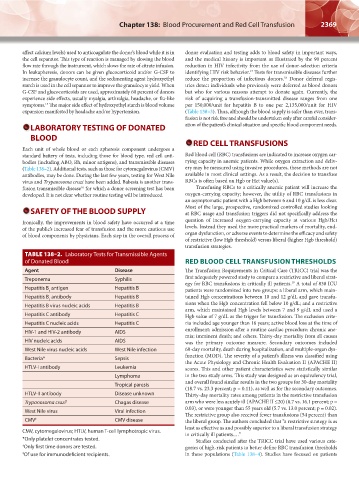
                  (Table 138–2). Additional tests, such as those for cytomegalovirus (CMV)   ery may be measured using invasive procedures, these methods are not
                  antibodies, may be done. During the last few years, testing for West Nile   available in most clinical settings. As a result, the decision to transfuse
                  virus and Trypanosoma cruzi have been added. Babesia is another trans-  RBCs is often based on Hgb or Hct value(s).
                                     16
                  fusion transmissible disease  for which a donor screening test has been   Transfusing RBCs to a critically anemic patient will increase the
                  developed. It is not clear whether routine testing will be introduced.  oxygen-carrying capacity; however, the utility of RBC transfusions in
                                                                        an asymptomatic patient with a Hgb between 6 and 10 g/dL is less clear.
                     SAFETY OF THE BLOOD SUPPLY                         Most of the large, prospective, randomized controlled studies looking
                                                                        at RBC usage and transfusion triggers did not specifically address the
                  Ironically, the improvements in blood safety have occurred at a time   question of increased oxygen-carrying capacity at various Hgb/Hct
                  of the public’s increased fear of transfusion and the more cautious use   levels. Instead they used the more practical markers of mortality, end-
                  of blood components by physicians. Each step in the overall process of   organ dysfunction, or adverse events to determine the efficacy and safety
                                                                        of restrictive (low Hgb threshold) versus liberal (higher Hgb threshold)
                                                                        transfusion strategies.
                   TABLE 138–2.  Laboratory Tests for Transmissible Agents
                   of Donated Blood                                     RED BLOOD CELL TRANSFUSION THRESHOLDS
                   Agent                         Disease                The Transfusion Requirements in Critical Care (TRICC) trial was the
                   Treponema                     Syphilis               first adequately powered study to compare a restrictive and liberal strat-
                                                                        egy for RBC transfusions in critically ill patients.  A total of 838 ICU
                                                                                                            19
                   Hepatitis B  antigen          Hepatitis B
                           s                                            patients were randomized into two groups: a liberal arm, which main-
                   Hepatitis B  antibody         Hepatitis B            tained Hgb concentrations between 10 and 12 g/dL and gave transfu-
                           c
                   Hepatitis B virus nucleic acids  Hepatitis B         sions when the Hgb concentration fell below 10 g/dL; and a restrictive
                                                                        arm, which maintained Hgb levels between 7 and 9 g/dL and used a
                   Hepatitis C antibody          Hepatitis C            Hgb value of 7 g/dL as the trigger for transfusion. The exclusion crite-
                   Hepatitis C nucleic acids     Hepatitis C            ria included age younger than 16 years; active blood loss at the time of
                                                                        enrollment; admission after a routine cardiac procedure; chronic ane-
                   HIV-1 and HIV-2 antibody      AIDS
                                                                        mia; imminent death; and others. Thirty-day mortality from all causes
                   HIV nucleic acids             AIDS                   was the primary outcome measure. Secondary outcomes included
                   West Nile virus nucleic acids  West Nile infection   60-day mortality, death during hospitalization, and multiple-organ dys-
                                                                        function (MOD). The severity of a patient’s illness was classified using
                   Bacteria*                     Sepsis
                                                                        the Acute Physiology and Chronic Health Evaluation II (APACHE II)
                   HTLV-I antibody               Leukemia               scores. This and other patient characteristics were statistically similar
                                                 Lymphoma               in the two study arms. This study was designed as an equivalency trial,
                                                                        and overall found similar results in the two groups for 30-day mortality
                                                 Tropical paresis
                                                                        (18.7 vs. 23.3 percent; p = 0.11), as well as for the secondary outcomes.
                   HTLV-II antibody              Disease unknown        Thirty-day mortality rates among patients in the restrictive transfusion
                   Trypanosoma cruzi †           Chagas disease         arm who were less acutely ill (APACHE II ≤20) (8.7 vs. 16.1 percent; p =
                                                                        0.03), or were younger than 55 years old (5.7 vs. 13.0 percent; p = 0.02).
                   West Nile virus               Viral infection
                                                                        The restrictive group also received fewer transfusions (54 percent) than
                   CMV ‡                         CMV disease            the liberal group. The authors concluded that “a restrictive strategy is as
                                                                        least as effective as and possibly superior to a liberal transfusion strategy
                  CMV, cytomegalovirus; HTLV, human T-cell lymphotropic virus.  in critically ill patients.…”
                  *Only platelet concentrates tested.                       Studies conducted after the TRICC trial have used various cate-
                  † Only first time donors are tested.                  gories of high-risk patients to better define RBC transfusion thresholds
                  ‡ Of use for immunodeficient recipients.              in these populations (Table 138–4). Studies have focused on patients


          Kaushansky_chapter 138_p2365-2380.indd   2369                                                                 9/18/15   11:12 AM

