


Page 273 - Williams Hematology ( PDFDrive )
P. 273
248            Part IV:  Molecular and Cellular Hematology                                                                                                                    Chapter 17:  Signal Transduction Pathways            249


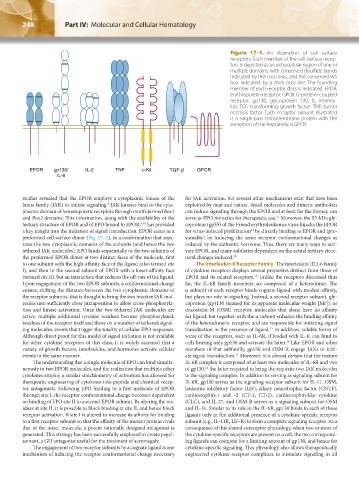
                                                                                     Figure 17–1.  An illustration of cell surface
                                                                                     receptors. Each member of the cell surface recep-
                                                                                     tors is depicted as an extracellular region of one or
                                                                                     multiple domains, with conserved disulfide bonds
                                                                                     indicated by thin cross lines, and the conserved WS
                                                                                     box indicated by a  thick cross line. The  founding
                                                                                     member of each receptor class is indicated. EPOR,
                                                                                     erythropoietin receptor; GPCR, G-protein–coupled
                                                                                     receptor; gp130, glycoprotein 130; IL, interleu-
                                                                                     kin; TGF, transforming growth factor; TNF, tumor
                                                                                     necrosis  factor.  Each  receptor  subunit  illustrated
                                                                                     is a single-pass transmembrane protein with the
                                                                                     exception of the heptahelical GPCR.


               studies revealed that the EPOR employs a cytoplasmic kinase of the   for JAK activation, but several other mechanisms exist that have been
               Janus family (JAK) to initiate signaling.  JAK kinases bind to the cyto-  exploited by man and nature. Small molecules and dimeric antibodies
                                            8
               plasmic domain of hematopoietic receptors through motifs termed Box1   can induce signaling through the EPOR and at least for the former, can
               and Box2 domains. This information, along with the availability of the   serve as EPO mimetics for therapeutic use.  Moreover, the 55-kDa gly-
                                                                                                     11
               tertiary structure of EPOR and of EPO bound to EPOR,  has provided   coprotein (gp55) of the Friend erythroleukemia virus hijacks the EPOR
                                                       9,10
               a key insight into the initiation of signal transduction. EPOR exists as a   for virus-induced proliferation  by directly binding to EPOR and (pre-
                                                                                            12
               preformed cell surface dimer (Fig. 17–1), in a conformation that sepa-  sumably) by inducing the same receptor conformational changes as
               rates the two cytoplasmic domains of the subunits (and hence the two   induced by the authentic hormone. Thus, there are many ways to acti-
               tethered JAK molecules). EPO binds sequentially to the two subunits of   vate EPOR, and many subtleties dependent on the actual tertiary struc-
               the preformed EPOR dimer at two distinct faces of the molecule, first   tural changes induced. 13
               to one subunit with the high-affinity face of the ligand (also termed site   The Interleukin-6 Receptor Family  The interleukin (IL)-6 family
               I), and then to the second subunit of EPOR with a lower-affinity face   of cytokine receptors displays several properties distinct from those of
               (termed site II), but an interaction that reduces the off-rate of the ligand.   EPOR and its related receptors.  Unlike the receptors discussed thus
                                                                                             14
               Upon engagement of the two EPOR subunits, a conformational change   far, the IL-6R family members are composed of a heterodimer. The
               ensues, shifting the distance between the two cytoplasmic domains of   α subunit of each receptor binds cognate ligand with modest affinity,
               the receptor subunits, that is thought to bring the two inactive JAK mol-  but plays no role in signaling. Instead, a second receptor subunit, gly-
               ecules into sufficiently close juxtaposition to allow cross-phosphoryla-  coprotein (gp)130 (named for its apparent molecular weight [Mr]), or
               tion and kinase activation. Once the two tethered JAK molecules are   oncostatin-M  (OSM)  receptor,  molecules  that  alone  have  no  affinity
               active,  multiple  additional  tyrosine  residues  become  phosphorylated,   for ligand, but together with the α subunit enhance the binding affinity
               residues of the receptor itself and those on a number of tethered signal-  of the heterodimeric receptor, and are responsible for initiating signal
               ing molecules, events that trigger the totality of cellular EPO responses.   transduction in the presence of ligand.  In addition, soluble forms of
                                                                                                  15
               Although direct proof for this model of signal initiation is not available   some of the receptors, such as IL-6R, if loaded with IL-6, can bind to
               for other cytokine receptors of this class, it is widely assumed that a   cells bearing only gp130 and activate the latter.  Like EPOR and other
                                                                                                        16
               variety of growth factors, interleukins, and hormones activate cellular   members of that subfamily, gp130 and OSM-R engage JAKs to initi-
               events in the same manner.                             ate signal transduction.  Moreover, it is almost certain that the mature
                                                                                       17
                   The understanding that a single molecule of EPO can bind simulta-  IL-6R complex is composed of at least two molecules of IL-6R and two
               neously to two EPOR molecules, and the realization that multiple other   of gp130,  the latter required to bring the requisite two JAK molecules
                                                                             18
               cytokines employ a similar stoichiometry of activation has allowed for   to the signaling complex. In addition to serving as signaling subunit for
               therapeutic engineering of cytokines into peptide and chemical recep-  IL-6R, gp130 serves as the signaling receptor subunit for IL-11, OSM,
               tor antagonists. Following EPO binding to a first molecule of EPOR   leukemia inhibitory factor (LIF), ciliary neurotrophic factor (CNTF),
               through site I, the receptor conformational change becomes dependent   cardiotrophin-1 and -2 (CT-1, CT-2), cardiotrophin-like cytokine
               on binding of EPO site II to a second EPOR subunit. By altering the res-  (CLC), and IL-27, and OSM-R serves as a signaling subunit for OSM
               idues at site II, it is possible to block binding at site II, and hence block   and IL-31. Similar to its role in the IL-6R, gp130 binds to each of these
               receptor activation. If site I is altered to increase its affinity for binding   ligands only in the additional presence of a cytokine-specific receptor
               to a first receptor subunit so that the affinity of the mutant protein rivals   subunit (e.g., IL-11R, LIF-R) to form a complete signaling receptor. As a
               that of the intact molecule, a potent rationally designed antagonist is   consequence of this shared coreceptor physiology, when two or more of
               generated. This strategy has been successfully employed to create pegvi-  the cytokine-specific receptors are present on a cell, the two correspond-
               somant, a GH antagonist useful for the treatment of acromegaly.  ing ligands can compete for a limiting amount of gp130, and hence for
                   The engagement of two receptor subunits by a cognate ligand is one   cytokine-specific signaling. This physiology also allows therapeutically
               mechanism of inducing the receptor conformational change necessary   engineered cytokine-receptor complexes  to stimulate  signaling  in  all


          Kaushansky_chapter 17_p0247-0256.indd   248                                                                   9/17/15   5:45 PM

