


Page 449 - Williams Hematology ( PDFDrive )
P. 449
424            Part V:  Therapeutic Principles                                                                                                                                             Chapter 27:  Vaccine Therapy            425


                   50                                                 One strategy is to vaccinate patients after chemotherapy, when a state
                                                                      of minimal residual disease has been achieved. Moreover, lymphope-
                        UPN Postvaccine
                                                                      nia induced by chemotherapy can also enhance antitumor immunity by
                   40     6                                           promoting expansion of vaccine-induced effector T cells and minimiz-
                                                                                                   33
                          8                                           ing tumor-induced immune suppression.  In this setting, the profound
                         15
                                                                      lymphopenia from chemotherapy results in release of cytokines, such as
                  Specific lysis (%)  30  16                          IL-15, providing a powerful proliferative drive to lymphocytes, which
                         19
                                                                      could be exploited to increase specific lymphocyte responses to the
                         23
                                                                      vaccine. Moreover, this strategy can eradicate cells that suppress antitu-
                                                                      mor responses such as regulatory T cells, and may overcome inherent
                   20
                                                                      defects in T-cell signaling, processing, or presentation.  In addition,
                                                                                                               33
                                                                      the afferent phase of the immune response could be enhanced by using
                   10                                                 more potent vaccines with novel adjuvants such as toll-like receptor
                                                                      ligands, or by vaccinating donors of transplant recipients who have a
                                                  Maximum level       healthy immune system as opposed to patients who may be immuno-
                                                 reached prevaccine
                                                                                                              41
                    0                                                 compromised either from the cancer or from therapy.  Alternatively,
                      0    12.5        25          50          100    vaccines could be used in combination with agents that inhibit immu-
                                   Effector-to-target ratio           nosuppressive mechanisms, such as immune checkpoint receptors/lig-
                                                                                                   43
                                                                         42
                                                                      ands  and/or deplete regulatory T cells,  to augment the afferent and/
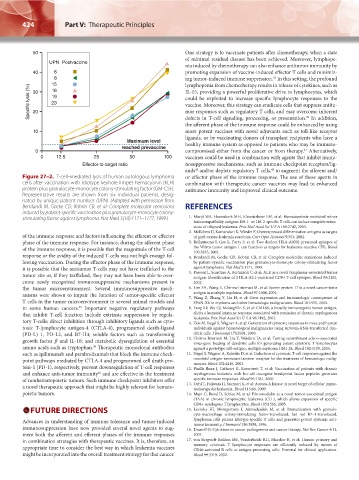
               Figure 27–2.  T-cell–mediated lysis of human autologous lymphoma   or effector phase of the immune response. The use of these agents in
               cells after vaccination with idiotype keyhole limpet hemocyanin (KLH)   combination with therapeutic cancer vaccines may lead to enhanced
               protein plus granulocyte-monocyte colony-stimulating factor (GM-CSF).   antitumor immunity and improved clinical outcome.
               Representative results are shown from six individual patients, desig-
               nated by unique patient number (UPN). (Adapted with permission from
               Bendandi M, Gocke CD, Kobrin CB, et al: Complete molecular remissions   REFERENCES
               induced by patient-specific vaccination plus granulocyte-monocyte colony-
               stimulating factor against lymphoma. Nat Med 5(10):1171–1177, 1999.)     1.  Marijt WA, Heemskerk MH, Kloosterboer FM, et al: Hematopoiesis-restricted minor
                                                                         histocompatibility antigens HA-1- or HA-2-specific T cells can induce complete remis-
                                                                         sions of relapsed leukemia. Proc Natl Acad Sci U S A 100:2742, 2003.
                                                                        2.  Molldrem JJ, Komanduri K, Wieder E: Overexpressed differentiation antigens as targets
               of the immune response and factors influencing the efferent or effector   of graft-versus-leukemia reactions. Curr Opin Hematol 9:503, 2002.
               phase of the immune response. For instance, during the afferent phase     3.  Bellantuono I, Gao L, Parry S, et al: Two distinct HLA-A0201-presented epitopes of
               of the immune response, it is possible that the magnitude of the T-cell   the Wilms tumor antigen 1 can function as targets for leukemia-reactive CTL. Blood
                                                                         100:3835, 2002.
               response or the avidity of the induced T-cells was not high enough fol-    4.  Bendandi M, Gocke CD, Kobrin CB, et al: Complete molecular remissions induced
               lowing vaccination. During the effector phase of the immune response,   by patient-specific vaccination plus granulocyte-monocyte colony-stimulating factor
               it is possible that the antitumor T-cells may not have trafficked to the   against lymphoma. Nat Med 5:1171, 1999.
               tumor site or, if they trafficked, they may not have been able to over-    5.  Passoni L, Scardino A, Bertazzoli C, et al: ALK as a novel lymphoma-associated tumor
                                                                         antigen: Identification of 2 HLA-A2.1-restricted CD8+ T-cell epitopes. Blood 99:2100,
               come newly recognized immunosuppressive mechanisms present in   2002.
               the  tumor  microenvironment.  Several  immunosuppressive mech-    6.  Lim SH, Wang Z, Chiriva-Internati M, et al: Sperm protein 17 is a novel cancer-testis
               anisms were shown to impair the function of tumor-specific effector   antigen in multiple myeloma. Blood 97:1508, 2001.
               T cells in the tumor microenvironment in several animal models and     7.  Wang Z, Zhang Y, Liu H, et al: Gene expression and immunologic consequence of
                                                                         SPAN-Xb in myeloma and other hematologic malignancies. Blood 101:955, 2003.
               in some human cancers.  Important negative regulatory pathways     8.  Yang XF, Wu CJ, Mclaughlin S, et al: CML66, a broadly immunogenic tumor antigen,
                                  39
               that inhibit T-cell function include extrinsic  suppression by regula-  elicits a humoral immune response associated with remission of chronic myelogenous
                                                                         leukemia. Proc Natl Acad Sci U S A 98:7492, 2001.
               tory T-cells; direct inhibition through inhibitory ligands such as cyto-    9.  Zeis M, Siegel S, Wagner A, et al: Generation of cytotoxic responses in mice and human
               toxic  T-lymphocyte antigen-4 (CTLA-4),  programmed  death-ligand     individuals against hematological malignancies using survivin-RNA-transfected den-
               (PD-L) 1, PD-L2, and B7-H4; soluble factors such as transforming   dritic cells. J Immunol 170:5391, 2003.
               growth factor  β and IL-10; and metabolic dysregulation of essential     10.  Chiriva-Internati M, Liu Y, Weidanz JA, et al: Testing recombinant adeno-associated
               amino acids such as tryptophan.  Therapeutic monoclonal antibodies   virus-gene loading of dendritic cells for generating potent cytotoxic T lymphocytes
                                       39
                                                                         against a prototype self-antigen, multiple myeloma HM1.24. Blood 102:3100, 2003.
               such as ipilimumab and pembrolizumab that block the immune check-    11.  Siegel S, Wagner A, Kabelitz D, et al: Induction of cytotoxic T-cell responses against the
               point pathways mediated by CTLA-4 and programmed cell death pro-  oncofetal antigen-immature laminin receptor for the treatment of hematologic malig-
                                                                         nancies. Blood 102:4416, 2003.
               tein-1 (PD-1), respectively, prevent downregulation of T-cell responses     12.  Pinilla-Ibarz J, Cathcart K, Korontsvit T, et al: Vaccination of patients with chronic
               and enhance anti-tumor immunity  and are effective in the treatment   myelogenous leukemia with bcr-abl oncogene breakpoint fusion peptides generates
                                         40
               of nonhematopoietic tumors. Such immune checkpoint inhibitors offer   specific immune responses. Blood 95:1781, 2000.
               a novel therapeutic approach that might be highly relevant for hemato-    13.  Ochi T, Fujiwara H, Suemori K, et al: Aurora-A kinase: A novel target of cellular immu-
                                                                         notherapy for leukemia. Blood 113:66, 2009.
               poietic tumors.                                          14.  Mayr C, Bund D, Schlee M, et al: Fibromodulin as a novel tumor-associated antigen
                                                                         (TAA) in chronic lymphocytic leukemia (CLL), which allows expansion of specific
                                                                         CD8+ autologous T lymphocytes. Blood 105:1566, 2005.
                  FUTURE DIRECTIONS                                     15.  Levitsky HI, Montgomery J,  Ahmadzadeh M, et al:  Immunization with granulo-
                                                                         cyte-macrophage colony-stimulating factor-transduced, but not B7–1-transduced,
               Advances in understanding of immune tolerance and tumor-induced   lymphoma cells primes idiotype-specific T cells and generates potent systemic anti-
                                                                         tumor immunity. J Immunol 156:3858, 1996.
               immunosuppression have now provided several novel agents to aug-    16.  Dranoff G: Cytokines in cancer pathogenesis and cancer therapy. Nat Rev Cancer 4:11,
               ment both the afferent and efferent phases of the immune responses   2004.
               in combination strategies with therapeutic vaccines. It is, therefore, an     17.  von Bergwelt-Baildon MS, Vonderheide RH, Maecker B, et al: Human primary and
               appropriate time to consider the best way in which leukemia vaccines   memory cytotoxic T lymphocyte responses are efficiently induced by means of
                                                                         CD40-activated B cells as antigen-presenting cells: Potential for clinical application.
               might be incorporated into the overall treatment strategy for that cancer.   Blood 99:3319, 2002.


          Kaushansky_chapter 27_p0421-0426.indd   424                                                                   9/17/15   6:02 PM

