


Page 447 - Williams Hematology ( PDFDrive )
P. 447
422            Part V:  Therapeutic Principles                                                                                                                                             Chapter 27:  Vaccine Therapy            423


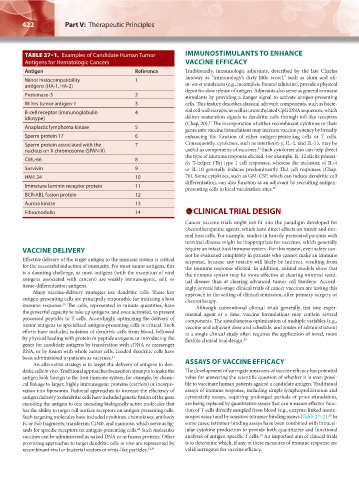
                TABLE 27–1.  Examples of Candidate Human Tumor        IMMUNOSTIMULANTS TO ENHANCE
                Antigens for Hematologic Cancers                      VACCINE EFFICACY
                Antigen                              Reference        Traditionally, immunologic adjuvants, described by the late Charles
                Minor histocompatibility             1                Janeway as “immunology’s dirty little secret,” such as alum and oil-
                antigens (HA-1, HA-2)                                 in-water emulsions (e.g., incomplete Freund adjuvant), provide a physical
                                                                      depot for slow release of antigen. Adjuvants also serve as general immune
                Proteinase-3                         2                stimulants by providing a danger signal to activate antigen-presenting
                Wilms tumor antigen-1                3                cells. This feature describes classical adjuvant components, such as bacte-
                B-cell receptor (immunoglobulin      4                rial cell wall extracts, as well as unmethylated CpG DNA sequences, which
                idiotype)                                             deliver maturation signals to dendritic cells through toll-like receptors
                                                                      (Chap. 20).  The incorporation of either recombinant cytokines or their
                                                                              25
                Anaplastic lymphoma kinase           5                genes into vaccine formulations may increase vaccine potency by broadly
                Sperm protein 17                     6                enhancing the function of either antigen-presenting  cells  or  T  cells.
                Sperm protein associated with the    7                Consequently, cytokines, such as interferon-γ, IL-2, and IL-15, may be
                                                                                              26
                nucleus on X chromosome (SPAN-X)                      useful as components of vaccines.  Such cytokines also can help direct
                                                                      the type of immune response elicited. For example, IL-12 elicits primar-
                CML-66                               8
                                                                      ily T-helper (Th) type 1 cell responses, whereas the inclusion of IL-4
                Survivin                             9                or IL-10 generally induces predominantly Th2 cell responses (Chap.
                HM1.24                               10               76). Some cytokines, such as GM-CSF, which can induce dendritic cell
                                                                      differentiation, can also function as an adjuvant by recruiting antigen-
                Immature laminin receptor protein    11
                                                                      presenting cells to local vaccination sites. 27
                BCR-ABL fusion protein               12
                Aurora kinase                        13
                Fibromodulin                         14                  CLINICAL TRIAL DESIGN
                                                                      Cancer vaccine trials might not fit into the paradigm developed for
                                                                      chemotherapeutic agents, which have direct effects on tumor and nor-
                                                                      mal host cells. For example, studies in heavily pretreated patients with
                                                                      terminal disease might be inappropriate for vaccines, which generally
               VACCINE DELIVERY                                       require an intact host immune system. For this reason, even safety can-
               Effective delivery of the target antigen to the immune system is critical   not be evaluated completely in patients who cannot make an immune
                                                                      response, because any toxicity will likely be indirect, resulting from
               for the successful induction of immunity. For most tumor antigens, this   the immune response elicited. In addition, animal models show that
               is a daunting challenge, as most antigens (with the exception of viral   the immune system may be more effective at clearing minimal resid-
               antigens  associated  with  cancers)  are  weakly  immunogenic,  self,  or    ual disease than at clearing advanced tumor cell burdens. Accord-
               tissue-differentiation antigens.                       ingly, several late-stage clinical trials of cancer vaccines are testing this
                   Many vaccine-delivery strategies use dendritic cells. These key   approach in the setting of clinical remission, after primary surgery or
               antigen-presenting cells are principally responsible for initiating a host   chemotherapy.
                             20
               immune response.  The cells, represented in minute quantities, have   Although conventional clinical trials generally test one exper-
               the powerful capacity to take up antigens, and once activated, to present   imental agent at a time, vaccine formulations may contain several
               processed peptides to T cells. Accordingly, optimizing the delivery of   components. The simultaneous optimization of multiple variables (e.g.,
               tumor antigens to specialized antigen-presenting cells is critical. Such   vaccine and adjuvant dose and schedule, and routes of administration)
               efforts have included isolation of dendritic cells from blood, followed   in a single clinical study often requires the application of novel, more
               by physical loading with protein or peptide antigens, or introducing the   flexible clinical trial design. 28
               genes for candidate antigens by transfection with cDNA or messenger
               RNA, or by fusion with whole tumor cells. Loaded dendritic cells have
               been administered to patients as vaccines. 21
                   An alternative strategy is to target the delivery of antigens to den-  ASSAYS OF VACCINE EFFICACY
               dritic cells in vivo. Traditional approaches focused on attempts to make the   The development of surrogate measures of vaccine efficacy has potential
               antigen look foreign to the host immune system; for example, by chemi-  value for answering the scientific question of whether it is even possi-
               cal linkage to larger, highly immunogenic proteins (carriers) or incorpo-  ble to vaccinate human patients against a candidate antigen. Traditional
               ration into liposomes. Rational approaches to increase the efficiency of   assays of immune response, including simple lymphoproliferation and
               antigen delivery to dendritic cells have included genetic fusion of the gene   cytotoxicity assays, requiring prolonged periods of prior stimulation,
               encoding the antigen to one encoding biologically active molecules that   are being replaced by quantitative assays that can measure effector func-
               has the ability to target cell-surface receptors on antigen-presenting cells.   tion of T cells directly sampled from blood (e.g., enzyme-linked immu-
                                                                                                                      29
               Such targeting molecules have included cytokines, chemokines, antibody   nospot assay) and by sensitive tetramer binding assays (Table 27–2).  In
               Fc or Fab fragments, transferrin, CD40, and mannose, which serve as lig-  some cases, tetramer-binding assays have been combined with intracel-
                                                      22
               ands for specific receptors on antigen-presenting cells.  Such molecular   lular cytokine production to provide both quantitative and functional
                                                                                               30
               vaccines can be administered as naked DNA or as fusion proteins. Other   analyses of antigen-specific T cells.  An important aim of clinical trials
               promising approaches to target dendritic cells in vivo are represented by   is to determine which, if any, of these measures of immune response are
               recombinant viral or bacterial vectors or virus-like particles. 23,24  valid surrogates for vaccine efficacy.


          Kaushansky_chapter 27_p0421-0426.indd   422                                                                   9/17/15   6:02 PM

