


Page 525 - Williams Hematology ( PDFDrive )
P. 525
500            Part VI:  The Erythrocyte                                                                                                                                              Chapter 33:  Erythrocyte Turnover            501


                                     Other heme proteins                10.  Mohanty JG, Nagababu E, Rifkind JM: Red blood cell oxidative stress impairs oxygen
                 Haptoglobin
                              Hemoglobin        Hemopexin                delivery and induces red blood cell aging. Front Physiol 5:84, 2014.
                                                                        11.  Lutz HU, Gianora O, Nater M, et al: Naturally occurring anti-band 3 antibodies bind to
                                                     CD91/LRP            protein rather than to carbohydrate on band 3. J Biol Chem 268(31):23562, 1993.
                                                                        12.  Gattegno L, Bladier D, Vaysse J, et al: Inhibition by carbohydrates and monoclonal anti-
                                    Heme                                 complement receptor type 1, on interactions between senescent human red blood cells
                                                                         and monocytic macrophagic cells. Adv Exp Med Biol 307:329, 1991.
                             CD163                                      13.  Ashby W: The determination of the length of life of transfused blood corpuscles in man.
                                                                         J Exp Med 29(3):267, 1919.
                                                                        14.  Shemin D, Rittenberg D: The life span of the human red blood cell.  J Biol Chem
                                                                         166(2):627, 1946.
                                                                        15.  Berlin NI, Meyer LM, Lazarus M: Life span of the rat red blood cell as determined by
                                                                         glycine-2-c14. Am J Physiol 165(3):465, 1951.
                                                                        16.  Beutler E, Dern RJ, Alving AS: The hemolytic effect of primaquine. Iv. The relationship
                                  Ligand endocytosis and                 of cell age to hemolysis. J Lab Clin Med 44(3):439, 1954.
                                      degradation                       17.  Birgens HS, Hansen OP, Henriksen JH, et al: Quantitation of erythropoiesis in myelo-
                                                                         matosis. Scand J Haematol 22(4):357, 1979.
                                                                        18.  Weinstein IM, Beutler E: The use of cr51 and fe59 in a combined procedure to study
                              Lysosome               CO  Fe 2+  Bilirubin  erythrocyte production and destruction in normal human subjects and in patients with
                                             Heme                        hemolytic or aplastic anemia. J Lab Clin Med 45(4):616, 1955.
                                                                        19.  Gifford SC, Yoshida T, Shevkoplyas SS, et al: A high-resolution, double-labeling method
                                                                         for the study of in vivo red blood cell aging. Transfusion 46(4):578, 2006.
                                                     Biliverdin
                                                                        20.  Beutler E, West C: Measurement of the viability of stored red cells by the single-isotope
                                                                         technique using 51cr. Analysis of validity. Transfusion 24(2):100, 1984.
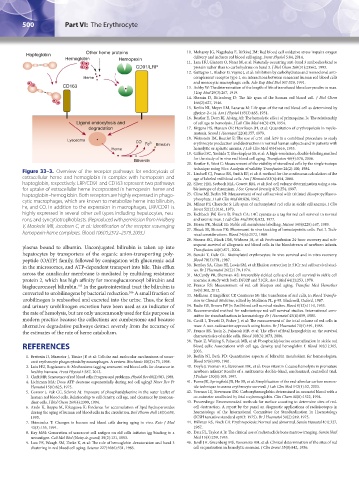
               Figure 33–3.  Overview of the receptor pathways for endocytosis of     21.  Lindsell CJ, Franco RS, Smith EP, et al: A method for the continuous calculation of the
               extracellular heme and hemoglobin in complex with hemopexin and   age of labeled red blood cells. Am J Hematol 83(6):454, 2008.
               haptoglobin, respectively. LRP/CD91 and CD163 represent two pathways     22.  Silver HM, Seebeck MA, Cowett RM, et al: Red cell volume determination using a sta-
               for uptake of extracellular heme incorporated in hemopexin–heme and   ble isotope of chromium. J Soc Gynecol Investig 4(5):254, 1997.
               haptoglobin–hemoglobin. Both receptors are highly expressed in phago-    23.  Cline MJ, Berlin NI: Measurement of red cell survival with tritiated diisopropylfluoro-
               cytic macrophages, which are known to metabolize heme into bilirubin,   phosphate. J Lab Clin Med 60:826, 1962.
               Fe, and CO. In addition to the expression in macrophages, LRP/CD91 is     24.  Milner PF, Charache S: Life span of carbamylated red cells in sickle cell anemia. J Clin
                                                                         Invest 52(12):3161, 1973.
               highly expressed in several other cell types including hepatocytes, neu-    25.  Eschbach JW, Korn D, Finch CA: 14C cyanate as a tag for red cell survival in normal
               rons, and syncytiotrophoblasts. (Reproduced with permission from Hvidberg   and uremic man. J Lab Clin Med 89(4):823, 1977.
               V, Maniecki MB, Jacobsen C, et al.: Identification of the receptor scavenging     26.  Horan PK, Slezak SE: Stable cell membrane labelling. Nature 340(6229):167, 1989.
               hemopexin-heme complexes.  Blood 106(7):2572–2579, 2005.)    27.  Slezak SE, Horan PK: Fluorescent in vivo tracking of hematopoietic cells. Part I. Tech-
                                                                         nical considerations. Blood 74(6):2172, 1989.
                                                                        28.  Strauss RG, Mock DM, Widness JA, et al: Posttransfusion 24-hour recovery and sub-
               plasma bound to albumin. Unconjugated bilirubin is taken up into   sequent survival of allogeneic red blood cells in the bloodstream of newborn infants.
                                                                         Transfusion 44(6):871, 2004.
               hepatocytes by transporters of the organic anion-transporting poly-    29.  Suzuki T, Dale GL: Biotinylated erythrocytes: In vivo survival and in vitro recovery.
               peptide (OATP) family, followed by conjugation with glucuronic acid   Blood 70(3):791, 1987.
               in the microsomes, and ATP-dependent transport into bile. This efflux     30.  Bentley SA, Glass HI, Lewis SM, et al: Elution correction in 51Cr red cell survival stud-
                                                                         ies. Br J Haematol 26(2):179, 1974.
               across the canalicular membrane is mediated by multidrug resistance     31.  McCurdy PR, Sherman AS: Irreversibly sickled cells and red cell survival in sickle cell
               protein 2, which has high affinity for monoglucuronosyl bilirubin and   anemia: A study with both DF32P and 51CR. Am J Med 64(2):253, 1978.
               bisglucuronosyl bilirubin.  In the gastrointestinal tract the bilirubin is     32.  Franco RS: Measurement of red cell lifespan and aging.  Transfus  Med  Hemother
                                  105
                                                                         39(5):302, 2012.
               converted to urobilinogens by bacterial reduction.  A small fraction of     33.  Mollison P, Engelfriet CP, Contreras M: The transfusion of red cells, in Blood Transfu-
                                                   106
               urobilinogen is reabsorbed and excreted into the urine. Thus, the fecal   sion in Clinical Medicine, edited by Mollison PL. p 95. Blackwell, Oxford, 1987.
               and urinary urobilinogen excretion have been used as an indicator of     34.  Eadie GS, Brown IW Jr: Red blood cell survival studies. Blood 8(12):1110, 1953.
               the rate of hemolysis, but are only uncommonly used for this purpose in     35.  Recommended method for radioisotope red-cell survival studies. International com-
                                                                         mittee for standardization in haematology. Br J Haematol 45(4):659, 1980.
               modern practice because the collections are cumbersome and because     36.  Cavill I, Trevett D, Fisher J, et al: The measurement of the total volume of red cells in
               alternative degradative pathways detract severely from the accuracy of   man: A non-radioactive approach using biotin. Br J Haematol 70(4):491, 1988.
               the estimates of the rate of heme catabolism.            37.  Franco RS, Yasin Z, Palascak MB, et al: The effect of fetal hemoglobin on the survival
                                                                         characteristics of sickle cells. Blood 108(3):1073, 2006.
                                                                        38.  Yasin Z, Witting S, Palascak MB, et al: Phosphatidylserine externalization in sickle red
               REFERENCES                                                blood cells: Associations with cell age, density, and hemoglobin f. Blood 102(1):365,
                                                                         2003.
                 1.  Bratosin D, Mazurier J, Tissier JP, et al: Cellular and molecular mechanisms of senes-    39.  Berlin NI, Berk PD: Quantitative aspects of bilirubin metabolism for hematologists.
                  cent erythrocyte phagocytosis by macrophages. A review. Biochimie 80(2):173, 1998.  Blood 57(6):983, 1981.
                 2.  Lutz HU, Bogdanova A: Mechanisms tagging senescent red blood cells for clearance in     40.  Doyle J, Vreman HJ, Stevenson DK, et al: Does vitamin C cause hemolysis in premature
                  healthy humans. Front Physiol 4:387, 2013.             newborn infants? Results of a multicenter double-blind, randomized, controlled trial.
                 3.  Clark MR: Senescence of red blood cells: Progress and problems. Physiol Rev 68(2):503, 1988.  J Pediatr 130(1):103, 1997.
                 4.  Lichtman MA: Does ATP decrease exponentially during red cell aging? Nouv Rev Fr     41.  Furne JK, Springfield JR, Ho SB, et al: Simplification of the end-alveolar carbon monox-
                  Hematol 15(6):625, 1975.                               ide technique to assess erythrocyte survival. J Lab Clin Med 142(1):52, 2003.
                 5.  Connor J, Pak CC, Schroit AJ: Exposure of phosphatidylserine in the outer leaflet of     42.  Vreman HJ, Stevenson DK: Carboxyhemoglobin determined in neonatal blood with a
                  human red blood cells. Relationship to cell density, cell age, and clearance by mononu-  co-oximeter unaffected by fetal oxyhemoglobin. Clin Chem 40(8):1522, 1994.
                  clear cells. J Biol Chem 269(4):2399, 1994.           43.  Proceedings: Recommended methods for surface counting to determine sites of red-
                 6.  Ando K, Beppu M, Kikugawa K: Evidence for accumulation of lipid hydroperoxides   cell destruction. A report by the panel on diagnostic applications of radioisotopes in
                  during the aging of human red blood cells in the circulation. Biol Pharm Bull 18(5):659,   haematology of the International Committee for Standardization in Haematology
                  1995.                                                  (ICSH tentative standard ep8/3: 1975). Br J Haematol 30(2):249, 1975.
                 7.  Shinozuka T: Changes in human red blood cells during aging in vivo.  Keio J Med     44.  Hillman RS, Finch CA: Erythropoiesis: Normal and abnormal. Semin Hematol 4(4):327,
                  43(3):155, 1994.                                       1967.
                 8.  Kay MM: Generation of senescent cell antigen on old cells initiates igg binding to a     45.  Datz FL, Taylor A Jr: The clinical use of radionuclide bone marrow imaging. Semin Nucl
                  neoantigen. Cell Mol Biol (Noisy-le-grand) 39(2):131, 1993.  Med 15(3):239, 1985.
                 9.  Low PS, Waugh SM, Zinke K, et al: The role of hemoglobin denaturation and band 3     46.  Jandl JH, Greenberg MS, Yonemoto RH, et al: Clinical determination of the sites of red
                  clustering in red blood cell aging. Science 227(4686):531, 1985.  cell sequestration in hemolytic anemias. J Clin Invest 35(8):842, 1956.


          Kaushansky_chapter 33_p0495-0502.indd   500                                                                   9/17/15   6:11 PM

