


Page 533 - Williams Hematology ( PDFDrive )
P. 533
508            Part VI:  The Erythrocyte                                                                                                  Chapter 34:  Clinical Manifestations and Classification of Erythrocyte Disorders         509


                TABLE 34–1.  Classification of Anemia (Continued )
                      b.  Red cell membrane disorders (Chap. 46)             d.   Porphyrias (congenital erythropoietic and hepatoery-
                         (1)   Cytoskeletal membrane disorders (hereditary     thropoietic porphyrias, rarely congenital erythropoi-
                           spherocytosis, elliptocytosis, pyropoikilocytosis)  etic protoporphyria [Chap. 58])
                         (2)   Lipid membrane disorders (hereditary abetalipo-  C.  Blood loss and blood redistribution
                           proteinemia, hereditary stomatocytosis, etc.)   1.  Acute blood loss
                         (3)   Membrane disorders associated with abnormali-  2.  Splenic sequestration crisis (Chap. 56)
                           ties of erythrocyte antigens (McLeod syndrome, Rh
                           deficiency syndromes, etc.)                 II.  Relative (increased plasma volume)
                         (4)   Membrane disorders associated with abnormal   A.  Macroglobulinemia (Chap. 109)
                           transport (hereditary xerocytosis)            B.  Pregnancy (Chap. 8)
                      c.   Red cell enzyme defects (pyruvate kinase, 5′ nucleo-  C.  Athletes (Chap. 33)
                        tidase, glucose-6-phosphate dehydrogenase deficien-
                        cies, other red cell enzyme disorders [Chap. 47])  D.  Postflight astronauts (Chap. 33)


               observed in some types of hemolytic anemia, in which the rate of red   thrombopoietin,  there is no evidence that the two molecules crossre-
                                                                                  36
               cell production can be four to six times normal. In erythrocytosis, the   act at the level of their respective receptors.  EPO-driven erythrocytosis
                                                                                                    37
               number of red cells destroyed daily merely causes a slight increase in   is generally not associated with increased platelet production.
               bilirubin levels. The presence of secondary gout and splenomegaly are   The increased viscosity and expansion of vascular space are
               usually signs of a myeloproliferative neoplasm rather than of erythrocy-  responsible for many of the signs and symptoms of polycythemia. The
               tosis alone. Although considerable homology exists between EPO and   characteristic  rubor  in patients  with  polycythemia vera  is  caused by
                                                                      excessive deoxygenation of blood flowing sluggishly through dilated
                                                                      cutaneous vessels. Nonspecific symptoms such as headaches, dizziness,
                                  ERYTHROPOIESIS
                                                                      tinnitus, and a reported feeling of fullness of the face and head probably
                            PRODUCTION              DESTRUCTION       are caused by a combination of increased viscosity and vascular dilata-
                                                                      tion. In extreme polycythemia and some specific types of polycythemia
                Stem      Progenitor     Precursor       Mature
                 cell       cells          cells          cells       (e.g., methemoglobinemia; Chap. 50), cyanosis can result from greater
                 pool   BFU-E   CFU-E   Erythroblasts                 than 4 g/dL of deoxygenated hemoglobin (accomplished more easily at
                                                                      higher hemoglobin concentrations [see “blue bloaters” and “pink puff-
                                                                      ers” in Chap. 57]) or greater than 1.5 g/dL of methemoglobin.


                                                                                          transport  (  1  x Hct )
                                                                                       O 2
                                                                                 14              viscosity
                                                                                 12
                                                                                      O  transport
                                                                                        2
                       Receptors                                                 10
                       EPO                                                        8
                GM-CSF                                                          Viscosity relative to H 2 O
                  IL-3
                 IGF-1                                                            6
                 TPO
                  SCF
                                                                                  4
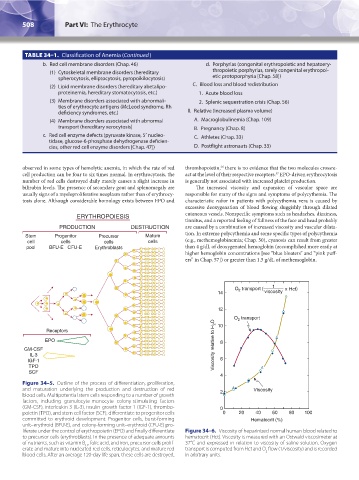
               Figure 34–5.  Outline of the process of differentiation, proliferation,
               and maturation underlying the production and destruction of red    2          Viscosity
               blood cells. Multipotential stem cells responding to a number of growth
               factors, including granulocyte-monocyte colony-stimulating factors
               (GM-CSF), interleukin 3 (IL-3), insulin growth factor 1 (IGF-1), thrombo-  0
               poietin (TPO), and stem cell factor (SCF), differentiate to progenitor cells   0  20  40  60  80  100
               committed to erythroid development. Progenitor cells, burst-forming          Hematocrit (%)
               unit–erythroid (BFU-E), and colony-forming unit–erythroid (CFU-E) pro-
               liferate under the control of erythropoietin (EPO) and finally differentiate   Figure 34–6.  Viscosity of heparinized normal human blood related to
               to precursor cells (erythroblasts). In the presence of adequate amounts   hematocrit (Hct). Viscosity is measured with an Ostwald viscosimeter at
               of nutrients, such as vitamin B , folic acid, and iron, precursor cells prolif-  37°C and expressed in relation to viscosity of saline solution. Oxygen
                                    12
               erate and mature into nucleated red cells, reticulocytes, and mature red   transport is computed from Hct and O  flow (1/viscosity) and is recorded
                                                                                                 2
               blood cells. After an average 120-day life span, these cells are destroyed.  in arbitrary units.


          Kaushansky_chapter 34_p0503-0512.indd   508                                                                   9/17/15   6:12 PM

