


Page 1063 - Clinical Immunology_ Principles and Practice ( PDFDrive )
P. 1063
1026         Part seven  Organ-Specific Inflammatory Disease


                                                               e.g., cytotoxic T lymphocyte antigen-4 (CTLA-4) Ig (abatacept)
                                                                                                            35
                                                               or the CD40-antagonist FFP104, are under investigation.  When
                                                               the  disease  has  already  progressed and  bile  is  accumulating,
                                                               obeticholic acid (OCA), an analog of CDCA with a much higher
                                                               affinity to the farnesoid X receptor, has been shown to decrease
                                                               bile synthesis, promote secretion, and induce liver regeneration
                                                               in animal models. In a phase III trial, OCA administered with
                                                               UDCA or as monotherapy for 12 months resulted in a decrease
                                                               in alkaline phosphatase and total bilirubin levels that differed
                                                               significantly from the changes observed with placebo. 35
                                                                  Ultimately, UDCA represents the cornerstone therapy of PBC.
                                                               Doses  ranging from  13 to 15 mg/kg are currently  used for
                                                               optimum  bile  enrichment  and  in  50%  of patients  normalize
                                                               alkaline phosphatase. Other immunosuppressive treatments
                                                               should be started only in combination with UDCA.
                                                                  Liver transplantation is the ultimate treatment for end-stage
          A
                                                               PBC, with survival rates of 92% and 85% at 1 and 5 years after
                                                               transplant, respectively. Recurrence is common, and its rates seem
                                                               to be influenced by certain immunosuppressive regimens. The
                                                               use of UDCA in cases of recurrence is safe and recommended.

                                                                   KeY COnCePts
                                                                 •  Primary biliary cholangitis (PBC) is a chronic autoimmune cholestatic
                                                                   disease affecting preferentially women in the fifth to sixth decades
                                                                   of life.
                                                                 •  Genetics plays a strong role in PBC pathogenesis, as suggested by
                                                                   familial clustering and the high concordance in monozygotic twins.
                                                                 •  Antimitochondrial antibodies (AMAs) are highly specific for PBC and
                                                                   can be detected in nearly 100% of patients.


                                                                   CLInICaL PearLs
          B
                                                                 •  Fatigue and pruritus represent the most frequently observed symptoms,
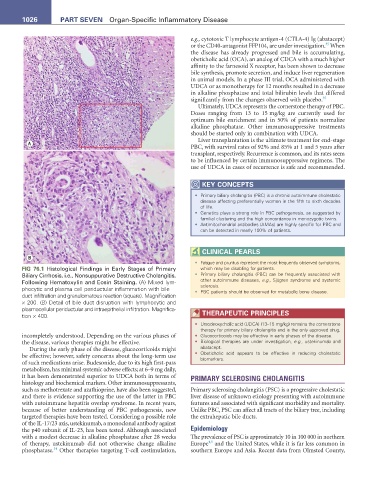
        FIG 76.1  Histological Findings in Early Stages of Primary   which may be disabling for patients.
        Biliary Cirrhosis, i.e., Nonsuppurative Destructive Cholangitis,   •  Primary biliary cholangitis (PBC) can be frequently associated with
        Following Hematoxylin and Eosin Staining. (A) Mixed lym-   other autoimmune diseases,  e.g., Sjögren syndrome and systemic
                                                                   sclerosis.
        phocytic and plasma cell periductular inflammation with bile  •  PBC patients should be observed for metabolic bone disease.
        duct infiltration and granulomatous reaction (square). Magnification
        × 200. (B) Detail of bile duct disruption with lymphocytic and
        plasmacellular periductular and intraepithelial infiltration. Magnifica-
        tion × 400.                                                tHeraPeUtIC PrInCIPLes
                                                                 •  Ursodeoxycholic acid (UDCA) (13–15 mg/kg) remains the cornerstone
                                                                   therapy for primary biliary cholangitis and is the only approved drug.
        incompletely understood. Depending on the various phases of   •  Glucocorticoids may be effective in early phases of the disease.
        the disease, various therapies might be effective.       •  Biological therapies are under investigation,  e.g., ustekinumab and
           During the early phase of the disease, glucocorticoids might   abatacept.
        be effective; however, safety concerns about the long-term use   •  Obeticholic  acid appears  to be effective  in reducing  cholestatic
                                                                   biomarkers.
        of such medications arise. Budesonide, due to its high first-pass
        metabolism, has minimal systemic adverse effects; at 6–9 mg daily,
        it has been demonstrated superior to UDCA both in terms of   PRIMARY SCLEROSING CHOLANGITIS
        histology and biochemical markers. Other immunosuppressants,
        such as methotrexate and azathioprine, have also been suggested,   Primary sclerosing cholangitis (PSC) is a progressive cholestatic
        and there is evidence supporting the use of the latter in PBC   liver disease of unknown etiology presenting with autoimmune
        with autoimmune hepatitis overlap syndrome. In recent years,   features and associated with significant morbidity and mortality.
        because of better understanding of PBC pathogenesis, new   Unlike PBC, PSC can affect all tracts of the biliary tree, including
        targeted therapies have been tested. Considering a possible role   the extrahepatic bile ducts.
        of the IL-17/23 axis, ustekinumab, a monoclonal antibody against
        the p40 subunit of IL-23, has been tested. Although associated   Epidemiology
        with a modest decrease in alkaline phosphatase after 28 weeks   The prevalence of PSC is approximately 10 in 100 000 in northern
                                                                     4,5
        of therapy, ustekinumab did not otherwise change alkaline   Europe  and the United States, while it is far less common in
                   34
        phosphatase.  Other therapies targeting T-cell costimulation,   southern Europe and Asia. Recent data from Olmsted County,

