


Page 1062 - Clinical Immunology_ Principles and Practice ( PDFDrive )
P. 1062
CHaPter 76  Inflammatory Hepatobiliary Diseases              1025


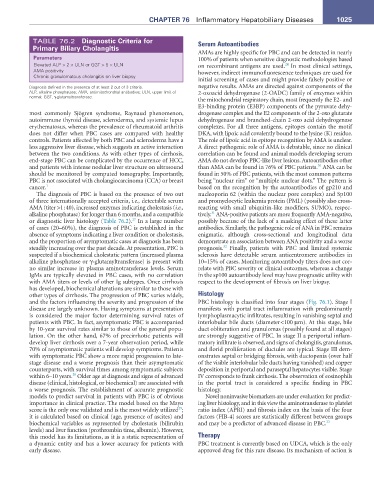
            TABLE 76.2  Diagnostic Criteria for                   Serum Autoantibodies
            Primary Biliary Cholangitis
                                                                  AMAs are highly specific for PBC and can be detected in nearly
            Parameters                                            100% of patients when sensitive diagnostic methodologies based
            Elevated ALP > 2 × ULN or GGT > 5 × ULN               on recombinant antigens are used.  In most clinical settings,
                                                                                              24
            AMA positivity                                        however, indirect immunofluorescence techniques are used for
            Chronic granulomatous cholangitis on liver biopsy
                                                                  initial screening of cases and might provide falsely positive or
           Diagnosis defined in the presence of at least 2 out of 3 criteria.  negative results. AMAs are directed against components of the
           ALP, alkaline phosphatase; AMA, antimitochondrial antibodies; ULN, upper limit of   2-oxoacid dehydrogenase (2-OADC) family of enzymes within
           normal; GGT, γ-glutamyltransferase.
                                                                  the mitochondrial respiratory chain, most frequently the E2- and
                                                                  E3-binding protein (E3BP) components of the pyruvate dehy-
           most commonly Sjögren syndrome, Raynaud phenomenon,    drogenase complex and the E2 components of the 2-oxo glutarate
           autoimmune thyroid disease, scleroderma, and systemic lupus   dehydrogenase and branched-chain 2-oxo acid dehydrogenase
           erythematosus, whereas the prevalence of rheumatoid arthritis   complexes. For all three antigens, epitopes contain the motif
           does not differ when PBC cases are compared with healthy   DKA, with lipoic acid covalently bound to the lysine (K) residue.
           controls. Patients affected by both PBC and scleroderma have a   The role of lipoic acid in epitope recognition by AMA is unclear.
           less aggressive liver disease, which suggests an active interaction   A direct pathogenic role of AMA is debatable, since no clinical
           between the two conditions. As with other types of cirrhosis,   correlation can be found and animal models developing serum
           end-stage PBC can be complicated by the occurrence of HCC,   AMA do not develop PBC-like liver lesions. Autoantibodies other
                                                                                                         30
           and patients with intense nodular liver structure on ultrasound   than AMA can be found in 76% of PBC patients.  ANA can be
           should be monitored by computed tomography. Importantly,   found in 50% of PBC patients, with the most common patterns
           PBC is not associated with cholangiocarcinoma (CCA) or breast   being “nuclear rim” or “multiple nuclear dots.” The pattern is
           cancer. 1                                              based on the recognition by the autoantibodies of gp210 and
             The diagnosis of PBC is based on the presence of two out   nucleoporin 62 (within the nuclear pore complex) and Sp100
           of three internationally accepted criteria, i.e., detectable serum   and promyelocytic leukemia protein (PML) (possibly also cross-
           AMA (titer >1 : 40), increased enzymes indicating cholestasis (i.e.,   reacting with small ubiquitin-like modifiers, SUMO), respec-
                                                                      31
           alkaline phosphatase) for longer than 6 months, and a compatible   tively.  ANA-positive patients are more frequently AMA-negative,
                                            27
           or diagnostic liver histology (Table 76.2).  In a large number   possibly because of the lack of a masking effect of these latter
           of cases (20–60%), the diagnosis of PBC is established in the   antibodies. Similarly, the pathogenic role of ANA in PBC remains
           absence of symptoms indicating a liver condition or cholestasis,   enigmatic, although cross-sectional and longitudinal data
           and the proportion of asymptomatic cases at diagnosis has been   demonstrate an association between ANA positivity and a worse
                                                                          32
           steadily increasing over the past decade. At presentation, PBC is   prognosis.   Finally,  patients  with  PBC  and  limited  systemic
           suspected if a biochemical cholestatic pattern (increased plasma   sclerosis have detectable serum anticentromere antibodies in
           alkaline phosphatase or γ-glutamyltransferase) is present with   10–15% of cases. Monitoring autoantibody titers does not cor-
           no similar increase in plasma aminotransferase levels. Serum   relate with PBC severity or clinical outcomes, whereas a change
           IgMs are typically elevated in PBC cases, with no correlation   in the sp100 autoantibody level may have prognostic utility with
           with AMA titers or levels of other Ig subtypes. Once cirrhosis   respect to the development of fibrosis on liver biopsy.
           has developed, biochemical alterations are similar to those with
           other types of cirrhosis. The progression of PBC varies widely,   Histology
           and the factors influencing the severity and progression of the   PBC histology is classified into four stages (Fig. 76.1). Stage I
           disease are largely unknown. Having symptoms at presentation   manifests with portal tract inflammation with predominantly
           is considered the major factor determining survival rates of   lymphoplasmacytic infiltrates, resulting in vanishing septal and
           patients with PBC. In fact, asymptomatic PBC is accompanied   interlobular bile ducts (diameter <100 µm). At this stage, bile
           by 10-year survival rates similar to those of the general popu-  duct obliteration and granulomas (possibly found at all stages)
           lation. On the other hand, 67% of precirrhotic patients will   are strongly suggestive of PBC. In stage II a periportal inflam-
           develop liver cirrhosis over a 7-year observation period, while   matory infiltrate is observed, and signs of cholangitis, granulomas,
           70% of asymptomatic patients will develop symptoms. Patients   and florid proliferation of ductules are typical. Stage III dem-
           with symptomatic PBC show a more rapid progression to late-  onstrates septal or bridging fibrosis, with ductopenia (over half
           stage disease and a worse prognosis than their asymptomatic   of the visible interlobular bile ducts having vanished) and copper
           counterparts, with survival times among symptomatic subjects   deposition in periportal and paraseptal hepatocytes visible. Stage
                         28
           within 6–10 years.  Older age at diagnosis and signs of advanced   IV corresponds to frank cirrhosis. The observation of eosinophils
           disease (clinical, histological, or biochemical) are associated with   in the portal tract is considered a specific finding in PBC
           a worse prognosis. The establishment of accurate prognostic   histology.
           models to predict survival in patients with PBC is of obvious   Novel noninvasive biomarkers are under evaluation for predict-
           importance in clinical practice. The model based on the Mayo   ing liver histology, and in this view the aminotransferase to platelet
                                                           29
           score is the only one validated and is the most widely utilized ;   ratio index (APRI) and fibrosis index on the basis of the four
           it is calculated based on clinical (age, presence of ascites) and   factors (FIB-4) scores are statistically different between groups
           biochemical  variables  as represented  by  cholestasis  (bilirubin   and may be a predictor of advanced disease in PBC. 33
           levels) and liver function (prothrombin time, albumin). However,
           this model has its limitations, as it is a static representation of   Therapy
           a dynamic entity and has a lower accuracy for patients with     PBC treatment is currently based on UDCA, which is the only
           early disease.                                         approved drug for this rare disease. Its mechanism of action is

