


Page 1136 - Clinical Immunology_ Principles and Practice ( PDFDrive )
P. 1136
1102         Part NiNe  Transplantation


                                                          1. Normal

                                                  2. Antibody-mediated rejection
                                                    Acute antibody-mediated rejection
                                              I.  ATN-like – C4d+, minimal inflammation
                                              II.  Capillary - margination and/or thromboses, C4d+
                                              III. Arterial – v3, C4d+
                                                 Chronic active antibody-mediated rejection
                                    Glomerular double contours and/or peritubular capillary basement membrane multilayering
                                   and/or interstitial fibrosis/tubular atrophy and/or fibrous intimal thickening in arteries, C4d

                                 3. Borderline changes: ‘suspicious’ for acute T-cell-mediated rejection
                                   This category is used when no intimal arteritis is present, but there are foci of tubulitis

                                                   4. T-cell-mediated rejection
                                                     Acute T-cell-mediated rejection
                                  IA.  Cases with significant interstitial infiltration (>25% of parenchyma affected, i2 or i3)
                                     and foci of moderate tubulitis (t2)
                                  IB.  Cases with significant interstitial infiltration (>25% of parenchyma affected, i2 or i3)
                                     and foci of severe tubulitis (t3)
                                  IIA. Cases with mild to moderate intimal arteritis (v1)
                                  IIB. Cases with severe intimal arteritis comprising >25% of the luminal area (v2)
                                  III.  Cases with ‘transmural’ arteritis and/or arterial fibrinoid change and necrosis of medial
                                     smooth muscle cells with accompanying lymphocytic inflammation (v3)

                                  Chronic active T-cell-mediated rejection
                                     ‘Chronic allograft arteriopathy’ (arterial intimal fibrosis with mononuclear cell infiltration in
                                     fibrosis, formation of neo-intima)


                                     5. Interstitial fibrosis and tubular atrophy, no evidence of any specific etiology
                                      I.  Mild interstitial fibrosis and tubular atrophy (<25% of cortical area)
                                      II.  Moderate interstitial fibrosis and tubular atrophy (26–50% of cortical area)
                                      III. Severe interstitial fibrosis and tubular atrophy/loss (>50% of cortical area)
                                        (may include nonspecific vascular and glomerular sclerosis, but severity
                                        graded by tubulointerstitial features)

                                     6. Other: Changes not considered to be due to rejection-acute and/or chronic

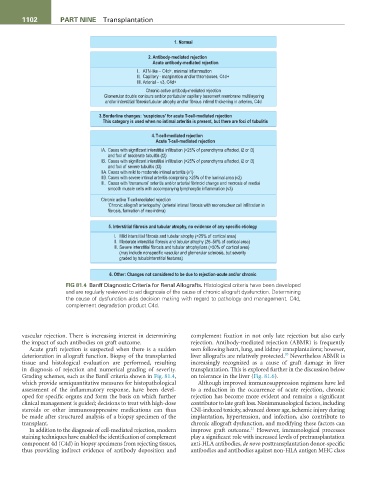
                       FiG 81.4  Banff Diagnostic Criteria for Renal Allografts. Histological criteria have been developed
                       and are regularly reviewed to aid diagnosis of the cause of chronic allograft dysfunction. Determining
                       the cause of dysfunction aids decision making with regard to pathology and management. C4d,
                       complement degradation product C4d.


        vascular rejection. There is increasing interest in determining   complement fixation in not only late rejection but also early
        the impact of such antibodies on graft outcome.        rejection. Antibody-mediated rejection (ABMR) is frequently
           Acute  graft  rejection  is  suspected  when  there  is  a  sudden   seen following heart, lung, and kidney transplantations; however,
                                                                                              20
        deterioration in allograft function. Biopsy of the transplanted   liver allografts are relatively protected.  Nevertheless ABMR is
        tissue and histological evaluation are performed, resulting    increasingly recognized as a cause of graft damage in liver
        in diagnosis of rejection and numerical grading of severity.   transplantation. This is explored further in the discussion below
        Grading schemes, such as the Banff criteria shown in Fig. 81.4,   on tolerance in the liver (Fig. 81.6).
        which provide semiquantitative measures for histopathological   Although improved immunosuppression regimens have led
        assessment of the inflammatory response, have been devel-  to a reduction in the occurrence of acute rejection, chronic
        oped for specific organs and form the basis on which further   rejection has become more evident and remains a significant
        clinical management is guided; decisions to treat with high-dose   contributor to late graft loss. Nonimmunological factors, including
        steroids or other immunosuppressive medications can thus     CNI-induced toxicity, advanced donor age, ischemic injury during
        be made after structured analysis of a biopsy specimen of the     implantation, hypertension,  and infection,  also contribute to
        transplant.                                            chronic allograft dysfunction, and modifying these factors can
                                                                                   21
           In addition to the diagnosis of cell-mediated rejection, modern   improve graft outcome.  However, immunological processes
        staining techniques have enabled the identification of complement   play a significant role with increased levels of pretransplantation
        component 4d (C4d) in biopsy specimens from rejecting tissues,   anti-HLA antibodies, de novo posttransplantation donor-specific
        thus providing indirect evidence of antibody deposition and   antibodies and antibodies against non-HLA antigen MHC class

