


Page 1138 - Clinical Immunology_ Principles and Practice ( PDFDrive )
P. 1138
1104         Part NiNe  Transplantation


                                     Living donor kidney                               Simultaneous pancreas/kidney
                                   Heart-beating donor kidney
                                                                                       Non-heart-beating donor kidney
                     HLA mismatch £ 2                 HLA mismatch ³ 2
                                                                                      Alemtuzumab induction on day 0+1
                                                                                Maintenance with daily mycophenolate and tacrolimus
                    Low intensity protocol           High intensity protocol  B              No steroids


                Basiliximab induction on day 1 +4  Basiliximab induction on day 1 +4
                    Maintenance with daily           Maintenance with daily
                  azathioprine and tacrolimus      mycophenolate and tacrolimus
         A    reducing dose of steriods over 2 months  reducing dose of steriods over 2 months
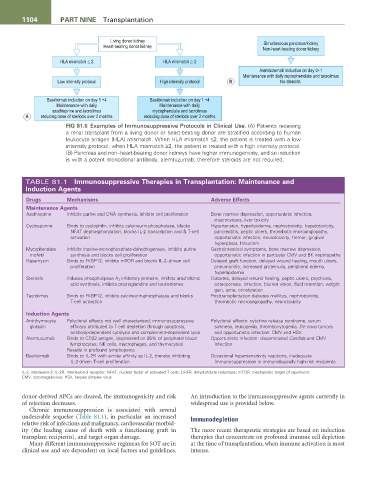
                       FiG 81.6  Examples of Immunosuppressive Protocols in Clinical Use. (A) Patients receiving
                       a renal transplant from a living donor or heart-beating donor are stratified according to human
                       leukocyte antigen (HLA) mismatch. When HLA mismatch ≤2, the patient is treated with a low
                       intensity protocol; when HLA mismatch ≥2, the patient is treated with a high intensity protocol.
                       (B) Pancreas and non–heart-beating donor kidneys have higher immunogenicity, and so induction
                       is with a potent monoclonal antibody, alemtuzumab; therefore steroids are not required.


         TABLE 81.1  immunosuppressive therapies in transplantation: Maintenance and
         induction agents
          Drugs        Mechanisms                                     adverse effects
          Maintenance agents
          Azathioprine  Inhibits purine and DNA synthesis, inhibits cell proliferation  Bone marrow depression, opportunistic infection,
                                                                       macrocytosis, liver toxicity
          Cyclosporine  Binds to cyclophilin, inhibits calcineurin-phosphatase, blocks   Hypertension, hyperlipidemia, nephrotoxicity, hepatotoxicity,
                        NFAT dephosphorylation, blocks IL-2 transcription and & T-cell   pancreatitis, peptic ulcers, thrombotic microangiopathy,
                        activation                                     opportunistic infection, neurotoxicity, tremor, gingival
                                                                       hyperplasia, hirsutism
          Mycophenolate   Inhibits inosine-monophosphate-dehydrogenase, inhibits purine   Gastrointestinal symptoms, bone marrow depression,
           mofetil      synthesis and blocks cell proliferation        opportunistic infection in particular CMV and BK nephropathy
          Rapamycin    Binds to FKBP12, inhibits mTOR and blocks IL-2–driven cell   Delayed graft function, delayed wound healing, mouth ulcers,
                        proliferation                                  pneumonitis, increased proteinuria, peripheral edema,
                                                                       hyperlipidemia
          Steroids     Induces phospholipase A 2  inhibitory proteins, inhibits arachidonic   Diabetes, delayed wound healing, peptic ulcers, psychosis,
                        acid synthesis, inhibits prostaglandins and leukotrienes  osteoporosis, infection, blurred vision, fluid retention, weight
                                                                       gain, acne, constipation
          Tacrolimus   Binds to FKBP12, inhibits calcineurin-phosphatase and blocks   Posttransplantation diabetes mellitus, nephrotoxicity,
                        T-cell activation                              thrombotic microangiopathy, neurotoxicity
          induction agents
          Antithymocyte   Polyclonal effects not well characterized; immunosuppressive   Polyclonal effects: cytokine release syndrome, serum
           globulin     efficacy attributed to T-cell depletion through apoptosis,   sickness, leukopenia, thrombocytopenia. De novo tumors
                        antibody-dependent cytolysis and complement-dependent lysis  and opportunistic infection: CMV and HSV.
          Alemtuzumab  Binds to CD52 antigen, (expressed on 95% of peripheral blood   Opportunistic infection: disseminated Candida and CMV
                        lymphocytes, NK cells, macrophages, and thymocytes)  infection
                       Results in profound lymphopenia
          Basiliximab  Binds to IL-2R with similar affinity as IL-2, thereby inhibiting   Occasional hypersensitivity reactions, inadequate
                        IL-2-driven T-cell proliferation               immunosuppression in immunologically high-risk recipients
        IL-2, interleukin-2; IL-2R, interleukin-2 receptor; NFAT, nuclear factor of activated T cells; DHFR, dihydrofolate reductase; mTOR, mechanistic target of rapamycin;
        CMV, cytomegalovirus; HSV, herpes simplex virus.


        donor-derived APCs are cleared, the immunogenicity and risk   An introduction to the immunosuppressive agents currently in
        of rejection decreases.                                widespread use is provided below.
           Chronic immunosuppression is associated with several
        undesirable  sequelae  (Table  81.1),  in  particular  an  increased   Immunodepletion
        relative risk of infections and malignancy, cardiovascular morbid-
        ity (the leading cause of death with a functioning graft in   The more recent therapeutic strategies are based on induction
        transplant recipients), and target organ damage.       therapies that concentrate on profound immune cell depletion
           Many different immunosuppressive regimens for SOT are in   at the time of transplantation, when immune activation is most
        clinical use and are dependent on local factors and guidelines.   intense.

