


Page 1137 - Clinical Immunology_ Principles and Practice ( PDFDrive )
P. 1137
CHaPter 81  Concepts and Challenges in Organ Transplantation                1103


                                                             APC


                                                                  Rituximab
                                                         MHC:peptide
                                                                  Signal 1             Basiliximab
                                           Belatacept
                                                                           IL-2

                                               Signal 2
                                                      CD28  TCR:CD3  Anti-CD3          IL-2 receptor
                                                                   mAB
                                                        Ca 2+
                                            Cyclosporine                                  Signal 3
                                             Tacrolimus                    Rapamycin
                                rATG                  Calcineurin                  mTOR

                                      CD52                                   Cyclin/CDK
                                                               NF-AT
                                                  Steriods                    Cell    Mycophenolate
                                                            IL-2 transcription  cycle  Azathioprine
                                     Alemtuzumab


                                Immunodepletion
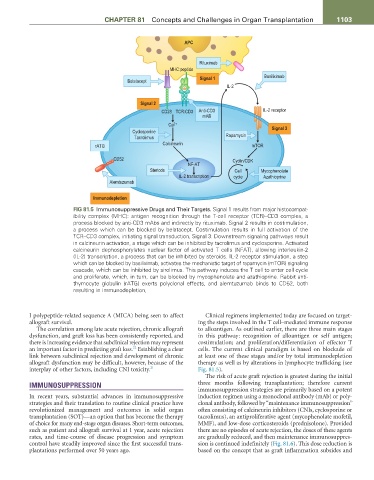
                         FiG 81.5  Immunosuppressive Drugs and Their Targets. Signal 1 results from major histocompat-
                         ibility  complex  (MHC):  antigen  recognition  through  the  T-cell  receptor  (TCR)–CD3  complex,  a
                         process blocked by anti-CD3 mAbs and indirectly by rituximab. Signal 2 results in costimulation,
                         a process which can be blocked by belatacept. Costimulation results in full activation of the
                         TCR–CD3 complex, initiating signal transduction, Signal 3: Downstream signaling pathways result
                         in calcineurin activation, a stage which can be inhibited by tacrolimus and cyclosporine. Activated
                         calcineurin dephosphorylates nuclear factor of activated T cells (NFAT), allowing interleukin-2
                         (IL-2) transcription, a process that can be inhibited by steroids. IL-2 receptor stimulation, a step
                         which can be blocked by basiliximab, activates the mechanistic target of rapamycin (mTOR) signaling
                         cascade, which can be inhibited by sirolimus. This pathway induces the T cell to enter cell cycle
                         and proliferate, which, in turn, can be blocked by mycophenolate and azathioprine. Rabbit anti-
                         thymocyte globulin (rATG) exerts polyclonal effects, and alemtuzumab binds to CD52, both
                         resulting in immunodepletion,


           I polypeptide-related sequence A (MICA) being seen to affect   Clinical regimens implemented today are focused on target-
           allograft survival.                                    ing the steps involved in the T cell–mediated immune response
             The correlation among late acute rejection, chronic allograft   to alloantigen. As outlined earlier, there are three main stages
           dysfunction, and graft loss has been consistently reported, and   in this pathway: recognition of alloantigen or self antigen;
           there is increasing evidence that subclinical rejection may represent   costimulation; and proliferation/differentiation of effector T
                                            22
           an important factor in predicting graft loss.  Establishing a clear   cells. The current clinical paradigm is based on blockade of
           link between subclinical rejection and development of chronic   at least one of these stages and/or by total immunodepletion
           allograft dysfunction may be difficult, however, because of the   therapy as well as by alterations in lymphocyte trafficking (see
           interplay of other factors, including CNI toxicity. 21  Fig. 81.5).
                                                                    The risk of acute graft rejection is greatest during the initial
           IMMUNOSUPPRESSION                                      three months following transplantation; therefore current
                                                                  immunosuppression strategies are primarily based on a potent
           In recent years, substantial advances in immunosuppressive   induction regimen using a monoclonal antibody (mAb) or poly-
           strategies and their translation to routine clinical practice have   clonal antibody, followed by “maintenance immunosuppression”
           revolutionized management and outcomes in solid organ   often consisting of calcineurin inhibitors (CNIs, cyclosporine or
           transplantation (SOT)—an option that has become the therapy   tacrolimus), an antiproliferative agent (mycophenolate mofetil,
           of choice for many end-stage organ diseases. Short-term outcomes,   MMF), and low-dose corticosteroids (prednisolone). Provided
           such as patient and allograft survival at 1 year, acute rejection   there are no episodes of acute rejection, the doses of these agents
           rates,  and  time-course  of  disease  progression  and  symptom   are gradually reduced, and then maintenance immunosuppres-
           control have steadily improved since the first successful trans-  sion is continued indefinitely (Fig. 81.6). This dose reduction is
           plantations performed over 50 years ago.               based on the concept that as graft inflammation subsides and

