


Page 1132 - Clinical Immunology_ Principles and Practice ( PDFDrive )
P. 1132
1098         Part NiNe  Transplantation


                         Trauma of transplantation             antigens can also be significant, particularly in bone marrow
                Organ retrieval, perfusion, and transplantation expression of  transplantation (BMT), where activation of the adaptive immune
           proinflammatory cytokines and recruitment of inflammatory cells into the graft  system of the donor may result in graft-versus-host disease
                                                               (GvHD). These miH antigens may be derived from a wide variety
                                                               of polymorphic proteins and are encoded for a vast array of
                   Presentation of alloantigen to recipient T cells:  genes distributed throughout the genome.
            Direct, indirect, and semidirect presentation of alloantigen to recipient APC
                                                               Signal 1: Recognition of Alloantigen
                                                               Class I MHC molecules are cell surface glycoproteins expressed
                            T-cell activation:
                              TCR signal                       on most nucleated cells and are recognized by the T-cell receptors
                             Costimulation                     (TCRs) of CD8 T cells. Class II MHC molecules are not expressed
                            Cytokine generation                by every cell in the body; rather they are found on DCs, B
                                                               lymphocytes, macrophages, and, in humans, endothelial cells.
                                                               MHC class II molecules are recognized by T cells bearing the
            Cell-mediated immunity  Th17  Humoral immunity     CD4 surface glycoprotein. Expression of both class I and II MHC
                  Th1                          Th2             molecules can be increased or, in the latter case, induced during
                                                               inflammation, in particular by IFN-γ.
                                                                  Class I and II MHC proteins contain a highly polymorphic
                                                               groove or cleft, which can bind peptides, formed on a platform
                                                               of beta strands, flanked by two α helices. Antigen processing
                            T-cell migration:                  within antigen-presenting cells (APCs) results in the production
                 Upregulation of MHC and adhesion molecules attraction  of peptides that can bind in these grooves producing a MHC–
                     of leucocytes into graft through chemotaxis  peptide complex that can be recognized by T cells (Chapter 6).
                                                               These peptides may be of self origin or derived from foreign
                                                               molecules (e.g., from an allograft after transplantation or from
                            Graft destruction:
                Infiltration of macrophages, cytokines, cytotoxic T cells, and  a virus after an infection). In general, peptides derived from
                        antibodies leading to graft injury     molecules present inside the cell are processed and loaded into
                                                               MHC class I molecules, whereas molecules present outside the
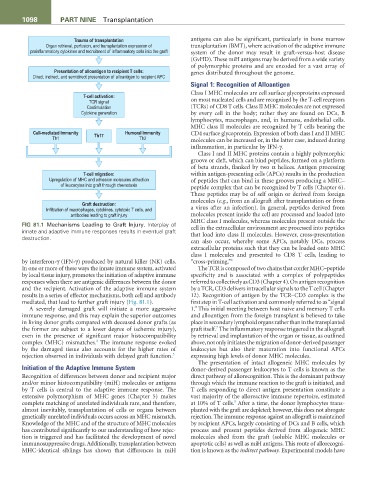
        FiG 81.1  Mechanisms Leading to Graft Injury. Interplay of
        innate and adaptive immune responses results in eventual graft   cell in the extracellular environment are processed into peptides
        destruction.                                           that load into class II molecules. However, cross-presentation
                                                               can also occur, whereby some  APCs, notably DCs, process
                                                               extracellular proteins such that they can be loaded onto MHC
                                                               class I molecules and presented to CD8 T cells, leading to
        by interferon-γ (IFN-γ) produced by natural killer (NK) cells.   “cross-priming.” 6
        In one or more of these ways the innate immune system, activated   The TCR is composed of two chains that confer MHC–peptide
        by local tissue injury, promotes the initiation of adaptive immune   specificity and  is  associated with  a  complex  of polypeptides
        responses when there are antigenic differences between the donor   referred to collectively as CD3 (Chapter 4). On antigen recognition
        and the recipient. Activation of the adaptive immune system   by a TCR, CD3 delivers intracellular signals to the T cell (Chapter
        results in a series of effector mechanisms, both cell and antibody   12). Recognition of antigen by the TCR–CD3 complex is the
        mediated, that lead to further graft injury (Fig. 81.1).  first step in T-cell activation and commonly referred to as “signal
           A severely damaged graft will initiate a more aggressive   1.” This initial meeting between host naive and memory T cells
        immune response, and this may explain the superior outcomes   and alloantigen from the foreign transplant is believed to take
        in living donor grafts compared with deceased donor grafts (as   place in secondary lymphoid organs rather than in the transplanted
                                                                        7
        the former are subject to a lower degree of ischemic injury),   graft itself.  The inflammatory response triggered in the allograft
        even  in  the  presence  of  significant  major  histocompatibility   by retrieval and implantation of the organ or tissue, as outlined
                                 4
        complex (MHC) mismatches.  The immune response evoked   above, not only initiates the migration of donor-derived passenger
        by  the  damaged  tissue  also  accounts  for  the  higher  rates  of   leukocytes but also their maturation into functional  APCs
        rejection observed in individuals with delayed graft function. 5  expressing high levels of donor MHC molecules.
                                                                  The presentation of intact allogeneic MHC molecules by
        Initiation of the Adaptive Immune System               donor-derived passenger leukocytes to T cells is known as the
        Recognition of differences between donor and recipient major   direct pathway of allorecognition. This is the dominant pathway
        and/or minor histocompatibility (miH) molecules or antigens   through which the immune reaction to the graft is initiated, and
        by T cells is central to the adaptive immune response. The   T cells responding to direct antigen presentation constitute a
        extensive polymorphism of MHC genes (Chapter 5) makes   vast majority of the alloreactive immune repertoire, estimated
                                                                              8
        complete matching of unrelated individuals rare, and therefore,   at 10% of T cells.  After a time, the donor lymphocytes trans-
        almost  inevitably,  transplantation  of  cells  or  organs  between   planted with the graft are depleted; however, this does not abrogate
        genetically unrelated individuals occurs across an MHC mismatch.   rejection. The immune response against an allograft is maintained
        Knowledge of the MHC and of the structure of MHC molecules   by recipient APCs, largely consisting of DCs and B cells, which
        has contributed significantly to our understanding of how rejec-  process and present peptides derived from allogeneic MHC
        tion is triggered and has facilitated the development of novel   molecules  shed  from  the  graft  (soluble  MHC  molecules  or
        immunosuppressive drugs. Additionally, transplantation between   apoptotic cells) as well as miH antigens. This route of allorecogni-
        MHC-identical siblings has shown that differences in miH   tion is known as the indirect pathway. Experimental models have

