


Page 1179 - Clinical Immunology_ Principles and Practice ( PDFDrive )
P. 1179
1144         ParT TEN  Prevention and Therapy of Immunological Diseases


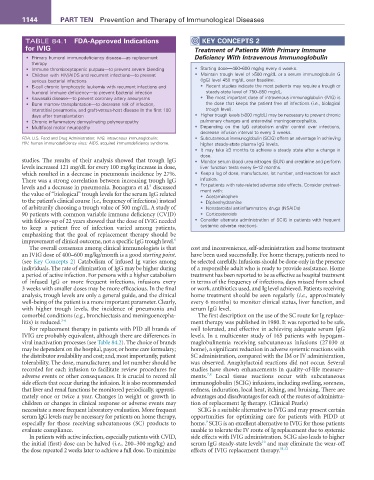
         TABLE 84.1  FDa-approved Indications                      KEY CONCEPTS 2
         for IVIG                                                Treatment of Patients With Primary Immune
          •  Primary humoral immunodeficiency disease—as replacement   Deficiency With Intravenous Immunoglobulin
           therapy
          •  Immune thrombocytopenic purpura—to prevent severe bleeding  •  Starting dose—400–600 mg/kg every 4 weeks.
          •  Children with HIV/AIDS and recurrent infections—to prevent   •  Maintain trough level of >500 mg/dL or a serum immunoglobulin G
           serious bacterial infections                            (IgG) level 450 mg/dL over baseline.
          •  B-cell chronic lymphocytic leukemia with recurrent infections and   •  Recent studies indicate the most patients may require a trough or
           humoral immune deficiency—to prevent bacterial infection  steady-state level of 750–850 mg/dL.
          •  Kawasaki disease—to prevent coronary artery aneurysms  •  The most important dose of intravenous immunoglobulin (IVIG) is
          •  Bone marrow transplantation—to decrease risk of infection,   the dose that keeps the patient free of infections (i.e., biological
           interstitial pneumonia, and graft-versus-host disease in the first 100   trough level).
           days after transplantation                            •  Higher trough levels (>800 mg/dL) may be necessary to prevent chronic
          •  Chronic inflammatory demyelinating polyneuropathy     pulmonary changes and enteroviral meningoencephalitis.
          •  Multifocal motor neuropathy                         •  Depending on the IgG catabolism and/or control over infections,
                                                                   decrease infusion interval to every 3 weeks.
        FDA, U.S. Food and Drug Administration; IVIG, intravenous immunoglobulin;    •  Subcutaneous immunoglobulin (SCIG) offers an advantage in achieving
        HIV, human immunodeficiency virus; AIDS, acquired immunodeficiency syndrome.  higher steady-state plasma IgG levels.
                                                                 •  It may take ≥3 months to achieve a steady state after a change in
                                                                   dose.
        studies. The results of their analysis showed that trough IgG   •  Monitor serum blood urea nitrogen (BUN) and creatinine and perform
        levels increased 121 mg/dL for every 100 mg/kg increase in dose,   liver function tests every 6–12 months.
        which resulted in a decrease in pneumonia incidence by 27%.   •  Keep a log of dose, manufacturer, lot number, and reactions for each
        There was a strong correlation between increasing trough IgG   infusion.
                                                  5
        levels and a decrease in pneumonia. Bonagura et al.  discussed   •  For patients with rate-related adverse side effects. Consider pretreat-
                                                                   ment with:
        the value of “biological” trough levels for the serum IgG related   •  Acetaminophen
        to the patient’s clinical course (i.e., frequency of infections) instead   •  Diphenhydramine
        of arbitrarily choosing a trough value of 500 mg/dL. A study of   •  Nonsteroidal antiinflammatory drugs (NSAIDs)
        90 patients with common variable immune deficiency (CVID)   •  Corticosteroids
        with follow-up of 22 years showed that the dose of IVIG needed   •  Consider alternate administration of SCIG in patients with frequent
        to keep a patient free of infection varied among patients,   systemic adverse reactions.
        emphasizing that the goal of replacement therapy should be
        improvement of clinical outcome, not a specific IgG trough level. 6
           The overall consensus among clinical immunologists is that   cost and inconvenience, self-administration and home treatment
        an IVIG dose of 400–600 mg/kg/month is a good starting point.  have been used successfully. For home therapy, patients need to
        (see Key Concepts 2) Catabolism of infused Ig varies among   be selected carefully. Infusions should be done only in the presence
        individuals. The rate of elimination of IgG may be higher during   of a responsible adult who is ready to provide assistance. Home
        a period of active infection. For persons with a higher catabolism   treatment has been reported to be as effective as hospital treatment
        of infused IgG or more frequent infections, infusions every    in terms of the frequency of infections, days missed from school
        3 weeks with smaller doses may be more efficacious. In the final   or work, antibiotics used, and Ig level achieved. Patients receiving
        analysis, trough levels are only a general guide, and the clinical   home treatment should be seen regularly (i.e., approximately
        well-being of the patient is a more important parameter. Clearly,   every 6 months) to monitor clinical status, liver function, and
        with higher trough levels, the incidence of pneumonia and   serum IgG level.
        comorbid conditions (e.g., bronchiectasis and meningoencepha-  The first description on the use of the SC route for Ig replace-
        litis) is reduced. 3-6                                 ment therapy was published in 1980. It was reported to be safe,
           For replacement therapy in patients with PID all brands of   well tolerated, and effective in achieving adequate serum IgG
        IVIG are probably equivalent, although there are differences in   levels. In a multicenter study of 165 patients with hypogam-
        viral inactivation processes (see Table 84.2). The choice of brands   maglobulinemia receiving subcutaneous infusions (27 030 at
        may be dependent on the hospital, payor, or home care formulary;   home), a significant reduction in adverse systemic reactions with
        the distributor availability and cost; and, most importantly, patient   SC administration, compared with the IM or IV administration,
        tolerability. The dose, manufacturer, and lot number should be   was observed. Anaphylactoid reactions did not occur. Several
        recorded for each infusion to facilitate review procedures for   studies have shown enhancements in quality-of-life measure-
                                                                     7,8
        adverse events or other consequences. It is crucial to record all   ments.  Local tissue reactions occur with subcutaneous
        side effects that occur during the infusion. It is also recommended   immunoglobulin (SCIG) infusions, including swelling, soreness,
        that liver and renal functions be monitored periodically, approxi-  redness, induration, local heat, itching, and bruising. There are
        mately once or twice a year. Changes in weight or growth in   advantages and disadvantages for each of the routes of administra-
        children or changes in clinical response or adverse events may   tion of replacement Ig therapy. (Clinical Pearls)
        necessitate a more frequent laboratory evaluation. More frequent   SCIG is a suitable alternative to IVIG and may present certain
        serum IgG levels may be necessary for patients on home therapy,   opportunities for optimizing care for patients with PIDD at
                                                                    9
        especially for those receiving subcutaneous (SC) products to   home.  SCIG is an excellent alternative to IVIG for those patients
        evaluate compliance.                                   unable to tolerate the IV route of Ig replacement due to systemic
           In patients with active infection, especially patients with CVID,   side effects with IVIG administration. SCIG also leads to higher
                                                                                       10
        the initial (first) dose can be halved (i.e., 200–300 mg/kg) and   serum IgG steady-state levels  and may eliminate the wear-off
        the dose repeated 2 weeks later to achieve a full dose. To minimize   effects of IVIG replacement therapy. 11,12

