


Page 1192 - Clinical Immunology_ Principles and Practice ( PDFDrive )
P. 1192
CHaPTEr 85  Gene Therapy for Primary Immune Deficiency Diseases                 1157


                 γ-Retroviral                                     long-terminal repeats are self-inactivated (SIN vectors). Lentiviral
                  Lentiviral      ψ     Gene                      vectors have several potential advantages over γ-RV, including
                 Foamy viral                                      the ability to more effectively transduce human HSCs in a shorter
                 α-Retroviral       Package as                    period of ex vivo culture, the capacity to carry longer and more
                                  pseudotyped vector
             Administer                       Gene addition to    complex genetic sequences (such as cellular gene enhancers and
              marrow                         stem cells with vector  promoters), and less tendency to insert near the 5′ ends of genes
             conditioning                                         which may decrease risks for trans-activating expression of the
                               Collect, isolate                   adjacent cellular genes. The combination of recombinant cytokines
                                 stem cells                       used to activate the HSCs to facilitate transduction was advanced
                      PID                      ψ  Gene            as factors were identified that acted on the earliest HSCs, including
                     patient     Transplant                       flt-3 ligand and thrombopoietin, combined with c-kit ligand.
                                gene-modified
                                 stem cells                       Role of Cytoreductive Conditioning to
                                          Gene correction of stem cells
                                           with site-specific nuclease  Facilitate Engraftment
                                            and homologous donor  Initial trials of gene therapy for PID did not administer pre-
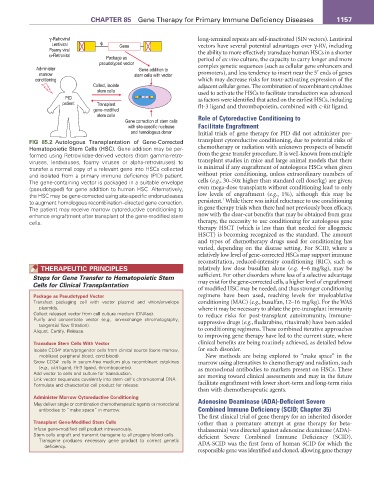
           FIG 85.2  Autologous Transplantation of Gene-Corrected   transplant cytoreductive conditioning, due to potential risks of
           Hematopoietic Stem Cells (HSC). Gene addition may be per-  chemotherapy or radiation with unknown prospects of benefit
           formed using Retroviridae-derived vectors (from gamma-retro-  from the gene transfer procedure. It is well-known from multiple
           viruses, lentiviruses, foamy viruses or alpha-retroviruses) to   transplant studies in mice and large animal models that there
           transfer a normal copy of a relevant gene into HSCs collected   is minimal if any engraftment of autologous HSCs when given
           and isolated from a primary immune deficiency (PID) patient.   without prior conditioning, unless extraordinary numbers of
           The gene-containing vector is packaged in a suitable envelope   cells (e.g., 30–50x higher than standard cell dose/kg) are given;
           (pseudotyped) for gene addition to human HSC. Alternatively,   even mega-dose transplants without conditioning lead to only
           the HSC may be gene-corrected using site-specific endonucleases   low levels of engraftment (e.g., 1%), although this may be
                                                                          1
           to augment homologous recombination–directed gene correction.   persistent.  While there was initial reluctance to use conditioning
           The patient may receive marrow cytoreductive conditioning to   in gene therapy trials when there had not previously been efficacy,
           enhance engraftment after transplant of the gene-modified stem   now with the clear-cut benefits that may be obtained from gene
           cells.                                                 therapy, the necessity to use conditioning for autologous gene
                                                                  therapy  HSCT  (which  is  less  than  that  needed  for  allogeneic
                                                                  HSCT) is becoming recognized as the standard. The amount
                                                                  and types of chemotherapy drugs used for conditioning has
                                                                  varied, depending on the disease setting. For SCID, where a
                                                                  relatively low level of gene-corrected HSCs may support immune
                                                                  reconstitution, reduced-intensity conditioning (RIC), such as
               THEraPEUTIC PrINCIPLES                             relatively low dose busulfan alone (e.g. 4–6 mg/kg), may be
            Steps for Gene Transfer to Hematopoietic Stem         sufficient. For other disorders where less of a selective advantage
            Cells for Clinical Transplantation                    may exist for the gene-corrected cells, a higher level of engraftment
                                                                  of modified HSC may be needed, and thus stronger conditioning
            Package as Pseudotyped Vector                         regimens have been used, reaching levels for myeloablative
            Transfect packaging cell with vector plasmid and virion/envelope   conditioning (MAC) (e.g., busulfan, 12–16 mg/kg). For the WAS
              plasmids.                                           where it may be necessary to ablate the pre-transplant immunity
            Collect released vector from cell culture medium (DNAse).  to reduce risks for post-transplant autoimmunity, immune-
            Purify  and concentrate vector (e.g., ion-exchange  chromatography,   suppressive drugs (e.g., fludarabine, rituximab) have been added
              tangential flow filtration).
            Aliquot. Certify. Release.                            to conditioning regimens. These combined iterative approaches
                                                                  to improving gene therapy have led to the current state, where
            Transduce Stem Cells With Vector                      clinical benefits are being routinely achieved, as detailed below
                     +
            Isolate CD34  stem/progenitor cells from clinical source (bone marrow,   for each disorder.
              mobilized peripheral blood, cord blood).              New methods are being explored to “make space” in the
                    +
            Grow CD34  cells in serum-free medium plus recombinant cytokines   marrow using alternatives to chemotherapy and radiation, such
              (e.g., ckit ligand, flt-3 ligand, thrombopoietin).  as monoclonal antibodies to markers present on HSCs. These
            Add vector to cells and culture for transduction.     are moving toward clinical assessments and may in the future
            Link vector sequences covalently into stem cell’s chromosomal DNA.
            Formulate and characterize cell product for release.  facilitate engraftment with lower short-term and long-term risks
                                                                  than with chemotherapeutic agents.
            administer Marrow Cytoreductive Conditioning
            May deliver single or combination chemotherapeutic agents or monoclonal   Adenosine Deaminase (ADA)-Deficient Severe
              antibodies to “make space” in marrow.               Combined Immune Deficiency (SCID; Chapter 35)
                                                                  The first clinical trial of gene therapy for an inherited disorder
            Transplant Gene-Modified Stem Cells                   (other than a premature attempt at gene therapy for beta-
            Infuse gene-modified cell product intravenously.      thalassemia) was directed against adenosine deaminase (ADA)-
            Stem cells engraft and transmit transgene to all progeny blood cells.  deficient Severe Combined Immune Deficiency (SCID).
              Transgene  produces  necessary  gene  product  to  correct  genetic   ADA-SCID was the first form of human SCID for which the
                deficiency.
                                                                  responsible gene was identified and cloned, allowing gene therapy

