


Page 1197 - Clinical Immunology_ Principles and Practice ( PDFDrive )
P. 1197
1162         ParT TEN  Prevention and Therapy of Immunological Diseases


                    Codon#:  1  2  3  4  5  6   7  8  9          Gene    Sequence-specific
         (1) Wild-type    5’-ATG CCTTGA AATTCG GGGCGA TTGACC-3’            endonuclease  Mutation
              Gene        3’-TAC GGAACT TTAAGC CCCGCT AACTGG-5’  Promoter
                                                                                    1      2     3   4       5
         (2) Mutant       5’-ATG CCTTGA AAT ACG GGGCGA TTGACC-3’
              Gene        3’-TAC GGAACT TTA TGC CCC GCTAAC TGG-5’
                                                                         1   2  34 5 pA         Homology arm flanked,
         (3) Repair template     5’-GA AAT TCG GGGC-3’                                         codon-optimized cDNA/pA
                                                                              Donor
         (4) Corrected    5’-ATG CCTTGA AAT TCG GGG CGATTG ACC-3’
              Gene        3’-TAC GGAACT TTA AGC CCC GCTAAC TGG-5’
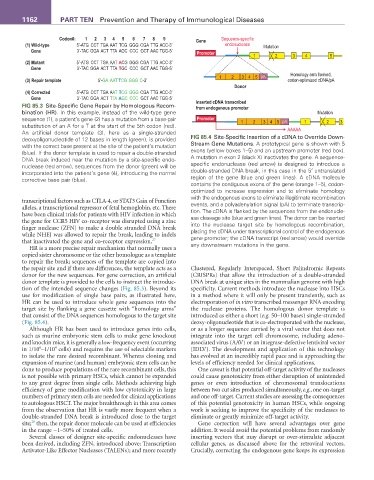
        FIG 85.3  Site-Specific Gene Repair by Homologous Recom-  Inserted cDNA transcribed
                                                                 from endogenous promoter
        bination (HR). In this example, instead of the wild-type gene                                    Mutation
        sequence (1), a patient’s gene (2) has a mutation from a base-pair   Promoter  1  2  3 45 pA  1     2   3
        substitution of an A for a T at the start of the 5th codon (red).
        An artificial donor template (3), here as a single-stranded                            AAAAA
        deoxyoligonucleotide of 12 bases in length (green), is provided   FIG 85.4  Site-Specific Insertion of a cDNA to Override Down-
        with the correct base present at the site of the patient’s mutation   Stream Gene Mutations. A prototypical gene is shown with 5
        (blue). If the donor template is used to repair a double-stranded   exons (yellow boxes 1–5) and an upstream promoter (red box).
        DNA break induced near the mutation by a site-specific endo-  A mutation in exon 2 (black X) inactivates the gene. A sequence-
        nuclease (red arrow), sequences from the donor (green) will be   specific endonuclease (red arrow) is designed to introduce a
        incorporated into the patient’s gene (4), introducing the normal   double-stranded DNA break, in this case in the 5′ untranslated
        corrective base pair (blue).                           region of the gene (blue and green lines). A cDNA molecule
                                                               contains the contiguous exons of the gene (orange 1–5), codon-
                                                               optimized to increase expression and to eliminate homology
                                                               with the endogenous exons to eliminate illegitimate recombination
        transcriptional factors such as CTLA-4, or STAT3 Gain of Function   events, and a polyadenylation signal (pA) to terminate transcrip-
        alleles, a transcriptional repressor of fetal hemoglobin, etc. There   tion. The cDNA is flanked by the sequences from the endonucle-
        have been clinical trials for patients with HIV infection in which   ase cleavage site (blue and green lines). The donor can be inserted
        the gene for CCR5 HIV co-receptor was disrupted using a zinc   into the nuclease target site by homologous recombination,
        finger nuclease (ZFN) to make a double stranded DNA break   placing the cDNA under transcriptional control of the endogenous
        while NHEJ was allowed to repair the break, leading to indels   gene promoter; the cDNA transcript (red arrow) would override
        that inactivated the gene and co-receptor expression. 27  any downstream mutations in the gene.
           HR is a more precise repair mechanism that normally uses a
        copied sister chromosome or the other homologue as a template
        to repair the break; sequences of the template are copied into
        the repair site and if there are differences, the template acts as a   Clustered, Regularly Interspaced, Short Palindromic Repeats
        donor for the new sequences. For gene correction, an artificial   (CRISPRs) that allow the introduction of a double-stranded
        donor template is provided to the cells to instruct the introduc-  DNA break at unique sites in the mammalian genome with high
        tion of the intended sequence changes (Fig. 85.3). Beyond its   specificity. Current methods introduce the nuclease into HSCs
        use for modification of single base pairs, as illustrated here,   in a method where it will only be present transiently, such as
        HR can be used to introduce whole gene sequences into the   electroporation of in vitro transcribed messenger RNA encoding
        target  site by flanking  a gene cassette with “homology  arms”   the nuclease proteins. The homologous donor template is
        that consist of the DNA sequences homologous to the target site     introduced as either a short (e.g. 50–100 bases) single-stranded
        (Fig. 85.4).                                           deoxy-oligonucleotide that is co-electroporated with the nuclease,
           Although HR has been used to introduce genes into cells,   or as a longer sequence carried by a viral vector that does not
        such as murine embryonic stem cells to make gene knockout   integrate into the target cell chromosome, including adeno-
        and knockin mice, it is generally a low-frequency event (occurring   associated virus (AAV) or an integrase-defective lentiviral vector
              6
                   4
        in 1/10 –1/10  cells) and requires the use of selectable markers   (IDLV). The development and application of this technology
        to isolate the rare desired recombinant. Whereas cloning and   has evolved at an incredibly rapid pace and is approaching the
        expansion of murine (and human) embryonic stem cells can be   levels of efficiency needed for clinical applications.
        done to produce populations of the rare recombinant cells, this   One caveat is that potential off-target activity of the nucleases
        is not possible with primary HSCs, which cannot be expanded   could cause genotoxicity from either disruption of unintended
        to any great degree from single cells. Methods achieving high   genes or even introduction of chromosomal translocations
        efficiency of gene modification with low cytotoxicity in large   between two cut sites produced simultaneously, e.g., one on-target
        numbers of primary stem cells are needed for clinical applications   and one off-target. Current studies are assessing the consequences
        to autologous HSCT. The major breakthrough in this area comes   of this potential genotoxicity in human HSCs, while ongoing
        from the observation that HR is vastly more frequent when a   work is seeking to improve the specificity of the nucleases to
        double-stranded DNA break is introduced close to the target   eliminate or greatly minimize off-target activity.
           28
        site;  then, the repair donor molecule can be used at efficiencies   Gene correction will have several advantages over gene
        in the range ~1–50% of treated cells.                  addition. It would avoid the potential problems from randomly
           Several classes of designer site-specific endonucleases have   inserting vectors that may disrupt or over-stimulate adjacent
        been derived, including ZFN, introduced above; Transcription   cellular genes, as discussed above for the retroviral vectors.
        Activator-Like Effector Nucleases (TALENs); and more recently   Crucially, correcting the endogenous gene keeps its expression

