


Page 1205 - Clinical Immunology_ Principles and Practice ( PDFDrive )
P. 1205
CHaPTEr 86  Glucocorticoids            1169


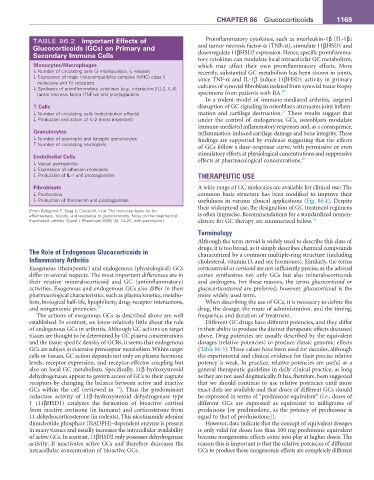
            TABLE 86.2  Important Effects of                        Proinflammatory cytokines, such as interleukin-1β (IL-1β)
            Glucocorticoids (GCs) on Primary and                  and tumor necrosis factor-α (TNF-α), stimulate 11βHSD1 and
            Secondary Immune Cells                                downregulate 11βHSD2 expression. Hence, specific proinflamma-
                                                                  tory cytokines can modulate local intracellular GC metabolism,
            Monocytes/Macrophages                                 which  may  affect  their  own  proinflammatory  effects.  More
            ↓ Number of circulating cells (↓ myelopoiesis, ↓ release)  recently, substantial GC metabolism has been shown in joints,
            ↓ Expression of major histocompatibility complex (MHC) class II   since TNF-α and IL-1β induce 11βHSD1 activity in primary
             molecules and Fc receptors
            ↓ Synthesis of proinflammatory cytokines (e.g., interleukin [IL]-2, IL-6,   cultures of synovial fibroblasts isolated from synovial tissue biopsy
                                                                                             20
             tumor necrosis factor [TNF]-α) and prostaglandins    specimens from patients with RA.
                                                                    In a rodent model of immune-mediated arthritis, targeted
            T Cells                                               disruption of GC signaling in osteoblasts attenuates joint inflam-
                                                                                             21
            ↓ Number of circulating cells (redistribution effects)  mation and cartilage destruction.  These results suggest that
            ↓ Production and action of IL-2 (most important)      under the control of endogenous GCs, osteoblasts modulate
                                                                  immune-mediated inflammatory responses and, as a consequence,
            Granulocytes                                          inflammation-induced cartilage damage and bone integrity. These
            ↓ Number of eosinophil and basophil granulocytes      findings are supported by evidence suggesting that the effects
            ↑ Number of circulating neutrophils
                                                                  of GCs follow a dose–response curve, with permissive or even
            Endothelial Cells                                     stimulatory effects at physiological concentrations and suppressive
                                                                                                    20
            ↓ Vessel permeability                                 effects at pharmacological concentrations.
            ↓ Expression of adhesion molecules
            ↓ Production of IL-1 and prostaglandins               THERAPEUTIC USE

            Fibroblasts                                           A wide range of GC molecules are available for clinical use: The
            ↓ Proliferation                                       common basic structure has been modified to improve their
            ↓ Production of fibronectin and prostaglandins        usefulness in various clinical applications (Fig. 86.4). Despite
                                                                  their widespread use, the designation of GC treatment regimens
           (From Buttgereit F, Saag K, Cutolo M, et al. The molecular basis for the
           effectiveness, toxicity, and resistance to glucocorticoids: focus on the treatment of   is often imprecise. Recommendations for a standardized nomen-
           rheumatoid arthritis. Scand J Rheumatol 2005; 34: 14–21, with permission.)  clature for GC therapy are summarized below. 14
                                                                  Terminology
                                                                  Although the term steroid is widely used to describe this class of
           The Role of Endogenous Glucocorticoids in              drugs, it is too broad, as it simply describes chemical compounds
                                                                  characterized by a common multiple-ring structure (including
           Inflammatory Arthritis                                 cholesterol, vitamin D, and sex hormones). Similarly, the terms
           Exogenous (therapeutic) and endogenous (physiological) GCs   corticosteroid or corticoid are not sufficiently precise, as the adrenal
           differ in several respects. The most important differences are in   cortex synthesizes not only GCs but also mineralocorticoids
           their relative mineralocorticoid and GC (antiinflammatory)   and androgens. For these reasons, the terms glucocorticoid or
           activities. Exogenous and endogenous GCs also differ in their   glucocorticosteroid are preferred; however, glucocorticoid is the
           pharmacological characteristics, such as plasma kinetics, metabo-  more widely used term.
           lism, biological half-life, lipophilicity, drug–receptor interactions,   When describing the use of GCs, it is necessary to define the
           and nongenomic potencies. 19                           drug, the dosage, the route of administration, and the timing,
             The actions of exogenous GCs as described above are well   frequency, and duration of treatment.
           established. In contrast, we know relatively little about the role   Different GC drugs have different potencies, and they differ
           of endogenous GCs in arthritis. Although GC actions on target   in their ability to produce the distinct therapeutic effects discussed
           tissues are thought to be determined by GC plasma concentrations   above. Drug potencies are usually described by the equivalent
           and the tissue-specific density of GCRs, it seems that endogenous   dosages (relative potencies) to produce classic genomic effects
           GCs are subject to extensive prereceptor metabolism. Within target   (Table 86.3). These values have been used for decades, although
           cells or tissues, GC action depends not only on plasma hormone   the experimental and clinical evidence for their precise relative
           levels, receptor expression, and receptor-effector coupling but   potency is weak. In practice, relative potencies are useful as a
           also on local GC metabolism. Specifically, 11β-hydroxysteroid   general therapeutic guideline in daily clinical practice, as long
           dehydrogenases appear to govern access of GCs to their cognate   as they are not used dogmatically. It has, therefore, been suggested
           receptors by changing the balance between active and inactive   that  we  should  continue  to  use  relative  potencies  until  more
                                       19
           GCs within the cell (reviewed in  ). Thus the predominant   exact data are available and that doses of different GCs should
           reductase activity of 11β-hydroxysteroid dehydrogenase type   be expressed in terms of “prednisone equivalent” (i.e., doses of
           1 (11βHSD1) catalyzes the formation of bioactive cortisol   different GCs are expressed as equivalent to milligrams of
           from inactive cortisone (in humans) and corticosterone from   prednisone [or prednisolone, as the potency of prednisone is
           11-dehydrocorticosterone (in rodents). This nicotinamide adenine   equal to that of prednisolone]).
           dinucleotide phosphate (NADPH)–dependent enzyme is present   However, data indicate that the concept of equivalent dosages
           in many tissues and usually increases the intracellular availability   is only valid for doses less than 100 mg prednisone equivalent
           of active GCs. In contrast, 11βHSD2 only possesses dehydrogenase   because nongenomic effects come into play at higher doses. The
           activity: It inactivates active GCs and therefore decreases the   reason this is important is that the relative potencies of different
           intracellular concentration of bioactive GCs.          GCs to produce these nongenomic effects are completely different

