


Page 1202 - Clinical Immunology_ Principles and Practice ( PDFDrive )
P. 1202
1166         ParT TEN  Prevention and Therapy of Immunological Diseases


         TABLE 86.1  Current Knowledge on the relationship Between Clinical Glucocorticoid (GC)
         Dosing and Cellular GC actions
          Terminology                                                                     Cytosolic Glucocorticoid
          (Mg Prednisone                           Genomic actions     Unspecific         receptor (cGCr)–Mediated
          Equivalent Per Day)  Clinical application  (receptor Saturation)  Nongenomic actions  Nongenomic actions
          Low dose (≤7.5)   Maintenance therapy for many   + (<50%)    −                  ?
                             rheumatic diseases
          Medium dose       Initially given in primary   ++ (>50% – <100%)  (+)           (+)
           (>7.5 – ≤30)      chronic rheumatic diseases
          High dose (>30 – ≤100)  Initially given in subacute   ++(+) (almost 100%)  +    +
                             rheumatic diseases
          Very high dose    Initially given in acute and/or   +++ ([almost] 100%)  ++     +(+?)
           (>100 mg)         potentially life-threatening
                             exacerbations of rheumatic
                             diseases
          Pulse therapy (≥250 mg   Particularly severe and/or   +++ (100%)  +++           +(++?)
           for 1 or a few days)  potentially life-threatening
                             forms of rheumatic diseases
        From Buttgereit F, Straub RH, Wehling M, Burmester GR. Glucocorticoids in the treatment of rheumatic diseases. An update on mechanisms of action. Arthritis Rheum 2004;50:
        3408–17, with permission.)

                          Genomic mechanisms            Glucocorticoid     Nongenomic mechanisms


                                                                              mGCR
                          Plasma membrane
                          Cytosol

                                 HSP      HSP                               3            4
                                     cGCR
                                                                        mGCR-mediated  nonspecific
                                          Src                           nongenomic m.  nongenomic m.
                                                    Src        2
                                              HSP
                                                           cGCR-mediated
                                                           nongenomic m.
                           Nucleus
                                                   HSP
                                                1
                                           cGCR-mediated                Antiinflammatory, immunomodulatory
                                             genomic m.                   and other (including unwanted
                            cGCR                                              adverse) effects
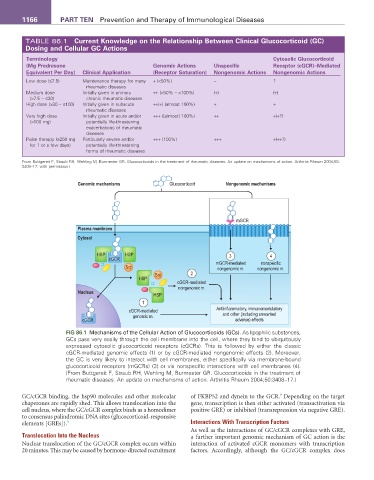
                       FIG 86.1  Mechanisms of the Cellular Action of Glucocorticoids (GCs). As lipophilic substances,
                       GCs pass very easily through the cell membrane into the cell, where they bind to ubiquitously
                       expressed cytosolic glucocorticoid receptors (cGCRs). This is followed by either the classic
                       cGCR-mediated genomic effects (1) or by cGCR-mediated nongenomic effects (2). Moreover,
                       the GC is very likely to interact with cell membranes, either specifically via membrane-bound
                       glucocorticoid receptors (mGCRs) (3) or via nonspecific interactions with cell membranes (4).
                       (From Buttgereit F, Straub RH, Wehling M, Burmester GR. Glucocorticoids in the treatment of
                       rheumatic diseases. An update on mechanisms of action. Arthritis Rheum 2004;50:3408–17.)

                                                                                             9
        GC/cGCR binding, the hsp90 molecules and other molecular   of FKBP52 and dynein to the GCR.  Depending on the target
        chaperones are rapidly shed. This allows translocation into the   gene, transcription is then either activated (transactivation via
        cell nucleus, where the GC/cGCR complex binds as a homodimer   positive GRE) or inhibited (transrepression via negative GRE).
        to consensus palindromic DNA sites (glucocorticoid-responsive
        elements [GREs]). 5                                    Interactions With Transcription Factors
                                                               As well as the interactions of GC/cGCR complexes with GRE,
        Translocation Into the Nucleus                         a further important genomic mechanism of GC action is the
        Nuclear translocation of the GC/cGCR complex occurs within   interaction of activated cGCR monomers with transcription
        20 minutes. This may be caused by hormone-directed recruitment   factors.  Accordingly, although the GC/cGCR complex does

