


Page 1216 - Clinical Immunology_ Principles and Practice ( PDFDrive )
P. 1216
1180         Part tEN  Prevention and Therapy of Immunological Diseases


                  Cyclophosphamide       CH CH CL                         Leflunomide  O
                                              2
                                           2
                                   O   N                                               C  NH         CF
                                     P   CH CH CL                                                      2
                                           2
                                              2
                                      O                                       N
                                   N                                             O     CH 3
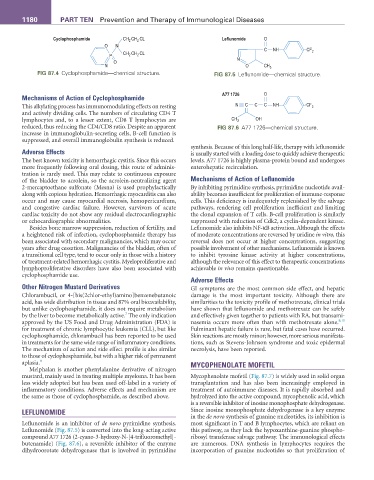
             FIG 87.4  Cyclophosphamide—chemical structure.            FIG 87.5  Leflunomide—chemical structure.

        Mechanisms of Action of Cyclophosphamide                          A77 1726     O
        This alkylating process has immunomodulating effects on resting       N  C  C  C  NH         CF 3
        and actively dividing cells. The numbers of circulating CD4 T
        lymphocytes and, to a lesser extent, CD8 T lymphocytes are           CH 3    OH
        reduced, thus reducing the CD4/CD8 ratio. Despite an apparent   FIG 87.6  A77 1726—chemical structure.
        increase in immunoglobulin-secreting cells, B-cell function is
        suppressed, and overall immunoglobulin synthesis is reduced.
                                                               synthesis. Because of this long half-life, therapy with leflunomide
        Adverse Effects                                        is usually started with a loading dose to quickly achieve therapeutic
        The best known toxicity is hemorrhagic cystitis. Since this occurs   levels. A77 1726 is highly plasma-protein bound and undergoes
        more frequently following oral dosing, this route of adminis-  enterohepatic recirculation.
        tration is rarely used. This may relate to continuous exposure
        of the bladder to acrolein, so the acrolein-neutralizing agent   Mechanisms of Action of Leflunomide
        2-mercaptoethane sulfonate (Mesna) is used prophylactically   By inhibiting pyrimidine synthesis, pyrimidine nucleotide avail-
        along with copious hydration. Hemorrhagic myocarditis can also   ability becomes insufficient for proliferation of immune-response
        occur and may cause myocardial necrosis, hemopericardium,   cells. This deficiency is inadequately replenished by the salvage
        and congestive cardiac failure. However, survivors of acute   pathways, rendering cell proliferation inefficient and limiting
        cardiac toxicity do not show any residual electrocardiographic   the clonal expansion of T cells. B-cell proliferation is similarly
        or echocardiographic abnormalities.                    suppressed with reduction of Cdk2, a cyclin-dependent kinase.
           Besides bone marrow suppression, reduction of fertility, and   Leflunomide also inhibits NF-κB activation. Although the effects
        a heightened risk of infection, cyclophosphamide therapy has   of moderate concentrations are reversed by uridine in vitro, this
        been associated with secondary malignancies, which may occur   reversal  does  not  occur  at  higher  concentrations,  suggesting
        years after drug cessation. Malignancies of the bladder, often of   possible involvement of other mechanisms. Leflunomide is known
        a transitional cell type, tend to occur only in those with a history   to inhibit tyrosine kinase activity at higher concentrations,
        of treatment-related hemorrhagic cystitis. Myeloproliferative and   although the relevance of this effect to therapeutic concentrations
        lymphoproliferative disorders have also been associated with   achievable in vivo remains questionable.
        cyclophosphamide use.
                                                               Adverse Effects
        Other Nitrogen Mustard Derivatives                     GI  symptoms  are  the  most  common  side  effect,  and  hepatic
        Chlorambucil, or 4-[bis(2chlor-ethyl)amino]benzenebutanoic   damage is the most important toxicity.  Although there are
        acid, has wide distribution in tissue and 87% oral bioavailability,   similarities to the toxicity profile of methotrexate, clinical trials
        but unlike cyclophosphamide, it does not require metabolism   have shown that leflunomide and methotrexate can be safely
                                          7
        by the liver to become metabolically active.  The only indication   and effectively given together to patients with RA, but transami-
        approved by the US Food and Drug Administration (FDA) is   nasemia  occurs more often than with  methotrexate alone. 9,10
        for treatment of chronic lymphocytic leukemia (CLL), but like   Fulminant hepatic failure is rare, but fatal cases have occurred.
        cyclophosphamide, chlorambucil has been reported to be used   Skin reactions are mostly minor; however, more serious manifesta-
        in treatments for the same wide range of inflammatory conditions.   tions, such as Stevens-Johnson syndrome and toxic epidermal
        The mechanism of action and side effect profile is also similar   necrolysis, have been reported.
        to those of cyclophosphamide, but with a higher risk of permanent
        aplasia. 8                                             MYCOPHENOLATE MOFETIL
           Melphalan is another phenylalanine derivative of nitrogen
        mustard, mainly used in treating multiple myeloma. It has been   Mycophenolate mofetil (Fig. 87.7) is widely used in solid organ
        less widely adopted but has been used off-label in a variety of   transplantation and has also been increasingly employed in
        inflammatory conditions. Adverse effects and mechanism are   treatment of autoimmune diseases. It is rapidly absorbed and
        the same as those of cyclophosphamide, as described above.  hydrolyzed into the active compound, mycophenolic acid, which
                                                               is a reversible inhibitor of inosine monophosphate dehydrogenase.
        LEFLUNOMIDE                                            Since inosine monophosphate dehydrogenase is a key enzyme
                                                               in the de novo synthesis of guanine nucleotides, its inhibition is
        Leflunomide  is  an inhibitor of  de  novo  pyrimidine  synthesis.   most significant in T and B lymphocytes, which are reliant on
        Leflunomide (Fig. 87.5) is converted into the long-acting active   this pathway, as they lack the hypoxanthine-guanine phospho-
        compound A77 1726 (2-cyano-3-hydroxy-N-[4-trifluoromethyl]-  ribosyl transferase salvage pathway. The immunological effects
        butenamide) (Fig. 87.6), a reversible inhibitor of the enzyme   are numerous. DNA synthesis in lymphocytes requires the
        dihydroorotate dehydrogenase that is involved in pyrimidine   incorporation of guanine nucleotides so that proliferation of

