


Page 1217 - Clinical Immunology_ Principles and Practice ( PDFDrive )
P. 1217
CHaPtEr 87  Immunomodulating Pharmaceuticals                 1181


                   Mycophenolatemofetil                                                      CH 3  CH 2
                                        CH 3                                                     CH
                      O    OH                                                                      2
                                CH 2  CH  C  CH 2  CH 2                                          CH 2
                   O                                               CH 3      CH 3     CH 3   OH
                                              O  C                                                C
                                                                   (CH ) 2 3  CH 3 (CH )  (CH )  O  C  CH 3  O CH 3
                                O                 O                           2 3  N   2 2
                           CH 3  CH 3            CH 2               C  C  N           CH  C  N  C C  N  CC  N  CO
                                                                       O        OCH         CH    O   CH
                                                 CH 2                               3         3         2
                                                 N                                                    CH 3
                                                                                      Cyclosporine

                                                 O                  N  C  C NH C   C  NH C  C  N  C   C  NH  C  N CH 3
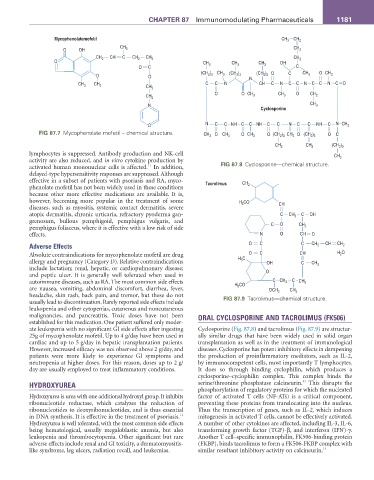
              FIG 87.7  Mycophenolate mofetil – chemical structure.   CH 3  O CH 3  O CH 3  O (CH ) CH 3  O (CH )  O C
                                                                                             2 3
                                                                                                       2 3
                                                                                           CH 3      CH 3     (CH )
                                                                                                                2 3
           lymphocytes is suppressed. Antibody production and NK-cell                                         CH
           activity are also reduced, and in vitro cytokine production by                                       3
                                                 11
           activated human mononuclear cells is affected.  In addition,   FIG 87.8  Cyclosporine—chemical structure.
           delayed-type hypersensitivity responses are suppressed. Although
           effective in a subset of patients with psoriasis and RA, myco-  Tacrolimus  CH
           phenolate mofetil has not been widely used in these conditions         2
           because other more effective medications are available. It is,
           however, becoming more popular in the treatment of some             H CO         CH
                                                                                3
           diseases, such as myositis, systemic contact dermatitis, severe
           atopic dermatitis, chronic urticaria, refractory pyoderma gan-                    C  CH 3  C  OH
           grenosum, bullous pemphigoid, pemphigus vulgaris, and                          C  O
           pemphigus foliaceus, where it is effective with a low risk of side                      CH 2
           effects.                                                                   N      O     CH  O
           Adverse Effects                                                        O   C             C  CH 2  CH  CH 2
           Absolute contraindications for mycophenolate mofetil are drug          O   C            CH          H O
                                                                                                                2
                                                                                3
           allergy and pregnancy (Category D). Relative contraindications      H C      OH          C  CH 3
           include lactation; renal, hepatic, or cardiopulmonary disease;               O
           and peptic ulcer. It is generally well tolerated when used in
           autoimmune diseases, such as RA. The most common side effects      H CO        C  CH 2  C  CH 2
           are nausea, vomiting, abdominal discomfort, diarrhea, fever,        3         OCH 3  CH 3
           headache, skin rash, back pain, and tremor, but these do not   FIG 87.9  Tacrolimus—chemical structure.
           usually lead to discontinuation. Rarely reported side effects include
           leukopenia and other cytopenias, cutaneous and noncutaneous
           malignancies, and pancreatitis. Toxic doses have not been   ORAL CYCLOSPORINE AND TACROLIMUS (FK506)
           established for this medication. One patient suffered only moder-
           ate leukopenia with no significant GI side effects after ingesting   Cyclosporine (Fig. 87.8) and tacrolimus (Fig. 87.9) are structur-
           25g of mycophenolate mofetil. Up to 4 g/day have been used in   ally similar drugs that have been widely used in solid organ
           cardiac and up to 5 g/day in hepatic transplantation patients.   transplantation as well as in the treatment of immunological
           However, increased efficacy was not observed above 2 g/day, and   diseases. Cyclosporine has potent inhibitory effects in dampening
           patients  were  more  likely to experience GI  symptoms  and   the production of proinflammatory mediators, such as IL-2,
           neutropenia at higher doses. For this reason, doses up to 2 g/  by immunocompetent cells, most importantly T lymphocytes.
           day are usually employed to treat inflammatory conditions.  It does so through binding cyclophilin, which produces a
                                                                  cyclosporine–cyclophilin complex. This complex binds the
                                                                                                    13
           HYDROXYUREA                                            serine/threonine  phosphatase  calcineurin.   This  disrupts  the
                                                                  phosphorylation of regulatory proteins for which the nucleated
           Hydroxyurea is urea with one additional hydroxyl group. It inhibits   factor of activated  T cells (NF-ATs) is  a critical component,
           ribonucleotide reductase, which catalyzes the reduction of   preventing these proteins from translocating into the nucleus.
           ribonucleotides to deoxyribonucleotides, and is thus essential   Thus the transcription of genes, such as IL-2, which induces
                                                            12
           in DNA synthesis. It is effective in the treatment of psoriasis.    mitogenesis in activated T cells, cannot be effectively activated.
           Hydroxyurea is well tolerated, with the most common side effects   A number of other cytokines are affected, including IL-3, IL-6,
           being hematological, usually megaloblastic anemia, but also   transforming growth factor (TGF)-β, and interferon (IFN)-γ.
           leukopenia and thrombocytopenia. Other significant but rare   Another T cell–specific immunophilin, FK506-binding protein
           adverse effects include renal and GI toxicity, a dermatomyositis-  (FKBP), binds tacrolimus to form a FK506-FKBP complex with
           like syndrome, leg ulcers, radiation recall, and leukemias.  similar resultant inhibitory activity on calcineurin. 14

