


Page 179 - Clinical Immunology_ Principles and Practice ( PDFDrive )
P. 179
CHaPTEr 10  Chemokines and Chemokine Receptors                   161


                ATYPICAL RECEPTORS                 CHEMOKINES                   TYPICAL RECEPTORS
                Distribution  Name                                            Name        Distribution
                                                   CXCL1
                                                   CXCL2
                                                   CXCL3                     CXCR1      N, Mo, NK, MC, Ba, DC, CD8 T,
                                                                                                         +
                                                   CXCL5                                     Treg, EC, Ca
                                                   CXCL6
                                                   CXCL7                     CXCR2      N, Mo, NK, MC, Ba, DC,
                                                   CXCL8                                    T, EC, Ca
                                                   CXCL4L1
                                                   CXCL4                     CXCR3      B, Th1, CD8 T, pDC, NK, NKT, Treg
                                                                                               +
                                                   CXCL9
                    B, BMVE                        CXCL10
                      AV EC   ACKR3                CXCL11                    CXCR4      most leukocytes, NHC
                 Stromal cells  (CXCR7)            CXCL12
               Cancer, Neurons                     CXCL13                    CXCR5     B, CD8 T, T FH
                                                   CXCL14                     ?
                                                   CXCL16                    CXCR6     Th1 and Th17, γ/δT, NKT, NK, PC, Ca
                                                   CXCL17                    CXCR8      Monocytes
                   RBC, LEC,  ACKR1
                  Purkinje cell  (DARC)            CCL1                      CCR8      DC; Mo; MΦ; Th2; skin CD4 ,
                                                                                                        RM
                                                   CCL8                                 CD8 and γδT; Tregs; thymocytes, NHC
                                                   CCL2
                                                   CCL3                      CCR2      Mo/MΦ, Th1, iDC, Ba, NK
                                                   CCL4
                                                   CCL5                                N, Mo/MΦ, Th1, Tmem, Ba, DC, NHC
                  Barrier sites;                   CCL7                      CCR1
                  LEC, DC, B;  ACKR2               CCL11
              Some leukocytes  (D6)                CCL13                     CCR3      Eo, Ba, Th2, MC, MG, DC, PC, NHC
                                                   CCL14                     CCR5      DC, Mo,MΦ, NK, Th1, Th17, Treg,
                                                   CCL15                               CTL, NHC
                                                   CCL16
                                                   CCL17                     CCR4      Th2, Th17, skin-homing T, Treg, iDC,
               Many leukocytes  CCRL2              CCL18                                   Mo,B, eff/mem CD4 and CD8T ,
                             (ACKR5)
                                                   CCL19
                                                   CCL20                              Th17, γ/δT, NK, NKT, Treg
                 Lung, gut, LN  ACKR4              CCL21                     CCR6
                            (CCRL1)
                                                   CCL22                     CCR7      mDC, thymocytes, B, T , T cm
                                                                                                    n
                                                   CCL23
                                                   CCL24
                                                   CCL25                     CCR9       thymocytes, gut-homing T, B and DC; pDC
                                                   CCL26
                                                   CCL27                     CCR10      skin-homing T; IgA+ plasmablasts;
                                                   CCL28                               skin Fb, EC and Me; Ca
                                                   XCL1
                                                   XCL2                      XCR1      cross-presenting CD8  DC; thymic DC
                                                                                                    +
                                                   CX3CL1                    CX3CR1    resident Mo,MΦ, Th1, γ/δT, CTL,
                                                                                       DC, NK, MG, neurons
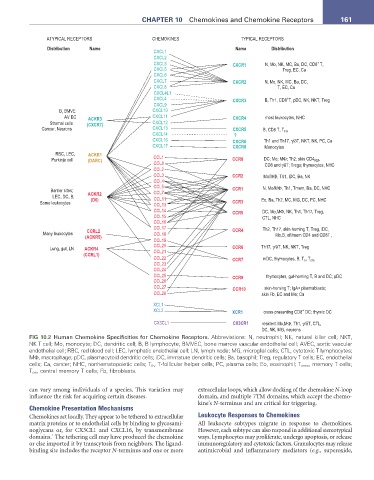
           FIG 10.2  Human Chemokine Specificities for Chemokine Receptors. Abbreviations: N, neutrophil; NK, natural killer cell; NKT,
           NK T cell; Mo, monocyte; DC, dendritic cell; B, B lymphocyte; BMVEC, bone marrow vascular endothelial cell; AVEC, aortic vascular
           endothelial cell; RBC, red blood cell; LEC, lymphatic endothelial cell; LN, lymph node; MG, microglial cells; CTL, cytotoxic T lymphocytes;
           MΦ, macrophage; pDC, plasmacytoid dendritic cells; iDC, immature dendritic cells; Ba, basophil; Treg, regulatory T cells; EC, endothelial
           cells; Ca, cancer; NHC, nonhematopoietic cells; T fh , T-follicular helper cells; PC, plasma cells; Eo, eosinophil; T mem , memory T cells;
           T cm , central memory T cells; Fb, fibroblasts.


           can vary among individuals of a species. This variation may   extracellular loops, which allow docking of the chemokine N-loop
           influence the risk for acquiring certain diseases.     domain, and multiple 7TM domains, which accept the chemo-
                                                                  kine’s N-terminus and are critical for triggering.
           Chemokine Presentation Mechanisms
           Chemokines act locally. They appear to be tethered to extracellular   Leukocyte Responses to Chemokines
           matrix proteins or to endothelial cells by binding to glycosami-  All leukocyte subtypes migrate in response to chemokines.
           noglycans or, for CX3CL1 and CXCL16, by transmembrane   However, each subtype can also respond in additional stereotypical
                  1
           domains.  The tethering cell may have produced the chemokine   ways. Lymphocytes may proliferate, undergo apoptosis, or release
           or else imported it by transcytosis from neighbors. The ligand-  immunoregulatory and cytotoxic factors. Granulocytes may release
           binding site includes the receptor N-terminus and one or more   antimicrobial and inflammatory mediators (e.g., superoxide,

