


Page 214 - Clinical Immunology_ Principles and Practice ( PDFDrive )
P. 214
194          PART ONE  Principles of Immune Response


                                         CD28                     CD28                     CD28
                              TCR/CD3                  TCR/CD3                     TCR/CD3


                                                                             Ca Ionophore

                                  NFAT + AP-1              NFAT > AP-1         NFAT

                                    ↑IL-2 +                 Anergy             Anergy
                                  Transcription
                         A         activation
                              TCR signaling for activation         TCR signaling in  anergy
               TCR/CD3                                                                           b  E3 ubiquitin ligases
                                                             TCR/CD3
                                                                                                      GRAIL
                               LAT                                                 LAT  a  Palmitoylation
                    PTK
                                                                   PTK                                   Cbl-b
                               PLCγ1                                               PLCγ1
                                                                                           c  DGK

                    IP3              DAG                            IP3                   DAG      PA
                                                                            d
                               RAS        PKCθ                            RAP1      RAS        PKCθ

                                                                    2+
                   Ca 2+ flux  RAF         IKK                     Ca flux          RAF         IKK

                   NFAT        ERK        NF-κB                    NFAT            ERK         NF-κB


                                         Activation factors                        AP-1   NF-κB    Anergy factors
                          NFAT  AP-1 NF-κB                                 NFAT
            B
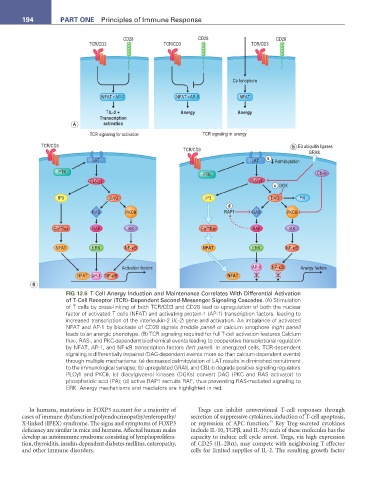
                       FIG 12.6  T-Cell Anergy Induction and Maintenance Correlates With Differential Activation
                       of T-Cell Receptor (TCR)–Dependent Second-Messenger Signaling Cascades. (A) Stimulation
                       of T cells by cross-linking of both TCR/CD3 and CD28 lead to upregulation of both the nuclear
                       factor of activated T cells (NFAT) and activating protein-1 (AP-1) transcription factors, leading to
                       increased transcription of the interleukin-2 (IL-2) gene and activation. An imbalance of activated
                       NFAT and AP-1 by blockade of CD28 signals (middle panel) or calcium ionophore (right panel)
                       leads to an anergic phenotype. (B) TCR signaling required for full T-cell activation features Calcium
                       flux-, RAS-, and PKC-dependent biochemical events leading to cooperative transcriptional regulation
                       by NFAT, AP-1, and NF-κB transcription factors (left panel). In anergized cells, TCR-dependent
                       signaling is differentially impaired (DAG-dependent events more so than calcium-dependent events)
                       through multiple mechanisms: (a) decreased palmitoylation of LAT results in diminished recruitment
                       to the immunological synapse; (b) upregulated GRAIL and CBL-b degrade positive signaling regulators
                       PLCγ1 and PKCθ; (c) diacylglycerol kinases (DGKs) convert DAG (PKC and RAS activator) to
                       phosphatidic acid (PA); (d) active RAP1 recruits RAF, thus preventing RAS-mediated signaling to
                       ERK. Anergy mechanisms and mediators are highlighted in red.


           In humans, mutations in FOXP3 account for a majority of   Tregs  can  inhibit  conventional  T-cell  responses through
        cases of immune dysfunction/polyendocrinopathy/enteropathy/   secretion of suppressive cytokines, induction of T-cell apoptosis,
                                                                                         49
        X-linked (IPEX) syndrome. The signs and symptoms of FOXP3   or repression of APC function.  Key Treg-secreted cytokines
        deficiency are similar in mice and humans. Affected human males   include IL-10, TGFβ, and IL-35; each of these molecules has the
        develop an autoimmune syndrome consisting of lymphoprolifera-  capacity to induce cell cycle arrest. Tregs, via high expression
        tion, thyroiditis, insulin-dependent diabetes mellitus, enteropathy,   of CD25 (IL-2Rα), may compete with neighboring T effector
        and other immune disorders.                            cells for limited supplies of IL-2. The resulting growth factor

