


Page 219 - Clinical Immunology_ Principles and Practice ( PDFDrive )
P. 219
198          ParT ONE  Principles of Immune Response


        class I interaction and CD4 T cells via MHC class II interaction   When challenged with injurious conditions, such as ischemia–
        (Chapter 5), thus shifting the immune response to an antigen   reperfusion in solid-organ transplantations, options for cellular
        specific  response, as  cytotoxic T  cells  and  active  B  cells now   fate are directly succumbing via accidental cell death (ACD),
        specifically attack stressed cells (Fig. 13.2). However, in addition   restoring cellular homeostasis, or dying by RCD. ACD happens
        to these DAMPs, other intracellular content has the potential to   passively under certain conditions, such as extreme heat, and
        be sensed as a target as well, which could lead to the development   occurs nearly immediately in an uncontrolled fashion. Because
        of autoimmunity.                                       of the direct loss of membrane integrity, huge amounts of DAMPs
                                                               are released. This leads to massive recruitment of innate immunity
                                                               and local inflammation. As this kind of stimulus is not given in
                                                               ischemia–reperfusion, this is not further discussed here. However,
             Apoptosis                          Necrosis       if these cells do not explode directly, they balance on the edge.
          regulated cell death             accidental or regulated  The issue then becomes whether balance will be restored (e.g.,
                                                               by means of autophagy or unfolded protein response following
                           Regulated cell death                endoplasmic reticulum [ER] stress) or, if the damage is too great,
                               RCD                             will balance be lost and RCD be induced?
                                                                  Within the cells that succumb to cell death, the necroinflam-
                                                               matory loop starts with perturbation of intracellular homeostasis
             Apoptosis        Necrosis          Necrosis       (class V DAMPs), which triggers the heat shock response, a system
          Regulated cell death  Regulated cell death  accidental  of critical importance for correct protein folding. Secreted or
           nonimmunogenic    immunogenic       cell death      surface-exposed heat shock proteins (HSPs) can be sensed by
        FIG 13.1  New Concept of Regulated Cell Death. When    either classic (e.g., TLR2/4) or nonclassic (e.g., CD91) receptors
        apoptosis was first identified, two models of regulated cell death   on DCs. In parallel, ER stress (which is often result of reactive
        were recognized: apoptosis and necrosis. More recently, however,   oxygen species [ROS] generation) leads to secretion of calreticulin
        cell death is divided into regulated cell death (including apoptosis   (an ER chaperone referred to as  “CALR”), which then acts
        and regulated necrosis) and accidental cell death (instant necrosis).   extracellularly as a class I DAMP by binding to CD91. This leads
        A second parameter classifies cell death as either immunogenic   inactive dendritic cells (iDCs) to be activated. For full activation,
        or nonimmunogenic.                                     however, an inflammatory milieu is required.


                                                 Failure of survival response
                                                                              Stressed
                                ICD
                                                   ICD inducing drugs   CALR    cell

                            HMGB1  eATP                                     HSPs

                                                                                           Y
                                                                  CD91
                                                                           Humoral response:
                                                                                   Y
                                                                                     Y
                                                      Dendritic cell                Y  Y  Y Y Y  Y
                                                        DC                       Y  Y
                            TLR2/4  P2X7
                              NLRP3     IL-1β      MHC-I      MHC-II                    B cell
                                        IL-18                                    MHC-II
                             Monocyte
                                                                   CD4+   CD4+
                                             CD8+
                                           CTC                        T Cell
                                                 Immunological cancer control
                                                   Autoimmune diseases
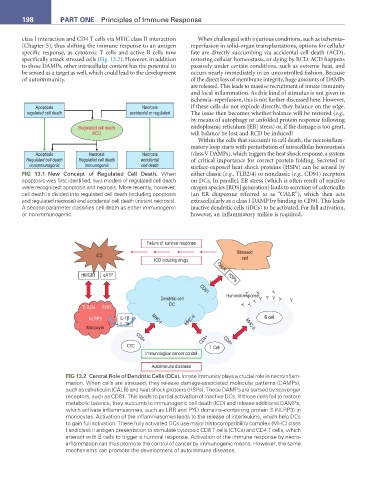
                       FIG 13.2  Central Role of Dendritic Cells (DCs). Innate immunity plays a crucial role in necroinflam-
                       mation. When cells are stressed, they release damage-associated molecular patterns (DAMPs),
                       such as calreticulin (CALR) and heat shock proteins (HSPs). These DAMPs are sensed by scavenger
                       receptors, such as CD91. This leads to partial activation of inactive DCs. If those cells fail to restore
                       metabolic balance, they succumb to immunogenic cell death (ICD) and release additional DAMPs,
                       which activate inflammasomes, such as LRR and PYD domains–containing protein 3 (NLRP3) in
                       monocytes. Activation of the inflammasomes leads to the release of interleukins, which help DCs
                       to gain full activation. These fully activated DCs use major histocompatibility complex (MHC) class
                       I and class II antigen presentation to stimulate cytotoxic CD8 T cells (CTCs) and CD4 T cells, which
                       interact with B cells to trigger a humoral response. Activation of the immune response by necro-
                       inflammation can thus promote the control of cancer by immunogenic means. However, the same
                       mechanisms can promote the development of autoimmune diseases.

