


Page 237 - Clinical Immunology_ Principles and Practice ( PDFDrive )
P. 237
216          Part One  Principles of Immune Response


        KINGDOM  BACTERIA  FUNGI
                                                                        KINGDOM  BACTERIA      FUNGI
                                                                          Bacteria  Propionibacterium  Malassezia
                                Glabella
                                                                          Eukaryota  Corynebacterium
                                                      Front     Back      Viruses   Staphylococcus
                                                                        SITE CHARACTERISTICS
                                External auditory canal                 Oily  Moist  Dry


                                                                                           KINGDOMKINGDOM  BACTERIA  FUNGI
                                Nare
                                                                             Retroauricular crease

                                Manubrium
                                                                                     Occiput
                                Antecubital fossa

                                                                                       Back
                                Volar forearm


                                Hypothenar palm
                                                                                           KINGDOM  BACTERIA  FUNGI
                                                                                           KINGDOM
                                Inguinal crease                                       Toenail


                                Toe web space                                      Plantar heel


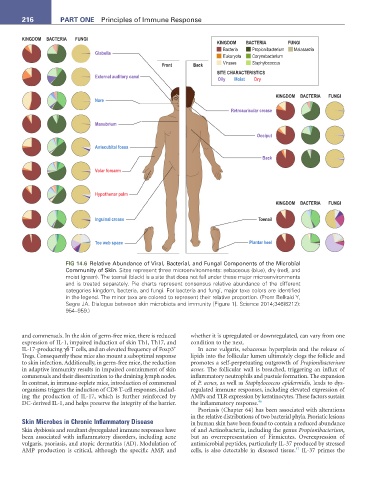
                       FIG 14.6  Relative Abundance of Viral, Bacterial, and Fungal Components of the Microbial
                      Community of Skin. Sites represent three microenvironments: sebaceous (blue), dry (red), and
                      moist (green). The toenail (black) is a site that does not fall under these major microenvironments
                      and is treated separately. Pie charts represent consensus relative abundance of the different
                      categories kingdom, bacteria, and fungi. For bacteria and fungi, major taxa colors are identified
                      in the legend. The minor taxa are colored to represent their relative proportion. (From Belkaid Y,
                      Segre JA. Dialogue between skin microbiota and immunity [Figure 1]. Science 2014;346(6212):
                      954–959.)


        and commensals. In the skin of germ-free mice, there is reduced   whether it is upregulated or downregulated, can vary from one
        expression of IL-1, impaired induction of skin Th1, Th17, and   condition to the next.
                                                          +
        IL-17-producing γδ T cells, and an elevated frequency of Foxp3    In acne vulgaris, sebaceous hyperplasia and the release of
        Tregs. Consequently these mice also mount a suboptimal response   lipids into the follicular lumen ultimately clogs the follicle and
        to skin infection. Additionally, in germ-free mice, the reduction   promotes a self-perpetuating outgrowth of Propionibacterium
        in adaptive immunity results in impaired containment of skin   acnes. The follicular wall is breached, triggering an influx of
        commensals and their dissemination to the draining lymph nodes.   inflammatory neutrophils and pustule formation. The expansion
        In contrast, in immune-replete mice, introduction of commensal   of P. acnes, as well as Staphylococcus epidermidis, leads to dys-
        organisms triggers the induction of CD8 T-cell responses, includ-  regulated immune responses, including elevated expression of
        ing  the  production  of  IL-17,  which  is  further  reinforced  by   AMPs and TLR expression by keratinocytes. These factors sustain
        DC-derived IL-1, and helps preserve the integrity of the barrier.  the inflammatory response. 46
                                                                  Psoriasis (Chapter 64) has been associated with alterations
                                                               in the relative distributions of two bacterial phyla. Psoriatic lesions
        Skin Microbes in Chronic Inflammatory Disease          in human skin have been found to contain a reduced abundance
        Skin dysbiosis and resultant dysregulated immune responses have   of and Actinobacteria, including the genus Propionibacterium,
        been  associated  with  inflammatory  disorders,  including  acne   but an overrepresentation of Firmicutes. Overexpression of
        vulgaris, psoriasis, and atopic dermatitis (AD). Modulation of   antimicrobial peptides, particularly IL-37 produced by stressed
                                                                                                  47
        AMP production is critical, although the specific  AMP, and   cells, is also detectable in diseased tissue.  IL-37 primes the

