


Page 243 - Clinical Immunology_ Principles and Practice ( PDFDrive )
P. 243
224          Part two  Host Defense Mechanisms and Inflammation


           The intrinsic affinity of an antibody for a small molecule,   than the intrinsic affinity of that antibody for the relevant epitope
        such as a drug (e.g., digoxin) or a hormone (e.g., insulin), can   on that same antigen. 2
                                               3
        be clinically important both in vivo and in vitro.  For example,   Functional affinity is also influenced by the degree to which
        the in vivo effectiveness of antibody F(ab) fragments in removing   the geometrical relationships among the epitopes are optimal
        toxic levels of the drug, digoxin, from patients being treated for   for the paratopes, which will depend on the quaternary structure
        congestive heart failure likely depends on the intrinsic affinity   and segmental flexibility of the antibody molecule. In the presence
        of the F(ab) fragments for the drug.  Alternatively, antibody   of nonoptimal geometry, the average number of engaged sites
        intrinsic affinity can limit the analytical sensitivity of an in vitro   may be less than maximal, and energy may be expended in
        immunoassay designed to determine the concentration of an   achieving some epitope–paratope contacts. Therefore the func-
        analyte, such as a hormone (e.g., insulin, parathyroid hormone)   tional affinity for a multivalent interaction does not necessarily
        or a drug (e.g., digoxin).                             increase in direct relationship to the maximal number of binding
           In contrast, functional affinity is defined as the equilibrium   sites that can be engaged simultaneously by an antibody molecule.
        association constant characterizing the interaction between an   For example, the effective valency of pentameric IgM with 10
        intact antibody and an intact antigen. For a monovalent immu-  paratopes is typically half that.
        noglobulin G (IgG) antibody–antigen interaction, the intrinsic   Intrinsic affinity provides information, qualified as above, on
        affinity and the functional affinity will be the same. However, if   the degree of complementarity between the epitope and the
        two paratopes interact simultaneously with two epitopes on the   paratope. Functional affinity accounts for properties influenced
        same antigen, referred to as monogamous bivalency (Fig. 15.2),   by structural features outside of the epitope and the paratope,
        the functional affinity of the antibody for the multivalent antigen   as normally conceived. Both concepts of affinity are valuable.
        may be substantially greater (as much as 10 000-fold for IgG)   Maximization of intrinsic affinity may be of prime importance
                                                               for antibody-mediated inactivation of toxins or enzymes, which
                                                               frequently involve monovalent interactions. However, in cases
                                                               where antibodies bind to repeated epitopes on the surfaces of
         TABLE 15.1  antigens and Valence                      bacteria, viruses, fungi, parasites, or mammalian cells, the
                                                               functional affinity may play a much larger role influencing the
          Number of types   Epitope Copy                       biological consequences of the interaction.
          of Epitope       Number        Examples                 Bivalent (IgG, IgE) or multivalent (IgA, IgM) antibodies carry
          Monodeterminant  Monovalent    Hapten: DNP, digoxin  with them the potential to bind simultaneously to two or more
          Monodeterminant  Multivalent   Polysaccharide: dextran a  epitopes on different antigenic particles, cross-linking them rather
          Multideterminant b  Monovalent  Monomeric protein:   than engaging in monogamous bivalency or monogamous
                                          myoglobin
          Multideterminant  Multivalent  Virion: influenza virus  multivalency (see Fig. 15.2). This phenomenon has played an
                                                               important historical role in immunology. It is the basis for the
        a Even a polysaccharide composed of one type of hexasaccharide can have two or   clinical method for typing erythrocyte antigens (e.g., ABO and
        more different kinds of epitope: terminal versus internal residues, for instance.   Rh antigens), which still rely on agglutination of red cells by
        However, a given antiserum may preferentially contain antibodies specific for only
        one such epitope.                                      antibodies (or lectins). Such antibodies may also participate in
        b Typically, multideterminant recognition occurs with respect to a polyclonal antibody.  the inactivation of complex antigens such as are found on the
        Adapted from Benjamini E, Leskowitz S. Immunology: a short course, 2nd ed.
        New York: Wiley-Liss; 1991, with permission from Wiley-Liss, Inc., a subsidiary of   surface of human immunodeficiency virus (HIV). Many neutral-
        John Wiley & Sons, Inc.                                izing epitopes of HIV are normally not well exposed on native


                                     Antigen alone                    Antigen + antibody


                                                        Dialysis                       Free antibody
                                                       membrane

                                                        Antigen
                                                       molecules
                                                                                       Antibody with
                                                                                       bound antigen


                            A                                 B
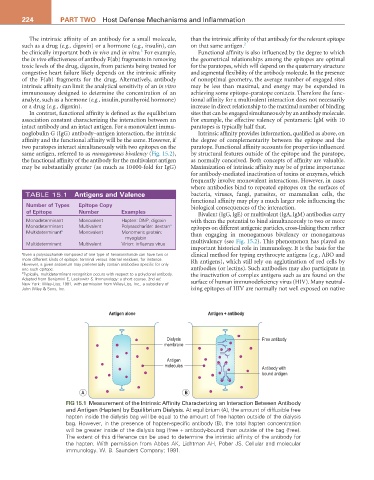
                       FIG 15.1  Measurement of the Intrinsic Affinity Characterizing an Interaction Between Antibody
                       and Antigen (Hapten) by Equilibrium Dialysis. At equilibrium (A), the amount of diffusible free
                       hapten inside the dialysis bag will be equal to the amount of free hapten outside of the dialysis
                       bag. However, in the presence of hapten-specific antibody (B), the total hapten concentration
                       will be greater inside of the dialysis bag (free + antibody-bound) than outside of the bag (free).
                       The extent of this difference can be used to determine the intrinsic affinity of the antibody for
                       the hapten. With permission from Abbas AK, Lichtman AH, Pober JS. Cellular and molecular
                       immunology. W. B. Saunders Company; 1991.

