


Page 293 - Clinical Immunology_ Principles and Practice ( PDFDrive )
P. 293
274          ParT TwO  Host Defense Mechanisms and Inflammation


                                                                  The dermis lies beneath the epidermis and serves as a con-
                    Maintenance of barrier integrity in normal skin
                                                               nective tissue layer that provides elasticity and tensile strength
                                                               to skin. It is filled with a matrix of collagen bundles, elastic fibers,
        Epidermis
                      Commensal microorganisms  AMPs           glycoproteins, proteoglycans, and glycosaminoglycans, all of
        Stratum corneum                                        which are produced by dermal fibroblasts. The production of
        Granular layer                                         collagen is a dynamic process that involves continual remodeling.
        Spinous layer
        Langerhans                                             Fibroblasts must balance ongoing synthesis of matrix components
        cell (LC)                                              with the production of matrix metalloproteinases (MMPs) that
        Basal layer                                            degrade the matrix. Scleroderma and morphea (localized
        Melanocyte                                             scleroderma)  (Chapter  55)  are  inflammatory  disorders  that
        BASEMENT MEMBRANE ZONE                                 lead to the overproduction of collagen in the dermis, thus
                       Barrier integrity factors
             DERMIS                                            hardening skin.
            Fibroblast                                            Other cell types normally found in the dermis are mast cells
                                                                                                                 3
                                                               and diverse sets of tissue macrophages and dendritic cells (DCs).
           Dermal DCs  Langerin +                              The dermis supports the microvasculature of skin. Endothelial
              (dDCs)  dDC                                      cells of dermal arterioles, capillaries, and postcapillary venules
                                                       pDC     behave differently from those in larger vessels. They express
              T cells                                          E- and P-selectins, which enable circulating skin-homing T cells
                                      Treg
                                          TGF β                to bind through their homing receptors cutaneous lymphocyte-
        Plasmacytoid DC  Langerin –  TGF β  IL-10              associated antigen (CLA)  and  P-selectin  glycoprotein ligand
                             IL-10
                pDC   dDC                                      (PSGL), respectively. 4
                                                       Trm        Both homeostatic T-cell trafficking and recruitment of inflam-
          Macrophages                                          matory leukocytes into skin from the circulation require dermal
                                                      Effector  endothelial cell-specific expression of E- and P-selectins. The
                                                      memory
                                                      T cells  egress of leukocytes from blood occurs primarily through
                                                               postcapillary venules. Egress is regulated, in part, by endothelial
                                                               responses to cutaneous cytokines and chemokines.
            Mast cells
                                                                  New vessels can also develop in skin. The new vessels can
                             Mast cell                         worsen immunologically mediated dermatological diseases and
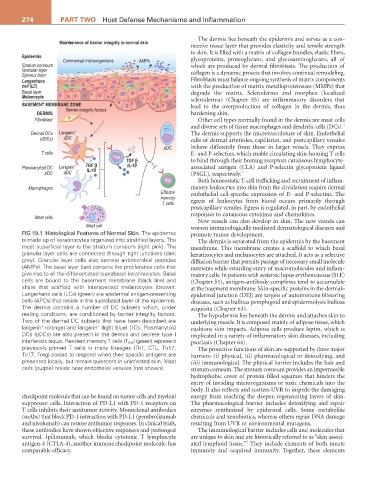
        FIG 19.1  Histological Features of Normal Skin. The epidermis   promote tumor development.
        is made up of keratinocytes organized into stratified layers. The   The dermis is separated from the epidermis by the basement
        most superficial layer is the stratum corneum (light pink). The   membrane. This membrane creates a scaffold to which basal
        granular layer cells are connected through tight junctions (dark   keratinocytes and melanocytes are attached. It acts as a selective
        grey). Granular layer cells also secrete antimicrobial peptides   diffusion barrier that permits passage of necessary small molecule
        (AMPs). The basal layer (tan) contains the proliferative cells that   nutrients while retarding entry of macromolecules and inflam-
        give rise to all the differentiated suprabasal keratinocytes. Basal   matory cells. In patients with systemic lupus erythematosus (SLE)
        cells are bound to the basement membrane (black line) and   (Chapter 51), antigen–antibody complexes tend to accumulate
        share that scaffold with interspersed melanocytes (brown).   at the basement membrane. Skin-specific proteins in the dermal–
        Langerhans cells (LCs) (green) are epidermal antigen-presenting   epidermal junction (DEJ) are targets of autoimmune blistering
        cells (APCs) that reside in the suprabasal layer of the epidermis.   diseases, such as bullous pemphigoid and epidermolysis bullosa
        The dermis contains a number of DC subsets which, under   acquisita (Chapter 63).
        resting conditions, are conditioned by barrier integrity factors.   The hypodermis lies beneath the dermis and attaches skin to
        Two of the dermal DC subsets that have been described are   underlying muscle. It is composed mainly of adipose tissue, which
                                 −
               +
        langerin  (orange) and langerin  (light blue) DCs. Plasmacytoid   cushions skin impacts. Adipose cells produce leptin, which is
        DCs (pDCs) are also present in the dermis and secrete type I   implicated in a variety of inflammatory skin diseases, including
        interferons (aqua). Resident memory T cells (T RM ) (green) represent   psoriasis (Chapter 64).
        previously primed T cells in many lineages (Th1, CTL, Th17,   The protective functions of skin are supported by three major
        Tc17, Treg) poised to respond when their specific antigens are   barriers: (i) physical, (ii) pharmacological or detoxifying, and
        presented locally, but remain quiescent in uninfected skin. Mast   (iii) immunological. The physical barrier includes the hair and
        cells (purple) reside near endothelial venules (not shown).   stratum corneum. The stratum corneum provides an impermeable
                                                               hydrophobic cover of protein-filled squames that hinders the
                                                               entry of invading microorganisms or toxic chemicals into the
                                                               body. It also reflects and scatters UVR to impede the damaging
        checkpoint molecule that can be found on tumor cells and myeloid   energy from reaching the deeper, regenerating layers of skin.
        suppressor cells. Interaction of PD-L1 with PD-1 receptors on   The pharmacological barrier includes detoxifying and repair
        T cells inhibits their antitumor activity. Monoclonal antibodies   enzymes synthesized by epidermal cells. Some metabolize
        (mAbs) that block PD-1 interaction with PD-L1 (pembrolizumab   chemicals and xenobiotics, whereas others repair DNA damage
        and nivolumab) can restore antitumor responses. In clinical trials,   resulting from UVR or environmental mutagens.
        these antibodies have shown objective responses and prolonged   The immunological barrier includes cells and molecules that
        survival. Ipilimumab, which blocks cytotoxic T lymphocyte   are unique to skin and are historically referred to as “skin associ-
                                                                                  5
        antigen-4 (CTLA-4), another immune checkpoint molecule, has   ated lymphoid tissue.”  They include elements of both innate
        comparable efficacy.                                   immunity and acquired immunity. Together, these elements

