


Page 305 - Clinical Immunology_ Principles and Practice ( PDFDrive )
P. 305
286          ParT TwO  Host Defense Mechanisms and Inflammation


         A                       Small intestine                          Large intestine
                                                                                                    Density
                                                                                                    • Mucus
                                                                                                    • Commensal microbes


                                                                                                        Outer
                                                                                                        mucus


                                      Mucus


                  Cryptdins:           • β-defensins                                                    Inner
                  • α-defensins        • TAP (38 aa)
                  • HD-5 (34 aa)  αβ   • HBD-1 (36 aa)  NK                                              mucus
                  • HD-6 (35 aa)  IELs   Anti-microbial                                       Mucus
                                          peptides

                               γδ                                                                      Tight junctions
                              IELs
                                     ILCs                       ILCs           ILCs
                             Lactoperoxidase
                          HNP  Lactoferrin              plgA
                         (1 to 4)  Lysozyme


                             PMN    Other             Plasma cells
                                   myeloid
                                    cells
         B   ILC1:   • NK cells (perforin/granzyme)  ILC2:   • Natural helper cells
                • IFN-γ and TNF-α        • IL-5, IL-9, IL-13 and amphiregulin
                • Killer function        • Worm clearance (eosinophil)
                                         • Tissue repair (amphiregulin)
                                         • Allergic asthma induction
                           CD127

                 CD103/CD160                      IL-25R


                                                      IL-33R

                                  ILCs
                                                      TSLP-R


              CD90 (mouse)
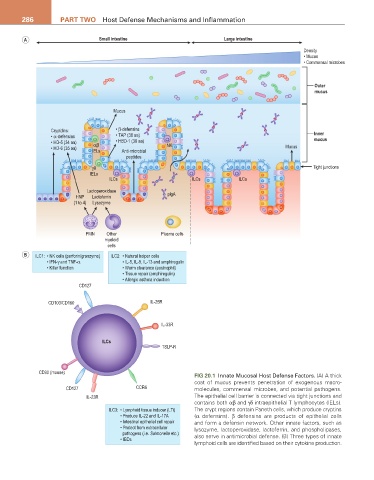
                                                                 FIG 20.1  Innate Mucosal Host Defense Factors. (A) A thick
                                                                 coat of mucus prevents penetration of exogenous macro-
                       CD127                  CCR6               molecules, commensal microbes, and potential pathogens.
                             IL-23R                              The epithelial cell barrier is connected via tight junctions and
                                                                 contains both αβ and γδ intraepithelial T lymphocytes (IELs).
                                     ILC3:   • Lymphoid tissue inducer (LTi)  The crypt regions contain Paneth cells, which produce cryptins
                                        • Produce IL-22 and IL-17A  (α defensins).  β defensins are products of epithelial cells
                                        • Intestinal epithelial cell repair  and form a defensin network. Other innate factors, such as
                                        • Protect from extracellular  lysozyme, lactoperoxidase, lactoferrin, and phospholipases,
                                          pathogens (i.e. Salmonella etc.)  also serve in antimicrobial defense. (B) Three types of innate
                                        • IBDs
                                                                 lymphoid cells are identified based on their cytokine production.

