


Page 307 - Clinical Immunology_ Principles and Practice ( PDFDrive )
P. 307
288          ParT TwO  Host Defense Mechanisms and Inflammation


                                                                 TABLE 20.1  Major T-Cell Subpopulations
                                                                 associated with Murine Peyer Patches
                                                                                                     Percentage of
                                                                 T-Cell Phenotype                    Total T Cells
                                                                 CD3 αβ T-cell receptor (TCR) +          95–97
                                                                    +
                                                                 CD3 γδ TCR +                             3–5
                                                                    +
                                                                    +
                                                                        +
                                                                 CD3 , CD4  (precursors of T-helper [Th] cells)  65–70
                                                                 CD3 , CD8  (precursors of cytotoxic T   30–35
                                                                    +
                                                                        +
                                                                  lymphocytes [CTLs])
                                                                           Hi
                                                                 Naïve (CD45RB )                         50–60
                                                                 Memory (CD45RB , CD45RO )               40–50
                                                                             Lo
                                                                                     Hi
                                                                 Blasts (in cell cycle)                  30–35
                                                               have mesenteric and cervical lymph nodes but lack peripheral
                                                               lymph nodes and PPs. Tumor necrosis factor–receptor I
                                                                       −/−
                                                               (TNF-RI)  mice lack or display abnormal PP structures, whereas
                                                                     −/−
                                                               TNF-α  mice exhibit normal patches.
                                                               Nasal-Associated Lymphoid Tissues
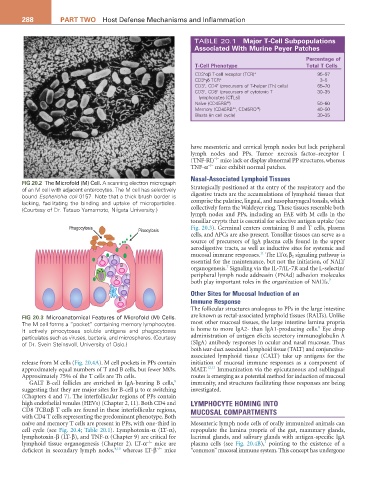
        FIG 20.2  The Microfold (M) Cell. A scanning electron micrograph
        of an M cell with adjacent enterocytes. The M cell has selectively   Strategically positioned at the entry of the respiratory and the
        bound Escherichia coli 0157. Note that a thick brush border is   digestive tracts are the accumulations of lymphoid tissues that
        lacking,  facilitating  the  binding  and  uptake  of  microparticles.   comprise the palatine, lingual, and nasopharyngeal tonsils, which
        (Courtesy of Dr. Tatsuo Yamamoto, Niigata University.)  collectively form the Waldeyer ring. These tissues resemble both
                                                               lymph nodes and PPs, including an FAE with M cells in the
                                                               tonsillar crypts that is essential for selective antigen uptake (see
                        Phagocytosis          Pinocytosis      Fig. 20.3). Germinal centers containing B and T cells, plasma
                                                               cells, and APCs are also present. Tonsillar tissues can serve as a
                                                               source of precursors of IgA plasma cells found in the upper
                                                               aerodigestive tracts, as well as inductive sites for systemic and
                                                                                      11
                                  B   T                        mucosal immune responses.  The LTα 1 β 2  signaling pathway is
                                                               essential for the maintenance, but not the initiation, of NALT
                                        B                                  7
                                     T                         organogenesis.  Signaling via the IL-7/IL-7R and the L-selectin/
                                       B  T                    peripheral lymph node addressin (PNAd) adhesion molecules
                                                               both play important roles in the organization of NALTs. 7
                                         T
                                                               Other Sites for Mucosal Induction of an
                                        B                      Immune Response
                                                               The follicular structures analogous to PPs in the large intestine
        FIG 20.3  Microanatomical Features of Microfold (M) Cells.   are known as rectal-associated lymphoid tissues (RALTs). Unlike
        The M cell forms a “pocket” containing memory lymphocytes.   most other mucosal tissues, the large intestine lamina propria
                                                                                                         8
        It  actively  pinocytoses  soluble  antigens  and  phagocytoses   is home to more IgA2- than IgA1-producing cells.  Eye drop
        particulates such as viruses, bacteria, and microspheres. (Courtesy   administration of antigen elicits secretory immunoglobulin A
        of Dr. Svein Steinsvoll, University of Oslo.)          (SIgA) antibody responses in ocular and nasal mucosae. Thus
                                                               both tear-duct associated lymphoid tissue (TALT) and conjunctiva-
                                                               associated lymphoid tissue (CALT) take up antigens for the
        release from M cells (Fig. 20.4A). M cell pockets in PPs contain   initiation of mucosal immune responses as a component of
        approximately equal numbers of T and B cells, but fewer MØs.   MALT. 12,13  Immunization via the epicutaneous and sublingual
        Approximately 75% of the T cells are Th cells.         routes is emerging as a potential method for induction of mucosal
                                                          8
           GALT B-cell follicles are enriched in IgA-bearing B cells,    immunity, and structures facilitating these responses are being
        suggesting that they are major sites for B-cell µ to α switching   investigated.
        (Chapters 4 and 7). The interfollicular regions of PPs contain
        high endothelial venules (HEVs) (Chapter 2, 11). Both CD4 and   LYMPHOCYTE HOMING INTO
        CD8 TCRαβ T cells are found in these interfollicular regions,   MUCOSAL COMPARTMENTS
        with CD4 T cells representing the predominant phenotype. Both
        naïve and memory T cells are present in PPs, with one-third in   Mesenteric lymph node cells of orally immunized animals can
        cell cycle (see  Fig. 20.4;  Table 20.1). Lymphotoxin-α (LT-α),   repopulate the lamina propria of the gut, mammary glands,
        lymphotoxin-β (LT-β), and TNF-α (Chapter 9) are critical for   lacrimal glands, and salivary glands with antigen-specific IgA
                                                 −/−
                                                                                        1
        lymphoid  tissue  organogenesis  (Chapter  2).  LT-α   mice  are   plasma  cells  (see  Fig.  20.4B),   pointing  to  the  existence  of a
                                                    −/−
        deficient in secondary lymph nodes, 9,10  whereas LT-β  mice   “common” mucosal immune system. This concept has undergone

