


Page 364 - Clinical Immunology_ Principles and Practice ( PDFDrive )
P. 364
344          ParT TwO  Host Defense Mechanisms and Inflammation


                  A                                            B


                  C                                        D
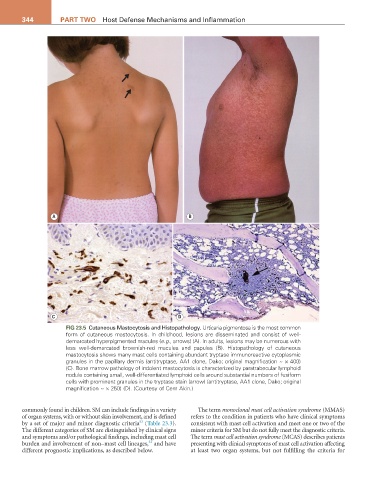
                       FIG 23.5  Cutaneous Mastocytosis and Histopathology. Urticaria pigmentosa is the most common
                       form of cutaneous mastocytosis. In childhood, lesions are disseminated and consist of well-
                       demarcated hyperpigmented macules (e.g., arrows) (A). In adults, lesions may be numerous with
                       less well-demarcated brownish-red macules and papules (B). Histopathology of cutaneous
                       mastocytosis shows many mast cells containing abundant tryptase immunoreactive cytoplasmic
                       granules in the papillary dermis (antitryptase, AA1 clone, Dako; original magnification ~ × 400)
                       (C). Bone marrow pathology of indolent mastocytosis is characterized by paratrabecular lymphoid
                       nodule containing small, well-differentiated lymphoid cells around substantial numbers of fusiform
                       cells with prominent granules in the tryptase stain (arrow) (antitryptase, AA1 clone, Dako; original
                       magnification ~ × 250) (D). (Courtesy of Cem Akin.)


        commonly found in children. SM can include findings in a variety   The term monoclonal mast cell activation syndrome (MMAS)
        of organ systems, with or without skin involvement, and is defined   refers to the condition in patients who have clinical symptoms
                                               53
        by a set of major and minor diagnostic criteria  (Table 23.3).   consistent with mast cell activation and meet one or two of the
        The different categories of SM are distinguished by clinical signs   minor criteria for SM but do not fully meet the diagnostic criteria.
        and symptoms and/or pathological findings, including mast cell   The term mast cell activation syndrome (MCAS) describes patients
                                                  52
        burden and involvement of non–mast cell lineages,  and have   presenting with clinical symptoms of mast cell activation affecting
        different prognostic implications, as described below.  at least two organ systems, but not fulfilling the criteria for

