


Page 447 - Clinical Immunology_ Principles and Practice ( PDFDrive )
P. 447
426          ParT THrEE  Host Defenses to Infectious Agents


         TABLE 30.1  Worldwide Significance of the Major Protozoal Infections
          Parasite           Estimated Worldwide Cases (annual Mortality)  Clinical Manifestations
          Plasmodium spp.    400–490 million (P. falciparum: >2 million deaths/year,   Fever with potential complications of severe hemolysis, renal
                              primarily children)                      failure, pulmonary edema, cerebral involvement
          Leishmania spp.    10–50 million people infected, 1.2 million new cases per   Asymptomatic infection; skin ulcers or nodules; destructive
                              year                                     oropharyngeal lesions; visceral disease with fever,
                                                                       hepatosplenomegaly, cachexia, pancytopenia
          Trypanosoma cruzi  24 million (60 000 deaths)               Asymptomatic infection; dysrhythmias or chronic heart failure;
                                                                       hypertrophy and dilation of the esophagus, colon
          Toxoplasma gondii  Several hundred million people infected worldwide.    Self-limited fever, hepatosplenomegaly; lymphadenopathy and
                              5–9% of healthy US adults are seropositive  encephalitis (reactivation in patients with acquired
                                                                       immunodeficiency syndrome [AIDS]); congenital infection,
                                                                       with fetal death, chorioretinitis, meningoencephalitis
          Entamoeba histolytica  50 million (100 000 deaths)          Asymptomatic infection, diarrhea, dysentery, or liver abscess
          Giardia lamblia    200 million (most common in young children and   Asymptomatic infection, chronic diarrhea
                              immunocompromised persons)
          Cryptosporidium parvum   Prevalence 3–10% in patients with diarrhea in developing   Self-limited diarrhea in immunocompetent persons, severe
           and C. hominis     countries                                intestinal and biliary disease in patients with AIDS
          Trichomonas vaginalis  170 million/year                     Asymptomatic infection, vaginal discharge, urethritis

           Pathogen or                                             KEY CONCEPTS
          soluble products
                                 IFN-α/β                         Immunopathogenesis of Severe Plasmodium
                                                                 falciparum Malaria
                         IL-10
                         TGF-β    (-)  (+)                       •  Release of malarial antigens stimulates tumor necrosis factor (TNF),
                         PGE 2          NK cell                    interleukin (IL)-1, and lymphotoxin production from innate immune
                                                 RNI               cells.
                         IL-12                   ROI             •  TNF/leukotriene (LT) induce vascular leakage, hemorrhage, endothelial
                                          IFN-γ
                         TNF-α    (+)     TNF-α                    cell activation with expression of endothelial adhesion molecules,
                         IL-18                                     platelet activation and adhesion, and coagulation.
               (+)       IL-1β         (+)  NO  Macrophage       •  Inflammatory cytokines amplify severe anemia caused by loss of
           Macrophage                            activated         infected red blood cells (RBCs) by inducing dyserythropoiesis and
          or dendritic cell                     for intracellular  phagocytosis of uninfected RBCs, which can be coated with parasite
                         IFN-γ                    killing          antigens.
                         TNF-α                                   •  Lethal outcomes for the fetus of infected women during pregnancy
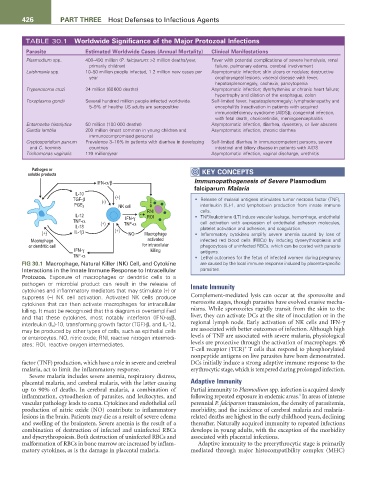
        FIG 30.1  Macrophage, Natural Killer (NK) Cell, and Cytokine   are caused by the local immune response induced by placenta-specific
        Interactions in the Innate Immune Response to Intracellular   parasites.
        Protozoa. Exposure of macrophages or dendritic cells to a
        pathogen  or  microbial  product  can  result  in  the  release  of
        cytokines and inflammatory mediators that may stimulate (+) or   Innate Immunity
        suppress (−) NK cell activation. Activated NK cells produce   Complement-mediated lysis can occur at the sporozoite and
        cytokines that can then activate macrophages for intracellular   merozoite stages, though parasites have evolved evasive mecha-
        killing. It must be recognized that this diagram is oversimplified   nisms. While sporozoites rapidly transit from the skin to the
        and that these cytokines, most notably interferon (IFN)-α/β,   liver, they can activate DCs at the site of inoculation or in the
        interleukin (IL)-10, transforming growth factor (TGF)-β, and IL-12,   regional lymph node. Early activation of NK cells and IFN-γ
        may be produced by other types of cells, such as epithelial cells   are associated with better outcomes of infection. Although high
        or enterocytes. NO, nitric oxide; RNI, reactive nitrogen intermedi-  levels of TNF are associated with severe malaria, physiological
        ates; ROI, reactive oxygen intermediates.              levels are protective through the activation of macrophages. γδ
                                                                                 +
                                                               T-cell receptor (TCR)  T cells that respond to phosphorylated
                                                               nonpeptide antigens on live parasites have been demonstrated.
        factor (TNF) production, which have a role in severe and cerebral   DCs initially induce a strong adaptive immune response to the
        malaria, act to limit the inflammatory response.       erythrocytic stage, which is tempered during prolonged infection.
           Severe malaria includes severe anemia, respiratory distress,
        placental malaria, and cerebral malaria, with the latter causing   Adaptive Immunity
        up  to  90%  of  deaths. In  cerebral  malaria,  a combination  of   Partial immunity to Plasmodium spp. infection is acquired slowly
                                                                                                   6
        inflammation, cytoadhesion of parasites, and leukocytes, and   following repeated exposure in endemic areas.  In areas of intense
        vascular pathology leads to coma. Cytokines and endothelial cell   perennial P. falciparum transmission, the density of parasitemia,
        production of nitric oxide (NO) contribute  to inflammatory   morbidity, and the incidence of cerebral malaria and malaria-
        lesions in the brain. Patients may die as a result of severe edema   related deaths are highest in the early childhood years, declining
        and swelling of the brainstem. Severe anemia is the result of a   thereafter. Naturally acquired immunity to repeated infections
        combination of destruction of infected and uninfected RBCs   develops in young adults, with the exception of the morbidity
        and dyserythropoiesis. Both destruction of uninfected RBCs and   associated with placental infections.
        malformation of RBCs in bone marrow are increased by inflam-  Adaptive immunity to the preerythrocytic stage is primarily
        matory cytokines, as is the damage in placental malaria.  mediated through major histocompatibility complex (MHC)

