


Page 471 - Clinical Immunology_ Principles and Practice ( PDFDrive )
P. 471
452          ParT FOur  Immunological Deficiencies


                                                     General screening of immunity
              History                              1. CBC, differential, platelets    Physical examination
            1. Number, type, course of infection   2. IgG, IgA, IgM, IgE levels     1. Growth and development
            2. Family history                      3. Baseline antibody titers:     2. Associated abnormalities
            3. Age of onset, sex                     To immunizations                 (i.e., DiGeorge facies, rash, telangiectasia)
            4. Environmental exposure to infection    (e.g., tetanus, pneumococcus)  3. Presence or absence of lymphoid tissue
                                                     Isohemagglutinins

                  Suspicious finding                    Suspicious finding                 Suspicious finding
                    or red flag                           or red flag                         or red flag


                                              Disease-specific testing of the immune system
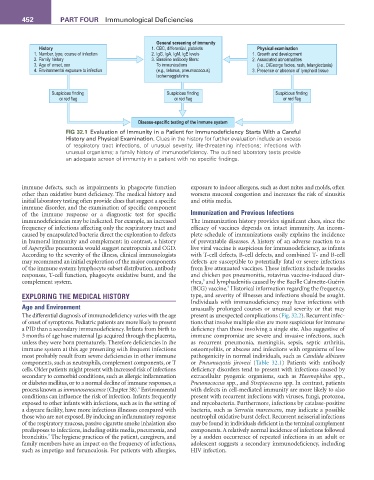
                       FIG 32.1  Evaluation of Immunity in a Patient for Immunodeficiency Starts With a Careful
                       History and Physical Examination. Clues in the history for further evaluation include an excess
                       of respiratory tract infections, of unusual severity; life-threatening infections; infections with
                       unusual organisms; a family history of immunodeficiency. The outlined laboratory tests provide
                       an adequate screen of immunity in a patient with no specific findings.


        immune  defects,  such  as  impairments  in  phagocyte  function   exposure to indoor allergens, such as dust mites and molds, often
        other than oxidative burst deficiency. The medical history and   worsens mucosal congestion and increases the risk of sinusitis
        initial laboratory testing often provide clues that suggest a specific   and otitis media.
        immune disorder, and the examination of specific component
        of the immune response or a diagnostic test for specific   Immunization and Previous Infections
        immunodeficiencies may be indicated. For example, an increased   The immunization history provides significant clues, since the
        frequency of infections affecting only the respiratory tract and   efficacy of vaccines depends on intact immunity. An incom-
        caused by encapsulated bacteria direct the exploration to defects   plete schedule of immunizations easily explains the incidence
        in humoral immunity and complement; in contrast, a history   of preventable diseases. A history of an adverse reaction to a
        of Aspergillus pneumonia would suggest neutropenia and CGD.   live viral vaccine is suspicious for immunodeficiency, as infants
        According to the severity of the illness, clinical immunologists   with T-cell defects, B-cell defects, and combined T- and B-cell
        may recommend an initial exploration of the major components   defects are susceptible to potentially fatal or severe infections
        of the immune system: lymphocyte subset distribution, antibody   from live attenuated vaccines. These infections include measles
        responses, T-cell function, phagocyte oxidative burst, and the   and chicken pox pneumonitis, rotavirus vaccine-induced diar-
                                                                   8
        complement system.                                     rhea,  and lymphadenitis caused by the Bacille Calmette-Guérin
                                                                           9
                                                               (BCG) vaccine.  Historical information regarding the frequency,
        EXPLORING THE MEDICAL HISTORY                          type, and severity of illnesses and infections should be sought.
                                                               Individuals with immunodeficiency may have infections with
        Age and Environment                                    unusually prolonged courses or unusual severity or that may
        The differential diagnosis of immunodeficiency varies with the age   present as unexpected complications (Fig. 32.2). Recurrent infec-
        of onset of symptoms. Pediatric patients are more likely to present   tions that involve multiple sites are more suspicious for immune
        a PID than a secondary immunodeficiency. Infants from birth to   deficiency than those involving a single site. Also suggestive of
        3 months of age have maternal Igs acquired through the placenta,   immune compromise are severe and invasive infections, such
        unless they were born prematurely. Therefore deficiencies in the   as recurrent pneumonia, meningitis, sepsis, septic arthritis,
        immune system at this age presenting with frequent infections   osteomyelitis, or abscess and infections with organisms of low
        most probably result from severe deficiencies in other immune   pathogenicity in normal individuals, such as Candida albicans
        components, such as neutrophils, complement components, or T   or  Pneumocystis jiroveci (Table 32.1) Patients with antibody
        cells. Older patients might present with increased risk of infections   deficiency disorders tend to present with infections caused by
        secondary to comorbid conditions, such as allergic inflammation   extracellular pyogenic organisms, such as  Haemophilus spp.,
        or diabetes mellitus, or to a normal decline of immune responses, a   Pneumococcus spp., and Streptococcus spp. In contrast, patients
                                              6
        process known as immunosenescence (Chapter 38).  Environmental   with defects in cell-mediated immunity are more likely to also
        conditions can influence the risk of infection. Infants frequently   present with recurrent infections with viruses, fungi, protozoa,
        exposed to other infants with infections, such as in the setting of   and mycobacteria. Furthermore, infections by catalase-positive
        a daycare facility, have more infectious illnesses compared with   bacteria, such as  Serratia marcescens, may indicate a possible
        those who are not exposed. By inducing an inflammatory response   neutrophil oxidative burst defect. Recurrent neisserial infections
        of the respiratory mucosa, passive cigarette smoke inhalation also   may be found in individuals deficient in the terminal complement
        predisposes to infections, including otitis media, pneumonia, and   components. A relatively normal incidence of infections followed
                 7
        bronchitis.  The hygiene practices of the patient, caregivers, and   by a sudden occurrence of repeated infections in an adult or
        family members have an impact on the frequency of infections,   adolescent suggests a secondary immunodeficiency, including
        such as impetigo and furunculosis. For patients with allergies,   HIV infection.

