


Page 472 - Clinical Immunology_ Principles and Practice ( PDFDrive )
P. 472
CHaPTEr 32  Approach to the Evaluation of the Patient With Suspected Immunodeficiency                453


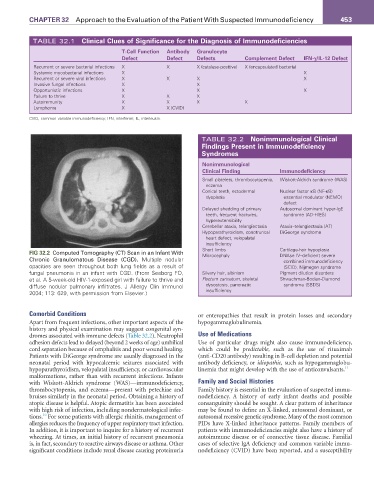
            TABLE 32.1  Clinical Clues of Significance for the Diagnosis of Immunodeficiencies
                                         T-Cell Function   antibody   Granulocyte
                                         Defect         Defect   Defects         Complement Defect  IFN-γ/IL-12 Defect
            Recurrent or severe bacterial infections  X  X       X (catalase-positive)  X (encapsulated bacteria)
            Systemic mycobacterial infections  X                                                    X
            Recurrent or severe viral infections  X     X        X                                  X
            Invasive fungal infections   X                       X
            Opportunistic infections     X                       X                                  X
            Failure to thrive            X              X        X
            Autoimmunity                 X              X        X               X
            Lymphoma                     X              X (CVID)

           CVID, common variable immunodeficiency; IFN, interferon; IL, interleukin.


                                                                   TABLE 32.2  Nonimmunological Clinical
                                                                   Findings Present in Immunodeficiency
                                                                   Syndromes

                                                                   Nonimmunological
                                                                   Clinical Finding          Immunodeficiency
                                                                   Small platelets, thrombocytopenia,   Wiskott-Aldrich syndrome (WAS)
                                                                    eczema
                                                                   Conical teeth, ectodermal   Nuclear factor κB (NF-κB)
                                                                    dysplasia                 essential modulator (NEMO)
                                                                                              defect
                                                                   Delayed shedding of primary   Autosomal dominant hyper-IgE
                                                                    teeth, frequent fractures,   syndrome (AD-HIES)
                                                                    hyperextensibility
                                                                   Cerebellar ataxia, telangiectasia  Ataxia–telangiectasia (AT)
                                                                   Hypoparathyroidism, conotruncal   DiGeorge syndrome
                                                                    heart defect, velopalatal
                                                                    insufficiency
                                                                   Short limbs               Cartilage-hair hypoplasia
           FIG 32.2  Computed Tomography (CT) Scan in an Infant With   Microcephaly          DNAse IV–deficient severe
           Chronic Granulomatous Disease (CGD). Multiple nodular                              combined immunodeficiency
           opacities are seen throughout both lung fields as a result of                      (SCID), Nijmegen syndrome
           fungal pneumonia in an infant with CGD. (From Seeborg FO,   Silvery hair, albinism  Pigment dilution disorders
           et al. A 5-week-old HIV-1-exposed girl with failure to thrive and   Pectum carinatum, skeletal   Shwachman-Bodian-Diamond
           diffuse nodular pulmonary infiltrates. J Allergy Clin Immunol   dysostosis, pancreatic   syndrome (SBDS)
           2004; 113: 629, with permission from Elsevier.)          insufficiency


           Comorbid Conditions                                    or  enteropathies  that  result  in  protein  losses  and  secondary
           Apart from frequent infections, other important aspects of the   hypogammaglobulinemia.
           history and physical examination may suggest congenital syn-
           dromes associated with immune defects (Table 32.2). Neutrophil   Use of Medications
           adhesion defects lead to delayed (beyond 2 weeks of age) umbilical   Use of particular drugs might also cause immunodeficiency,
           cord separation because of omphalitis and poor wound healing.   which  could  be  predictable,  such  as  the  use  of  rituximab
           Patients with DiGeorge syndrome are usually diagnosed in the   (anti-CD20 antibody) resulting in B-cell depletion and potential
           neonatal period with hypocalcemic seizures associated with   antibody deficiency, or idiopathic, such as hypogammaglobu-
           hypoparathyroidism, velopalatal insufficiency, or cardiovascular   linemia that might develop with the use of anticonvulsants. 11
           malformations, rather than with recurrent infections. Infants
           with  Wiskott-Aldrich syndrome (WAS)—immunodeficiency,   Family and Social Histories
           thrombocytopenia, and eczema—present with petechiae and   Family history is essential in the evaluation of suspected immu-
           bruises similarly in the neonatal period. Obtaining a history of   nodeficiency.  A history of early infant deaths and possible
           atopic disease is helpful. Atopic dermatitis has been associated   consanguinity should be sought. A clear pattern of inheritance
           with high risk of infection, including nondermatological infec-  may be found to define an X-linked, autosomal dominant, or
               10
           tions.  For some patients with allergic rhinitis, management of   autosomal recessive genetic syndrome. Many of the most common
           allergies reduces the frequency of upper respiratory tract infection.   PIDs have X-linked inheritance patterns. Family members of
           In addition, it is important to inquire for a history of recurrent   patients with immunodeficiencies might also have a history of
           wheezing. At times, an initial history of recurrent pneumonia   autoimmune disease or of connective tissue disease. Familial
           is, in fact, secondary to reactive airways disease or asthma. Other   cases of selective IgA deficiency and common variable immu-
           significant conditions include renal disease causing proteinuria   nodeficiency (CVID) have been reported, and a susceptibility

