


Page 476 - Clinical Immunology_ Principles and Practice ( PDFDrive )
P. 476
CHaPTEr 32  Approach to the Evaluation of the Patient With Suspected Immunodeficiency                457


                                   P1009: CD4                     Oxidase activity can be detected by a flow cytometry assay
               8000                                               measuring the oxidation of dihydrorhodamine (DHR) 123 in
                                                                                                               19
                                                                  phagocytes, resulting in fluorescent rhodamine-123.  The
                                                                  nitroblue tetrazolium (NBT) test measures oxidative burst activity
               6000
                                                                  as well, but it is a more subjective test and can miss the diagnosis
                                                                  of CGD. For patients with suspected LAD-1 deficiency, neutrophils
              Counts  4000                                        are labeled with mAb directed against the adhesion molecule
                                                                  CD11/CD18 heterodimer.  Absence of fluorescence intensity
                                                                  indicates lack of expression of the adhesion molecule. In addition,
               2000                                               an increase of fluorescence intensity after stimulation can be
                                                                  documented in normal individuals, indicating the normal
                                                                                                        20
                 0                                                upregulation of this molecule after cell activation.  Other labora-
                   0         5         10        15               tory techniques used to identify phagocytic defects include assays
                                                                  for chemotaxis  and  bactericidal activity.  A  major  pitfall for
                                   Age (years)                    neutrophil studies is the spontaneous cell activation that might
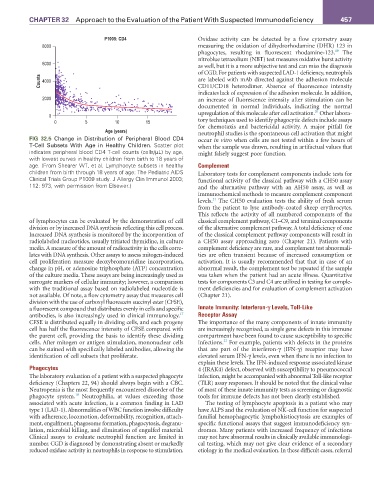
           FIG  32.5  Change  in  Distribution  of  Peripheral  Blood  CD4   occur in vitro when cells are not tested within a few hours of
           T-Cell Subsets With Age in Healthy Children. Scatter plot   when the sample was drawn, resulting in artifactual values that
           indicates peripheral blood CD4 T-cell counts (cells/µL) by age,   might falsely suggest poor function.
           with lowest curves in healthy children from birth to 18 years of
           age. (From Shearer WT, et al. Lymphocyte subsets in healthy   Complement
           children from birth through 18 years of age: The Pediatric AIDS   Laboratory tests for complement components include tests for
           Clinical Trials Group P1009 study. J Allergy Clin Immunol 2003;   functional activity of the classical pathway with a CH50 assay
           112: 973, with permission from Elsevier.)              and the alternative pathway with an  AH50 assay, as well as
                                                                  immunochemical methods to measure complement component
                                                                       21
                                                                  levels.  The CH50 evaluation tests the ability of fresh serum
                                                                  from  the  patient  to  lyse  antibody-coated  sheep  erythrocytes.
                                                                  This reflects the activity of all numbered components of the
           of lymphocytes can be evaluated by the demonstration of cell   classical complement pathway, C1–C9, and terminal components
           division or by increased DNA synthesis reflecting this cell process.   of the alternative complement pathway. A total deficiency of one
           Increased DNA synthesis is monitored by the incorporation of   of the classical complement pathway components will result in
           radiolabeled nucleotides, usually tritiated thymidine, in culture   a CH50 assay approaching zero (Chapter 21). Patients with
           media. A measure of the amount of radioactivity in the cells corre-  complement deficiency are rare, and complement test abnormali-
           lates with DNA synthesis. Other assays to assess mitogen-induced   ties are often transient because of increased consumption or
           cell  proliferation measure deoxybromouridine  incorporation,   activation. It is usually recommended that that in case of an
           change in pH, or adenosine triphosphate (ATP) concentration   abnormal result, the complement test be repeated if the sample
           of the culture media. These assays are being increasingly used as   was taken when the patient had an acute illness. Quantitative
           surrogate markers of cellular immunity; however, a comparison   tests for components C3 and C4 are utilized in testing for comple-
           with the traditional assay based on radiolabeled nucleotide is   ment deficiencies and for evaluation of complement activation
           not available. Of note, a flow cytometry assay that measures cell   (Chapter 21).
           division with the use of carboxyl fluorescein succinyl ester (CFSE),
           a fluorescent compound that distributes evenly in cells and specific   Innate Immunity: Interferon-γ Levels, Toll-Like
                                                            17
           antibodies, is also increasingly used in clinical immunology.    Receptor Assay
           CFSE is distributed equally in dividing cells, and each progeny   The importance of the many components of innate immunity
           cell has half the fluorescence intensity of CFSE compared with   are increasingly recognized, as single gene defects in this immune
           the parent cell, providing the basis to identify these dividing   compartment have been found to cause susceptibility to specific
                                                                          22
           cells. After mitogen or antigen stimulation, mononuclear cells   infections.  For example, patients with defects in the proteins
           can be stained with specifically labeled antibodies, allowing the   that are part of the interferon-γ (IFN-γ) receptor may have
           identification of cell subsets that proliferate.       elevated serum IFN-γ levels, even when there is no infection to
                                                                  explain these levels. The IFN-induced response associated kinase
           Phagocytes                                             4 (IRAK4) defect, observed with susceptibility to pneumococcal
           The laboratory evaluation of a patient with a suspected phagocyte   infection, might be accompanied with abnormal Toll-like receptor
           deficiency (Chapters 22, 94) should always begin with a CBC.   (TLR) assay responses. It should be noted that the clinical value
           Neutropenia is the most frequently encountered disorder of the   of most of these innate immunity tests as screening or diagnostic
                          18
           phagocyte system.  Neutrophilia, at values exceeding those   tools for immune defects has not been clearly established.
           associated with acute infection, is a common finding in LAD   The testing of lymphocyte apoptosis in a patient who may
           type 1 (LAD-1). Abnormalities of WBC function involve difficulty   have ALPS and the evaluation of NK-cell function for suspected
           with adherence, locomotion, deformability, recognition, attach-  familial hemophagocytic lymphohistiocytosis are examples of
           ment, engulfment, phagosome formation, phagocytosis, degranu-  specific functional assays that suggest immunodeficiency syn-
           lation, microbial killing, and elimination of engulfed material.   dromes. Many patients with increased frequency of infections
           Clinical assays to evaluate neutrophil function are limited in   may not have abnormal results in clinically available immunologi-
           number. CGD is diagnosed by demonstrating absent or markedly   cal testing, which may not give clear evidence of a secondary
           reduced oxidase activity in neutrophils in response to stimulation.   etiology in the medical evaluation. In these difficult cases, referral

