


Page 493 - Clinical Immunology_ Principles and Practice ( PDFDrive )
P. 493
CHAPtER 34  Primary Antibody Deficiencies              473


                                                                        Antigen dependent

                                                                  M        M
                                                                                                IgM
                                                                       CVID    CVID

                               XLA                                M        G
                                   Antigen independent
                                       Mψ L     M     M              G                          IgG
                                        µ                D  HIGM       CVID    CVID
                              TdT                                          E
                                  XLA       XLA                   M
                                   µ 0
                                  IGLL1 0                   HIGM     E                           IgE
                             Pro-B    Pre-B   Immature Mature          CVID    CVID
                             cell      cell    B cell  B cell
                                                           HIGM   M        A
                                                                     A                           IgA
                                                                       IgAD     IgAD
                                                                       CVID    CVID
                                                                 Class    Mature    Plasma
                                                               switching  B cell     cell
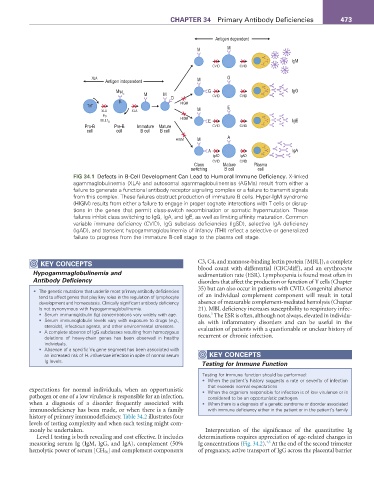
                         fIG 34.1  Defects in B-Cell Development Can Lead to Humoral Immune Deficiency. X-linked
                         agammaglobulinemia (XLA) and autosomal agammaglobulinemias (AGMs) result from either a
                         failure to generate a functional antibody receptor signaling complex or a failure to transmit signals
                         from this complex. These failures obstruct production of immature B cells. Hyper-IgM syndrome
                         (HIGM) results from either a failure to engage in proper cognate interactions with T cells or disrup-
                         tions in the genes that permit class-switch recombination or somatic hypermutation. These
                         failures inhibit class switching to IgG, IgA, and IgE, as well as limiting affinity maturation. Common
                         variable immune deficiency (CVID), IgG subclass deficiencies (IgSD), selective IgA deficiency
                         (IgAD), and transient hypogammaglobulinemia of infancy (THI) reflect a selective or generalized
                         failure to progress from the immature B-cell stage to the plasma cell stage.


               KEY CoNCEPtS                                       C3, C4, and mannose-binding lectin protein [MBL]), a complete
            Hypogammaglobulinemia and                             blood count with differential (CBC/diff), and an erythrocyte
                                                                  sedimentation rate (ESR). Lymphopenia is found most often in
            Antibody Deficiency                                   disorders that affect the production or function of T cells (Chapter
                                                                  35) but can also occur in patients with CVID. Congenital absence
            •  The genetic mutations that underlie most primary antibody deficiencies
              tend to affect genes that play key roles in the regulation of lymphocyte   of an individual complement component will result in total
              development and homeostasis. Clinically significant antibody deficiency   absence of measurable complement-mediated hemolysis (Chapter
              is not synonymous with hypogammaglobulinemia.       21). MBL deficiency increases susceptibility to respiratory infec-
                                                                      3
              •  Serum immunoglobulin (Ig) concentrations vary widely with age.  tions.  The ESR is often, although not always, elevated in individu-
              •  Serum immunoglobulin levels vary with exposure to drugs (e.g.,   als with inflammatory disorders and can be useful in the
                steroids), infectious agents, and other environmental stressors.  evaluation of patients with a questionable or unclear history of
              •  A complete absence of IgG subclasses resulting from homozygous
                deletions of heavy-chain genes has been observed in healthy   recurrent or chronic infection.
                individuals.
              •  Absence of a specific Vκ gene segment has been associated with
                an increased risk of H. influenzae infection in spite of normal serum    KEY CoNCEPtS
                Ig levels.                                         Testing for Immune Function

                                                                   Testing for immune function should be performed:
                                                                   •  When the patient’s history suggests a rate or severity of infection
                                                                     that exceeds normal expectations
           expectations for normal individuals, when an opportunistic   •  When the organism responsible for infection is of low virulence or is
           pathogen or one of a low virulence is responsible for an infection,   considered to be an opportunistic pathogen
           when a diagnosis of a disorder frequently associated with   •  When there is a diagnosis of a genetic syndrome or disorder associated
           immunodeficiency has been made, or when there is a family   with immune deficiency either in the patient or in the patient’s family
           history of primary immunodeficiency. Table 34.2 illustrates four
           levels of testing complexity and when such testing might com-
           monly be undertaken.                                     Interpretation  of  the  significance  of  the  quantitative  Ig
             Level I testing is both revealing and cost effective. It includes   determinations requires appreciation of age-related changes in
                                                                                        4,5
           measuring serum Ig (IgM, IgG, and IgA), complement (50%   Ig concentrations (Fig. 34.2).  At the end of the second trimester
           hemolytic power of serum [CH 50 ] and complement components   of pregnancy, active transport of IgG across the placental barrier

