


Page 488 - Clinical Immunology_ Principles and Practice ( PDFDrive )
P. 488
CHaPTEr 33  Human Genomics in Immunology                   469


                                 FILTERS                          or in an animal model with the disease? Finding mutations in
                                                                  one of the candidate genes also in other patients would confirm
                                                                  that this gene was the responsible gene trio under study. In some
                                                Known 1°          cases, one gene remaining on the list in Step 4 may become a
                                     Recessive or
                 Sequence                        immuno-          leading candidate because its involvement makes biological or
                   quality  MAF≤0.05   de novo  deficiency        genetic  sense or  it is  known  to be  mutated in  other affected
                                      pedigree
                                                  genes           individuals. In other cases, however, the gene responsible may
                                                                  turn out to be entirely unanticipated on biological grounds or
             17613      14353                88         2
             protein    high      3901     recessive  variants in  may not be mutated in other affected individuals because of
             altering   quality    rare    or de novo  one gene->  locus heterogeneity (i.e., mutations in other as yet undiscovered
             variants  variants  variants   variants  ZAP-70      genes can cause a similar disease).
                  3260     10452       3813       86                Such variant assessments require extensive use of public
                                                                  genomic databases and software tools. These include the human
                                                                  genome reference sequence, databases of variants with their allelic
                                                                  frequencies, software that assesses how deleterious an amino
                                                                  acid substitution might be to gene function, collections of known
                                                                  disease-causing mutations, and databases of functional networks
                                 Set aside                        and biological pathways. The enormous expansion of this
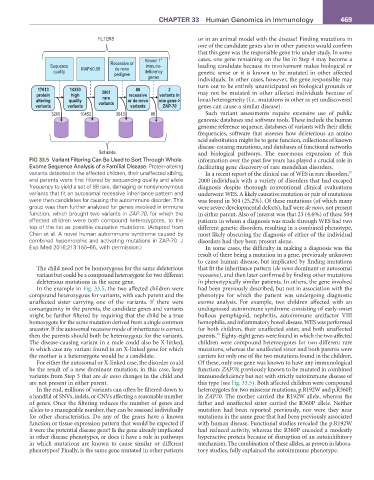
           FIG 33.5  Variant Filtering Can Be Used to Sort Through Whole-  information over the past few years has played a crucial role in
           Exome Sequence Analysis of a Familial Disease. Protein-altering   facilitating gene discovery of rare mendelian disorders.
           variants detected in the affected children, their unaffected sibling,   In a recent report of the clinical use of WES in rare disorders,
                                                                                                                   25
           and parents were first filtered by sequencing quality and allele   2000 individuals with a variety of disorders that had escaped
           frequency to yield a set of 88 rare, damaging or nonsynonymous   diagnosis despite thorough conventional clinical evaluations
           variants that fit an autosomal recessive inheritance pattern and   underwent WES. A likely causative mutation or pair of mutations
           were then candidates for causing the autoimmune disorder. This   was found in 504 (25.2%). Of these mutations (of which many
           group was then further analyzed for genes involved in immune   were severe developmental defects), half were de novo, not present
           function, which brought two variants in ZAP-70, for which the   in either parent. Also of interest was that 23 (4.6%) of these 504
           affected children were both compound heterozygotes, to the   patients in whom a diagnosis was made through WES had two
           top of the list as possible causative mutations. (Adapted from   different genetic disorders, resulting in a combined phenotype,
           Chan et al. A novel human autoimmune syndrome caused by   most likely obscuring the diagnosis of either of the individual
           combined hypomorphic and activating mutations in ZAP-70. J   disorders had they been present alone.
           Exp Med 2016;213:155–65, with permission.)               In some cases, the difficulty in making a diagnosis was the
                                                                  result of there being a mutation in a gene, previously unknown
                                                                  to cause human disease, but implicated by finding mutations
             The child need not be homozygous for the same deleterious   that fit the inheritance pattern (de novo dominant or autosomal
             variant but could be a compound heterozygote for two different   recessive), and then later confirmed by finding other mutations
             deleterious mutations in the same gene.              in phenotypically similar patients. In others, the gene involved
             In the example in Fig. 33.5, the two affected children were   had been previously described, but not in association with the
           compound heterozygous for variants, with each parent and the   phenotype for which the patient was undergoing diagnostic
           unaffected sister carrying one of the variants. If there were   exome analysis. For example, two children affected with an
           consanguinity in the parents, the candidate genes and variants   undiagnosed autoimmune syndrome consisting of early-onset
           might be further filtered by requiring that the child be a true   bullous pemphigoid, nephritis, autoimmune antifactor  VIII
           homozygote for the same mutation derived from a single common   hemophilia, and inflammatory bowel disease. WES was performed
           ancestor. If the autosomal recessive mode of inheritance is correct,   for both children, their unaffected sister, and both unaffected
                                                                        26
           then the parents should both be heterozygous for the variants.   parents.  Eighty-eight genes were found in which the two affected
           The disease-causing variant in a male could also be X-linked,   children were compound heterozygotes for two different rare
           in which case any variant found in an X-linked gene for which   mutations, whereas the unaffected sister and both parents were
           the mother is a heterozygote would be a candidate.     carriers for only one of the two mutations found in the children.
             For either the autosomal or X-linked case, the disorder could   Of these, only one gene was known to have any immunological
           be the result of a new dominant mutation; in this case, keep   function: ZAP70, previously known to be mutated in combined
           variants from Step 3 that are de novo changes in the child and   immunodeficiency but not with strictly autoimmune disease of
           are not present in either parent.                      this type (see Fig. 33.5). Both affected children were compound
             In the end, millions of variants can often be filtered down to   heterozygotes for two missense mutations, p.R192W and p.R360P,
           a handful of SNVs, indels, or CNVs affecting a reasonable number   in ZAP70. The mother carried the R192W allele, whereas the
           of genes. Once the filtering reduces the number of genes and   father and unaffected sister carried the R360P allele. Neither
           alleles to a manageable number, they can be assessed individually   mutation had been reported previously, nor were they near
           for other characteristics. Do any of the genes have a known   mutations in the same gene that had been previously associated
           function or tissue expression pattern that would be expected if   with human disease. Functional studies revealed the p.R192W
           it were the potential disease gene? Is the gene already implicated   had reduced activity, whereas the R360P encoded a modestly
           in other disease phenotypes, or does it have a role in pathways   hyperactive protein because of disruption of an autoinhibitory
           in which mutations are known to cause similar or different   mechanism. The combination of these alleles, as proven in labora-
           phenotypes? Finally, is the same gene mutated in other patients   tory studies, fully explained the autoimmune phenotype.

