


Page 553 - Clinical Immunology_ Principles and Practice ( PDFDrive )
P. 553
CHaPtEr 37  Infections in the Immunocompromised Host                  531


            A                                  B                                        C
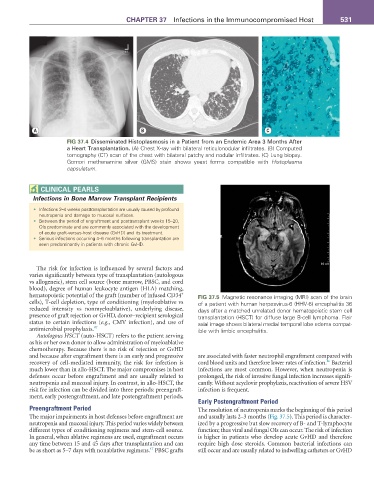
                       fIG 37.4  Disseminated Histoplasmosis in a Patient from an Endemic Area 3 Months After
                       a Heart Transplantation. (A) Chest X-ray with bilateral reticulonodular infiltrates. (B) Computed
                       tomography (CT) scan of the chest with bilateral patchy and nodular infiltrates. (C) Lung biopsy.
                       Gomori methenamine silver (GMS) stain shows yeast forms compatible with  Histoplasma
                       capsulatum.


               CLINICaL PEarLS
            Infections in Bone Marrow Transplant Recipients
            •  Infections 2–4 weeks posttransplantation are usually caused by profound
              neutropenia and damage to mucosal surfaces.
            •  Between the period of engraftment and posttransplant weeks 15–20,
              OIs predominate and are commonly associated with the development
              of acute graft-versus-host disease (GvHD) and its treatment.
            •  Serious infections occurring 4–6 months following transplantation are
              seen predominantly in patients with chronic GvHD.


             The risk for infection is influenced by several factors and
           varies significantly between type of transplantation (autologous
           vs allogeneic), stem cell source (bone marrow, PBSC, and cord
           blood), degree of human leukocyte antigen (HLA) matching,
                                                            +
           hematopoietic potential of the graft (number of infused CD34    fIG 37.5  Magnetic resonance imaging (MRI) scan of the brain
           cells), T-cell depletion, type of conditioning (myeloablative vs   of a patient with human herpesvirus-6 (HHV-6) encephalitis 36
           reduced intensity vs nonmyeloablative), underlying disease,   days after a matched unrelated donor hematopoietic stem cell
           presence of graft rejection or GvHD, donor–recipient serological   transplantation (HSCT) for diffuse large B-cell lymphoma. Flair
           status to certain infections (e.g., CMV infection), and use of   axial image shows bilateral medial temporal lobe edema compat-
           antimicrobial prophylaxis. 47                          ible with limbic encephalitis.
             Autologous HSCT (auto-HSCT) refers to the patient serving
           as his or her own donor to allow administration of myeloablative
           chemotherapy. Because there is no risk of rejection or GvHD
           and because after engraftment there is an early and progressive   are associated with faster neutrophil engraftment compared with
                                                                                                            46
           recovery of cell-mediated immunity, the risk for infection is   cord blood units and therefore lower rates of infection.  Bacterial
           much lower than in allo-HSCT. The major compromises in host   infections are most common. However, when neutropenia is
           defenses occur before engraftment and are usually related to   prolonged, the risk of invasive fungal infection increases signifi-
           neutropenia and mucosal injury. In contrast, in allo-HSCT, the   cantly. Without acyclovir prophylaxis, reactivation of severe HSV
           risk for infection can be divided into three periods: preengraft-  infection is frequent.
           ment, early postengraftment, and late postengraftment periods.
                                                                  Early Postengraftment Period
           Preengraftment Period                                  The resolution of neutropenia marks the beginning of this period
           The major impairments in host defenses before engraftment are   and usually lasts 2–3 months (Fig. 37.5). This period is character-
           neutropenia and mucosal injury. This period varies widely between   ized by a progressive but slow recovery of B- and T-lymphocyte
           different types of conditioning regimens and stem-cell source.   function; thus viral and fungal OIs can occur. The risk of infection
           In general, when ablative regimens are used, engraftment occurs   is higher in patients who develop acute GvHD and therefore
           any time between 15 and 45 days after transplantation and can   require high dose steroids. Common bacterial infections can
                                                  47
           be as short as 5–7 days with nonablative regimens.  PBSC grafts   still occur and are usually related to indwelling catheters or GvHD

