


Page 548 - Clinical Immunology_ Principles and Practice ( PDFDrive )
P. 548
526          Part four  Immunological Deficiencies


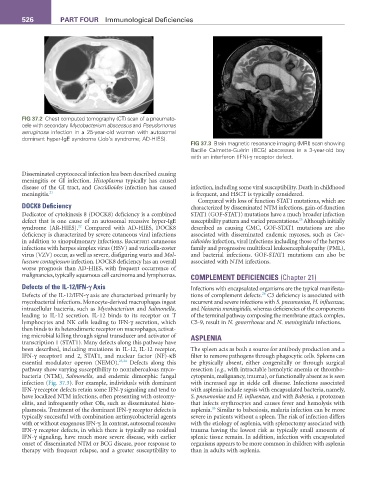
        fIG 37.2  Chest computed tomography (CT) scan of a pneumato-
        cele with secondary Mycobacterium abscessus and Pseudomonas
        aeruginosa infection in a 25-year-old woman with autosomal
        dominant hyper-IgE syndrome (Job’s syndrome; AD-HIES).
                                                               fIG 37.3  Brain magnetic resonance imaging (MRI) scan showing
                                                               Bacille Calmette-Guérin (BCG) abscesses in a 3-year-old boy
                                                               with an interferon (IFN)-γ receptor defect.


        Disseminated cryptococcal infection has been described causing
        meningitis or GI infection.  Histoplasma typically has caused
        disease of the GI tract, and Coccidioides infection has caused   infection, including some viral susceptibility. Death in childhood
        meningitis. 21                                         is frequent, and HSCT is typically considered.
                                                                  Compared with loss of function STAT1 mutations, which are
        DOCK8 Deficiency                                       characterized by disseminated NTM infections, gain-of-function
        Dedicator of cytokinesis 8 (DOCK8) deficiency is a combined   STAT1 (GOF-STAT1) mutations have a much broader infection
                                                                                                   25
        defect that is one cause of an autosomal recessive hyper-IgE   susceptibility pattern and varied presentations.  Although initially
                           22
        syndrome (AR-HIES).  Compared with  AD-HIES, DOCK8     described as causing CMC, GOF-STAT1 mutations are also
        deficiency is characterized by severe cutaneous viral infections   associated with disseminated  endemic  mycoses, such as  Coc-
        in addition to sinopulmonary infections. Recurrent cutaneous   cidioides infection, viral infections including those of the herpes
        infections with herpes simplex virus (HSV) and varicella-zoster   family and progressive multifocal leukoencephalopathy (PML),
        virus (VZV) occur, as well as severe, disfiguring warts and Mol-  and bacterial infections. GOF-STAT1 mutations can also be
        luscum contagiosum infection. DOCK8 deficiency has an overall   associated with NTM infections.
        worse prognosis than AD-HIES, with frequent occurrence of
        malignancies, typically squamous cell carcinoma and lymphomas.  COMPLEMENT DEFICIENCIES (Chapter 21)
        Defects of the IL-12/IFN-γ Axis                        Infections with encapsulated organisms are the typical manifesta-
                                                                                       26
        Defects of the IL-12/IFN-γ axis are characterized primarily by   tions of complement defects.  C3 deficiency is associated with
        mycobacterial infections. Monocyte-derived macrophages ingest   recurrent and severe infections with S. pneumoniae, H. influenzae,
        intracellular bacteria, such as Mycobacterium and Salmonella,   and Neisseria meningitidis, whereas deficiencies of the components
        leading to IL-12 secretion. IL-12 binds to its receptor on T   of the terminal pathway composing the membrane attack complex,
        lymphocytes and NK cells leading to IFN-γ secretion, which   C5-9, result in N. gonorrhoeae and N. meningitidis infections.
        then binds to its heterodimeric receptor on macrophages, activat-
        ing microbial killing through signal transducer and activator of   ASPLENIA
        transcription 1 (STAT1). Many defects along this pathway have
        been described, including mutations in IL-12, IL-12 receptor,   The spleen acts as both a source for antibody production and a
        IFN-γ receptor1 and 2, STAT1, and nuclear factor (NF)-κB   filter to remove pathogens through phagocytic cells. Spleens can
        essential  modulator  operon  (NEMO). 23,24   Defects  along this   be  physically  absent,  either  congenitally  or  through  surgical
        pathway show varying susceptibility to nontuberculous myco-  resection (e.g., with intractable hemolytic anemia or thrombo-
        bacteria (NTM),  Salmonella, and endemic dimorphic fungal   cytopenia, malignancy, trauma), or functionally absent as is seen
        infection (Fig. 37.3). For example, individuals with dominant   with increased age in sickle cell disease. Infections associated
        IFN-γ receptor defects retain some IFN-γ signaling and tend to   with asplenia include sepsis with encapsulated bacteria, namely,
        have localized NTM infections, often presenting with osteomy-  S. pneumoniae and H. influenzae, and with Babesia, a protozoan
        elitis, and infrequently other OIs, such as disseminated histo-  that infects erythrocytes and causes fever and hemolysis with
                                                                      26
        plasmosis. Treatment of the dominant IFN-γ receptor defects is   asplenia.  Similar to babesiosis, malaria infection can be more
        typically successful with combination antimycobacterial agents   severe in patients without a spleen. The risk of infection differs
        with or without exogenous IFN-γ. In contrast, autosomal recessive   with the etiology of asplenia, with splenectomy associated with
        IFN-γ receptor defects, in which there is typically no residual   trauma having the lowest risk as typically small amounts of
        IFN-γ signaling, have much more severe disease, with earlier   splenic tissue remain. In addition, infection with encapsulated
        onset of disseminated NTM or BCG disease, poor response to   organisms appears to be more common in children with asplenia
        therapy with frequent relapse, and a greater susceptibility to   than in adults with asplenia.

