


Page 764 - Clinical Immunology_ Principles and Practice ( PDFDrive )
P. 764
736          ParT Six  Systemic Immune Diseases


                                                               are targeted against ribonucleoprotein antigens. Anti-Ro/SSA
                                                               recognizes two RNA binding proteins (the 52-kilodalton [kDa]
                                                               or the 60-kDa protein), whereas anti-La/SSB antibodies recognize
                                                               RNA polymerase III. Anti-Ro/SSA antibodies are found in over
                                                               70% of  patients with SS but  are also frequently encountered
                                                               in systemic lupus erythematosus (SLE) and other autoimmune
                                                               diseases, even in the absence of oral or ocular dryness. Anti-La/
                                                               SSB is more specific; it is present in 50% of patients with primary
                                                               SS or SS/SLE but is rarely seen in other diseases. The patho-
                                                               genic role of these antibodies has not yet been defined, except
                                                               in infants born to women with anti-Ro/SSA and/or anti-La/
                                                               SSB antibodies. These antibodies can cross the placenta and
                                                               bind to Ro and La antigens located on the cell surface of fetal
                                                               myocardial tissue, leading to fetal heart block. Other autoanti-
                                                               bodies, such as antinuclear antibodies (ANAs) and rheumatoid
                                                               factor, are frequently present in patients with both primary and
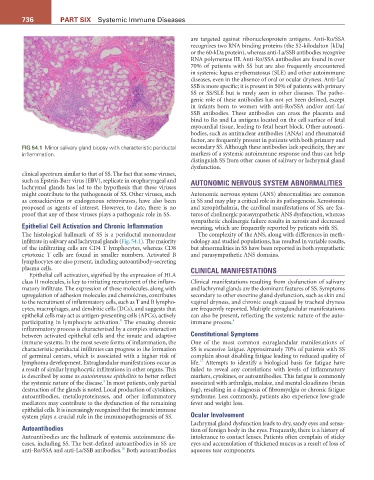
        FiG 54.1  Minor salivary gland biopsy with characteristic periductal   secondary SS. Although these antibodies lack specificity, they are
        inflammation.                                          markers of a systemic autoimmune response and thus can help
                                                               distinguish SS from other causes of salivary or lachrymal gland
                                                               dysfunction.
        clinical spectrum similar to that of SS. The fact that some viruses,
        such as Epstein-Barr virus (EBV), replicate in oropharyngeal and   AUTONOMIC NERVOUS SYSTEM ABNORMALITIES
        lachrymal glands has led to the hypothesis that these viruses
        might contribute to the pathogenesis of SS. Other viruses, such   Autonomic nervous system (ANS) abnormalities are common
        as coxsackievirus or endogenous retroviruses, have also been   in SS and may play a critical role in its pathogenesis. Xerostomia
        proposed as agents of interest. However, to date, there is no   and xerophthalmia, the cardinal manifestations of SS, are fea-
        proof that any of these viruses plays a pathogenic role in SS.  tures of cholinergic parasympathetic ANS dysfunction, whereas
                                                               sympathetic cholinergic failure results in xerosis and decreased
        Epithelial Cell Activation and Chronic Inflammation    sweating, which are frequently reported by patients with SS.
        The histological hallmark of SS is a periductal mononuclear   The complexity of the ANS, along with differences in meth-
        infiltrate in salivary and lachrymal glands (Fig. 54.1). The majority   odology and studied populations, has resulted in variable results,
        of the infiltrating cells are CD4 T lymphocytes, whereas CD8   but abnormalities in SS have been reported in both sympathetic
        cytotoxic T cells are found in smaller numbers.  Activated B   and parasympathetic ANS domains.
        lymphocytes are also present, including autoantibody-secreting
        plasma cells.                                          CLINICAL MANIFESTATIONS
           Epithelial cell activation, signified by the expression of HLA
        class II molecules, is key to initiating recruitment of the inflam-  Clinical manifestations resulting from dysfunction of salivary
        matory infiltrate. The expression of these molecules, along with   and lachrymal glands are the dominant features of SS. Symptoms
        upregulation of adhesion molecules and chemokines, contributes   secondary to other exocrine gland dysfunction, such as skin and
        to the recruitment of inflammatory cells, such as T and B lympho-  vaginal dryness, and chronic cough caused by tracheal dryness
        cytes, macrophages, and dendritic cells (DCs), and suggests that   are frequently reported. Multiple extraglandular manifestations
        epithelial cells may act as antigen-presenting cells (APCs), actively   can also be present, reflecting the systemic nature of the auto-
                                        9
        participating in lymphocyte activation.  The ensuing chronic   immune process. 4
        inflammatory process is characterized by a complex interaction
        between activated epithelial cells and the innate and adaptive   Constitutional Symptoms
        immune systems. In the most severe forms of inflammation, the   One  of  the  most  common  extraglandular  manifestations  of
        characteristic periductal infiltrates can progress to the formation   SS is excessive fatigue. Approximately 70% of patients with SS
        of germinal centers, which is associated with a higher risk of   complain about disabling fatigue leading to reduced quality of
                                                                  11
        lymphoma development. Extraglandular manifestations occur as   life.   Attempts to identify a biological basis for fatigue have
        a result of similar lymphocytic infiltrations in other organs. This   failed to reveal any correlations with levels of inflammatory
        is described by some as autoimmune epithelitis to better reflect   markers, cytokines, or autoantibodies. This fatigue is commonly
                                   9
        the systemic nature of the disease.  In most patients, only partial   associated with arthralgia, malaise, and mental cloudiness (brain
        destruction of the glands is noted. Local production of cytokines,   fog), resulting in a diagnosis of fibromyalgia or chronic fatigue
        autoantibodies, metalloproteinases, and other inflammatory   syndrome. Less commonly, patients also experience low-grade
        mediators may contribute to the dysfunction of the remaining   fever and weight loss.
        epithelial cells. It is increasingly recognized that the innate immune
        system plays a crucial rule in the immunopathogenesis of SS.  Ocular Involvement
                                                               Lachrymal gland dysfunction leads to dry, sandy eyes and sensa-
        Autoantibodies                                         tion of foreign body in the eyes. Frequently, there is a history of
        Autoantibodies are the hallmark of systemic autoimmune dis-  intolerance to contact lenses. Patients often complain of sticky
        eases, including SS. The best-defined autoantibodies in SS are   eyes and accumulation of thickened mucus as a result of loss of
                                         10
        anti-Ro/SSA and anti-La/SSB antibodies.  Both autoantibodies   aqueous tear components.

