


Page 827 - Clinical Immunology_ Principles and Practice ( PDFDrive )
P. 827
CHaPtEr 58  Small- and Medium-Vessel Primary Vasculitis                799


                            ORGAN INVOLVEMENT IN GPA              systemic inflammatory syndrome. The child typically has mucosal
           100                                                    inflammation with strawberry tongue; approximately 10 days
            90                                                    after the onset, skin desquamation is a very typical feature. The
                                                                  most worrying feature of KD is the development of coronary
            80                                                    artery aneurysms, which occur in around 2–4% of children
            70                                                    and can  be fatal, if untreated. This can  be detected by using
                                                                  echocardiography.
            60
                                                                  Laboratory Investigations
            50
                                                                  The investigation of patients with suspected small- or medium-
            40
                                                                  vessel vasculitis should follow a careful history and examination
            30                                                    to determine the likely diagnosis and underlying illness. The
            20                                                    differential diagnosis is very wide. It is important to be vigilant
                                                                  in looking for positive signs of vasculitis, but it is equally
            10                                                    important not to forget to look for more common causes of the
            0                                                     clinical presentation. Many of the studies performed can result
                ENT   Lung  Kidney  Heart  GI  Skin  CNS  PNS     in  nonspecific  findings,  such  as  an  elevated  white  blood  cell
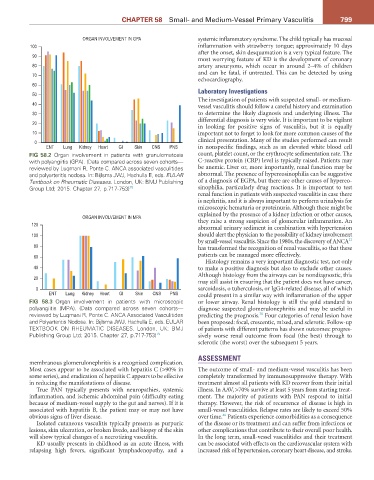
           FIG 58.2  Organ involvement in patients with granulomatosis   count, platelet count, or the erythrocyte sedimentation rate. The
           with polyangiitis (GPA). (Data compared across seven cohorts—  C-reactive protein (CRP) level is typically raised. Patients may
           reviewed by Luqmani R, Ponte C. ANCA associated vasculitides   be anemic. Liver or, more importantly, renal function may be
           and polyarteritis nodosa. In: Bijlsma JWJ, Hachulla E, eds. EULAR   abnormal. The presence of hypereosinophilia can be suggestive
           Textbook on Rheumatic Diseases. London, UK: BMJ Publishing   of a diagnosis of EGPA, but there are other causes of hypereo-
           Group Ltd; 2015. Chapter 27, p.717-753) 75             sinophilia, particularly drug reactions. It is important to test
                                                                  renal function in patients with suspected vasculitis in case there
                                                                  is nephritis, and it is always important to perform urinalysis for
                                                                  microscopic hematuria or proteinuria. Although these might be
                            ORGAN INVOLVEMENT IN MPA              explained by the presence of a kidney infection or other causes,
           120                                                    they raise a strong suspicion of glomerular inflammation. An
                                                                  abnormal urinary sediment in combination with hypertension
           100                                                    should alert the physician to the possibility of kidney involvement
                                                                                                                   12
                                                                  by small-vessel vasculitis. Since the 1980s, the discovery of ANCA
            80                                                    has transformed the recognition of renal vasculitis, so that these
            60                                                    patients can be managed more effectively.
                                                                    Histology remains a very important diagnostic test, not only
            40                                                    to make a positive diagnosis but also to exclude other causes.
            20                                                    Although histology from the airways can be nondiagnostic, this
                                                                  may still assist in ensuring that the patient does not have cancer,
             0                                                    sarcoidosis, o tuberculosis, or IgG4-related disease, all of which
                 ENT  Lung  Kidney  Heart  GI  Skin  CNS  PNS     could present in a similar way with inflammation of the upper
           FIG  58.3  Organ  involvement  in  patients  with  microscopic   or lower airway. Renal histology is still the gold standard to
           polyangiitis (MPA). (Data compared across seven cohorts—  diagnose  suspected  glomerulonephritis  and  may  be  useful  in
           reviewed by Luqmani R, Ponte C. ANCA Associated Vasculitides   predicting the prognosis.  Four categories of renal lesion have
                                                                                      76
           and Polyarteritis Nodosa. In: Bijlsma JWJ, Hachulla E, eds. EULAR   been proposed: focal, crescentic, mixed, and sclerotic. Follow-up
           TEXTBOOK ON RHEUMATIC DISEASES. London, UK: BMJ        of patients with different patterns has shown outcomes: progres-
           Publishing Group Ltd; 2015. Chapter 27, p.717-753) 75  sively worse renal outcome from focal (the best) through to
                                                                  sclerotic (the worst) over the subsequent 5 years.

                                                                  ASSESSMENT
           membranous glomerulonephritis is a recognized complication.
           Most cases appear to be associated with hepatitis C (>90% in   The outcome of small- and medium-vessel vasculitis has been
           some series), and eradication of hepatitis C appears to be effective   completely transformed by immunosuppressive therapy. With
           in reducing the manifestations of disease.             treatment almost all patients with KD recover from their initial
             True PAN typically presents with neuropathies, systemic   illness. In AAV, >70% survive at least 5 years from starting treat-
           inflammation, and ischemic abdominal pain (difficulty eating   ment. The majority of patients with PAN respond to initial
           because of medium-vessel supply to the gut and nerves). If it is   therapy. However, the risk of recurrence of disease is high in
           associated with hepatitis B, the patient may or may not have   small-vessel vasculitides. Relapse rates are likely to exceed 50%
                                                                          46
           obvious signs of liver disease.                        over time.  Patients experience comorbidities as a consequence
             Isolated cutaneous vasculitis typically presents as purpuric   of the disease or its treatment and can suffer from infections or
           lesions, skin ulceration, or broken livedo, and biopsy of the skin   other complications that contribute to their overall poor health.
           will show typical changes of a necrotizing vasculitis.  In the long term, small-vessel vasculitides and their treatment
             KD usually presents in childhood as an acute illness, with   can be associated with effects on the cardiovascular system with
           relapsing high fevers, significant lymphadenopathy, and a   increased risk of hypertension, coronary heart disease, and stroke.

