


Page 823 - Clinical Immunology_ Principles and Practice ( PDFDrive )
P. 823
CHaPtEr 58  Small- and Medium-Vessel Primary Vasculitis                795


             Cocaine-induced midline destructive lesions (CIMDLs) in the   stimulator (BLyS)  levels  are significantly  increased, thereby
                                                                                                                   45
                                                     40
           upper respiratory tract mimic limited forms of GPA.  Patients   promoting B-cell differentiation, proliferation, and survival.
           with CIMDLs may present with or without ANCA, and when   B cells may play a number of roles in AAV: as precursors to
           ANCA-positive, the pattern often varies. Some patients are positive   antibody-producing plasma cells; as APCs; producing proinflam-
           for c-ANCA with PR3 specificity, but more often, patients with   matory mediators; or in costimulation of T cells.
           CIMDLs present p-ANCA with specificity for atypical ANCA,
           such as HNE. Wiesner et al. reported that 76% of the patients   ROLE OF NEUTROPHILS
           with CIMDLs were ANCA-positive (mostly p-ANCA): 57% had
           PR3-ANCA and 86% had HNE-ANCA; this compares with the   In addition to containing the antigens for  ANCA, activated
           absence of HNE-ANCA in GPA and MPA, suggesting that the   neutrophils release many mediators that modulate the inflam-
           presence of HNE-ANCAs may be helpful in distinguishing CIMDL   matory response and can directly contribute to tissue inflam-
           from GPA. 41                                           mation, vascular injury, and damage in AAV via phagocytosis,
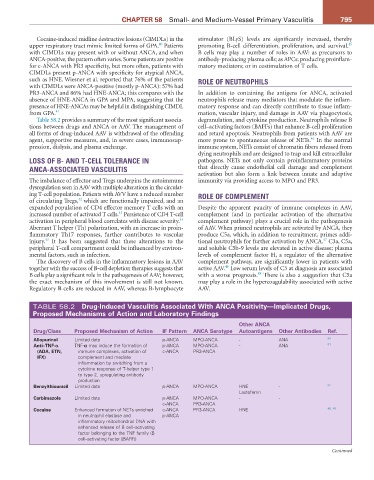
             Table 58.2 provides a summary of the most significant associa-  degranulation, and cytokine production. Neutrophils release B
           tions between drugs and ANCA or AAV. The management of   cell–activating factors (BAFFs) that enhance B-cell proliferation
           all forms of drug-induced AAV is withdrawal of the offending   and retard apoptosis. Neutrophils from patients with AAV are
                                                                                                       46
           agent, supportive measures, and, in severe cases, immunosup-  more prone to spontaneous release of NETs.  In the normal
           pression, dialysis, and plasma exchange.               immune system, NETs consist of chromatin fibers released from
                                                                  dying neutrophils and are designed to trap and kill extracellular
           LOSS OF B- AND T-CELL TOLERANCE IN                     pathogens. NETs not only contain proinflammatory proteins
           ANCA-ASSOCIATED VASCULITIS                             that directly cause endothelial cell damage and complement
                                                                  activation but also form a link between innate and adaptive
           The imbalance of effector and Tregs underpins the autoimmune   immunity via providing access to MPO and PR3.
           dysregulation seen in AAV with multiple alterations in the circulat-
           ing T-cell population. Patients with AVV have a reduced number   ROLE OF COMPLEMENT
                           42
           of circulating Tregs,  which are functionally impaired, and an
           expanded population of CD4 effector memory T cells with an   Despite the apparent paucity of immune complexes in  AAV,
                                        43
           increased number of activated T cells.  Persistence of CD4 T-cell   complement (and in particular activation of the alternative
                                                            44
           activation in peripheral blood correlates with disease severity.    complement pathway) plays a crucial role in the pathogenesis
           Aberrant T helper (Th) polarization, with an increase in proin-  of AAV. When primed neutrophils are activated by ANCA, they
           flammatory Th17 responses, further contributes to vascular   produce C5a, which, in addition to recruitment, primes addi-
                                                                                                           47
                43
           injury.  It has been suggested that these alterations to the   tional neutrophils for further activation by ANCA.  C3a, C5a,
           peripheral T-cell compartment could be influenced by environ-  and soluble C5b-9 levels are elevated in active disease; plasma
           mental factors, such as infection.                     levels of complement factor H, a regulator of the alternative
             The discovery of B cells in the inflammatory lesions in AAV   complement pathway, are significantly lower in patients with
                                                                           48
           together with the success of B-cell depletion therapies suggests that   active AAV.  Low serum levels of C3 at diagnosis are associated
                                                                                     49
           B cells play a significant role in the pathogenesis of AAV; however,   with a worse prognosis.  There is also a suggestion that C5a
           the exact mechanism of this involvement is still not known.   may play a role in the hypercoagulability associated with active
           Regulatory B cells are reduced in AAV, whereas B-lymphocyte   AAV.
            TABLE 58.2  Drug-Induced Vasculitis associated With aNCa Positivity—Implicated Drugs,
            Proposed Mechanisms of action and Laboratory Findings

                                                                               Other aNCa
            Drug/Class   Proposed Mechanism of action  IF Pattern  aNCa Serotype  autoantigens  Other antibodies  ref.
            allopurinol  Limited data                 p-ANCA    MPO-ANCA       -            ANA             50
            anti–tNF-α   TNF-α may induce the formation of   p-ANCA  MPO-ANCA  -            ANA             51
             (aDa, EtN,    immune complexes, activation of   c-ANCA  PR3-ANCA
             IFX)          complement and mediate
                           inflammation by switching from a
                           cytokine response of T-helper type 1
                           to type 2, upregulating antibody
                           production
            Benzylthiouracil  Limited data            p-ANCA    MPO-ANCA       HNE          -               52
                                                                               Lactoferrin
            Carbimazole  Limited data                 p-ANCA    MPO-ANCA       -            -
                                                      c-ANCA    PR3-ANCA

            Cocaine      Enhanced formation of NETs enriched   c-ANCA  PR3-ANCA  HNE                        40, 41
                           in neutrophil elastase and   p-ANCA
                           inflammatory mitochondrial DNA with
                           enhanced release of B cell–activating
                           factor belonging to the TNF family (B
                           cell–activating factor [BAFF])
                                                                                                              Continued

