


Page 822 - Clinical Immunology_ Principles and Practice ( PDFDrive )
P. 822
794          Part SIX  Systemic Immune Diseases


          $FWLYDWHG 301                                          $FWLYDWHG 301


         5HVWLQJ 301                                            5HVWLQJ 301


           ,QWUDYDVFXODU                                         ,QWUDYDVFXODU
           VSDFH                                                 VSDFH

           ([WUDYDVFXODU                                         ([WUDYDVFXODU
           VSDFH                                                 VSDFH

         $                                                     %


          $FWLYDWHG 301                                         $FWLYDWHG 301


         5HVWLQJ 301                                            5HVWLQJ 301
                                                                                           5HFUXLWPHQW
           ,QWUDYDVFXODU                                         ,QWUDYDVFXODU
           VSDFH                                                 VSDFH

           ([WUDYDVFXODU                                         ([WUDYDVFXODU
           VSDFH                                                 VSDFH
                                                                                       $FXWH LQIODPPDWLRQ  &KURQLF
         &                                                     '                       ZLWK 1(7 IRUPDWLRQ  LQIODPPDWLRQ


              (QGRWKHOLDO FHOO              &RPSOHPHQW *$        )LEUREODVW                7 FHOO
                                            UHFHSWRU DQG & H

                                            $QWLQHXWURSKLO
              5HVWLQJ DQG                   F\WRSODVPLF DQWLERG\
              DFWLYDWHG QHXWURSKLO           $1&$                0RQRF\WH DQG              &'   E
              SRO\PRUSKRQXFOHDU FHOO  301   DQG SURWHLQDVH  FU   PDFURSKDJH
                                            P\HORSURWHLQDVH
              &\WRNLQH UHFHSWRU     ,QWUDFHOOXODU DGKHVLRQ
              DQG SURLQIODPPDWRU\   PROHFXOH    ,&$0     )F UHFHSWRU     )LEULQ         &ROODJHQ
              F\WRNLQH
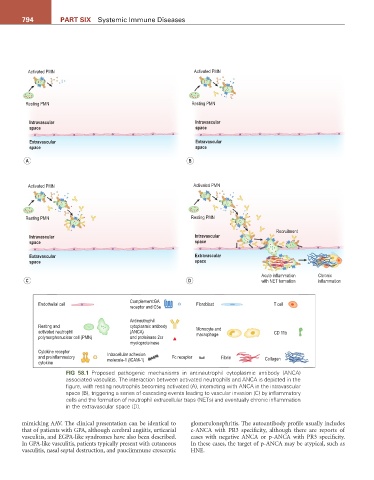
                       FIG 58.1  Proposed pathogenic mechanisms in antineutrophil cytoplasmic antibody (ANCA)
                       associated vasculitis. The interaction between activated neutrophils and ANCA is depicted in the
                       figure, with resting neutrophils becoming activated (A), interacting with ANCA in the intravascular
                       space (B), triggering a series of cascading events leading to vascular invasion (C) by inflammatory
                       cells and the formation of neutrophil extracellular traps (NETs) and eventually chronic inflammation
                       in the extravascular space (D).


        mimicking AAV. The clinical presentation can be identical to   glomerulonephritis. The autoantibody profile usually includes
        that of patients with GPA, although cerebral angiitis, urticarial   c-ANCA with PR3 specificity, although there are reports of
        vasculitis, and EGPA-like syndromes have also been described.   cases with negative  ANCA or p-ANCA with PR3 specificity.
        In GPA-like vasculitis, patients typically present with cutaneous   In these cases, the target of p-ANCA may be atypical, such as
        vasculitis, nasal septal destruction, and pauciimmune crescentic   HNE.

